

Sample
Summaries after sample
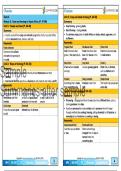
, U4: Food processing U1: People and food
• Unprocessed - food that you eat fresh or raw. Ways people get their food:
• Bacteria make food rot and it only grows in certain
• Food production - producing or making the
temperatures and when there is moisture in the air.
food you eat.
• Some food comes from crops and orchards
(plants) - vegetables, tea, coffee and fruit.
Processes to keep food for longer:
• Other food comes from livestock (animals) -
• Cooking it. meat, chicken and fish.
• Freezing it. • Some food is raw, other food needs to be
• Adding chemicals to destroy the bacteria. cooked before it’s safe to eat it.
• Removing the air and moisture – canning or drying.
M3: Food and
Sample U3: Crop and stock farming
farming in
South Africa
U2: Ways of farming
Farming for self and family:
• On farms and in villages, people often grow
Summaries after sample Farming crops:
• Crop farming involves growing plants.
• Crop farming is sometimes called arable farming.
their own foods.
• In towns and cities, people usually buy food that
other people have grown.
• Different crops need different things - the right amount • Subsistence farmers - grow food for themselves
of sunshine, water and the right kind of soil. and their families.
• Commercial farmers - farm large amounts of
agricultural products that they sell.
Growing food in towns and cities:
• Many people in towns and cities grow food so they can
eat healthy and spend less on buying food.
• Although they don’t grow all their own food, they are
subsistence farmers because they eat what they grow.
GR4 SS-GEO T3-M3 Mind Map Study&Master Copyright © www.summariessa.co.za (DO NOT COPY)
Summaries after sample
, U4: Food processing U1: People and food
• Unprocessed - food that you eat fresh or raw. Ways people get their food:
• Bacteria make food rot and it only grows in certain
• Food production - producing or making the
temperatures and when there is moisture in the air.
food you eat.
• Some food comes from crops and orchards
(plants) - vegetables, tea, coffee and fruit.
Processes to keep food for longer:
• Other food comes from livestock (animals) -
• Cooking it. meat, chicken and fish.
• Freezing it. • Some food is raw, other food needs to be
• Adding chemicals to destroy the bacteria. cooked before it’s safe to eat it.
• Removing the air and moisture – canning or drying.
M3: Food and
Sample U3: Crop and stock farming
farming in
South Africa
U2: Ways of farming
Farming for self and family:
• On farms and in villages, people often grow
Summaries after sample Farming crops:
• Crop farming involves growing plants.
• Crop farming is sometimes called arable farming.
their own foods.
• In towns and cities, people usually buy food that
other people have grown.
• Different crops need different things - the right amount • Subsistence farmers - grow food for themselves
of sunshine, water and the right kind of soil. and their families.
• Commercial farmers - farm large amounts of
agricultural products that they sell.
Growing food in towns and cities:
• Many people in towns and cities grow food so they can
eat healthy and spend less on buying food.
• Although they don’t grow all their own food, they are
subsistence farmers because they eat what they grow.
GR4 SS-GEO T3-M3 Mind Map Study&Master Copyright © www.summariessa.co.za (DO NOT COPY)


