

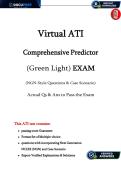
Virtual ATI
Comprehensive Predictor
(Green Light) EXAM
(NGN-Style Questions & Case Scenario)
Actual Qs & Ans to Pass the Exam
This ATI test contains:
passing score Guarantee
Format Set of Multiple-choice
questions with incorporating Next Generation
NCLEX (NGN) and Case Scenario
Expert-Verified Explanations & Solutions
,1. A nurse is caring for a client who is at 33 weeks of gestation following an
amniocentesis. The nurse should monitor the client for which of the following
complications?
A. Vomiting
B. Hypertension
C. Epigastric pain
D. Contractions
Correct Answer: D. Contractions
Expert Rationale: Amniocentesis can trigger uterine irritability leading to
contractions and potential preterm labor, especially at 33 weeks gestation.
Monitoring for contractions is essential. Vomiting, hypertension, and
epigastric pain are not common complications of amniocentesis.
---
2. A nurse is providing teaching to an older adult client about methods to
promote nighttime sleep. Which of the following instructions should the
nurse include?
A. Stay in bed at least 1 hr if unable to fall asleep
B. Take a 1 hr nap during the day
C. Perform exercises prior to bedtime
D. Eat a light snack before bedtime
Correct Answer: D. Eat a light snack before bedtime
Expert Rationale: A light carbohydrate or protein snack can promote sleep by
preventing hunger. Napping too long or late in the day and vigorous
,exercise close to bedtime can interfere with sleep. Also, staying in bed awake
for too long can condition the brain to associate bed with wakefulness.
---
3. A nurse on a telemetry unit is caring for a client who becomes unconscious
and whose monitor displays ventricular tachycardia. Which of the following
actions should the nurse take first after determining the client does not have a
palpable pulse?
A. Assess heart sounds
B. Defibrillate
C. Establish IV access
D. Administer epinephrine
Correct Answer: B. Defibrillate
Expert Rationale: Pulseless ventricular tachycardia is a life-threatening cardiac
arrest rhythm requiring immediate defibrillation. The nurse’s priority is to
defibrillate to restore a perfusing rhythm. Other interventions follow.
---
4. A nurse is admitting a client who is 1 week postpartum and reports
excessive vaginal bleeding. The nurse does not speak the same language as the
client. The client's partner and 10-year-old child are accompanying her.
Which of the following actions should the nurse take to gather the client's
admission data?
A. Have the client's child translate
, B. Allow the client's partner to translate
C. Request a female interpreter through the facility
D. Ask a nursing student who speaks the same language as the client to
translate
Correct Answer: C. Request a female interpreter through the facility
Expert Rationale: Using a professional interpreter ensures accuracy and
confidentiality. A female interpreter is preferred for obstetric care to respect
cultural sensitivities. Family members, especially children, are not appropriate
interpreters.
---
5. A nurse is caring for a client who is febrile. To reduce the client's fever, the
nurse applies a cooling blanket. Which of the following findings indicates the
client is having an adverse reaction to the cooling?
a. Flushing
b. Tachycardia
c. Restlessness
d. Shivering
Correct Answer: d. Shivering
Expert Rationale: Shivering indicates the client is responding to cold by
generating heat, which raises body temperature and counteracts the cooling
intervention. This is an adverse effect and requires prompt reassessment of the
approach.
Comprehensive Predictor
(Green Light) EXAM
(NGN-Style Questions & Case Scenario)
Actual Qs & Ans to Pass the Exam
This ATI test contains:
passing score Guarantee
Format Set of Multiple-choice
questions with incorporating Next Generation
NCLEX (NGN) and Case Scenario
Expert-Verified Explanations & Solutions
,1. A nurse is caring for a client who is at 33 weeks of gestation following an
amniocentesis. The nurse should monitor the client for which of the following
complications?
A. Vomiting
B. Hypertension
C. Epigastric pain
D. Contractions
Correct Answer: D. Contractions
Expert Rationale: Amniocentesis can trigger uterine irritability leading to
contractions and potential preterm labor, especially at 33 weeks gestation.
Monitoring for contractions is essential. Vomiting, hypertension, and
epigastric pain are not common complications of amniocentesis.
---
2. A nurse is providing teaching to an older adult client about methods to
promote nighttime sleep. Which of the following instructions should the
nurse include?
A. Stay in bed at least 1 hr if unable to fall asleep
B. Take a 1 hr nap during the day
C. Perform exercises prior to bedtime
D. Eat a light snack before bedtime
Correct Answer: D. Eat a light snack before bedtime
Expert Rationale: A light carbohydrate or protein snack can promote sleep by
preventing hunger. Napping too long or late in the day and vigorous
,exercise close to bedtime can interfere with sleep. Also, staying in bed awake
for too long can condition the brain to associate bed with wakefulness.
---
3. A nurse on a telemetry unit is caring for a client who becomes unconscious
and whose monitor displays ventricular tachycardia. Which of the following
actions should the nurse take first after determining the client does not have a
palpable pulse?
A. Assess heart sounds
B. Defibrillate
C. Establish IV access
D. Administer epinephrine
Correct Answer: B. Defibrillate
Expert Rationale: Pulseless ventricular tachycardia is a life-threatening cardiac
arrest rhythm requiring immediate defibrillation. The nurse’s priority is to
defibrillate to restore a perfusing rhythm. Other interventions follow.
---
4. A nurse is admitting a client who is 1 week postpartum and reports
excessive vaginal bleeding. The nurse does not speak the same language as the
client. The client's partner and 10-year-old child are accompanying her.
Which of the following actions should the nurse take to gather the client's
admission data?
A. Have the client's child translate
, B. Allow the client's partner to translate
C. Request a female interpreter through the facility
D. Ask a nursing student who speaks the same language as the client to
translate
Correct Answer: C. Request a female interpreter through the facility
Expert Rationale: Using a professional interpreter ensures accuracy and
confidentiality. A female interpreter is preferred for obstetric care to respect
cultural sensitivities. Family members, especially children, are not appropriate
interpreters.
---
5. A nurse is caring for a client who is febrile. To reduce the client's fever, the
nurse applies a cooling blanket. Which of the following findings indicates the
client is having an adverse reaction to the cooling?
a. Flushing
b. Tachycardia
c. Restlessness
d. Shivering
Correct Answer: d. Shivering
Expert Rationale: Shivering indicates the client is responding to cold by
generating heat, which raises body temperature and counteracts the cooling
intervention. This is an adverse effect and requires prompt reassessment of the
approach.


