BIO 1013 BRCC EXAM – Questions With Complete
Solutions
Save Groups
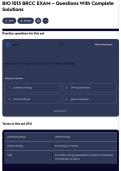
Practice questions for this set
Learn 1 /7 Study using Learn
process of using dna instructions to makes proteins
Choose an answer
1 potential energy 2 DNA polymerase
3 photosynthesis 4 gene expression
Don't know?
Terms in this set (113)
potential energy stored energy
kinetic energy the energy of motion
heat the kinetic energy generated by random movements
of molecules or atoms
, autotrophs organisms such as plants, algae, and bacteria that
capture the energy of sunlight by photosynthesis
photosynthesis sunlight + H2O + CO2 ----> O2 + C6H12O6 (glucose)
heterotrophs organisms (humans/animals) that obtain energy by
eating organic molecules produced by other
organisms
aerobic Respiration a series of reactions that occurs in the presence of
oxygen and converts energy stored in food into ATP
aerobic respiration Glucose + O2 -----> ATP + Co2 + H2O
Glycolysis breaks down food molecules into 2 molecules in the
cytoplasm, then enters into the mitochondria
creating 2 ATP.
Citric Acid Cycle electrons are stripped from the bonds between
carbon and hydrogen and carried to inner
membrane by NADH+ creating 2 ATP
electron transport electrons are passed from NADH down a chain of
molecules in the mitochondrial membrane, they
power reactions that channel energy into 36 ATP
molecules
fermintation - chemical reactions that takes place in absence of
oxygen and converts some energy stored in food
into 2 ATP
- occurs in cytoplasm
- converts products of glycolysis into lactid acid
DNA polymerase enzymes that reads a sequence of DNA strand and
helps add complementary nucleotides to form a new
strand of dna during dna replication
Solutions
Save Groups
Practice questions for this set
Learn 1 /7 Study using Learn
process of using dna instructions to makes proteins
Choose an answer
1 potential energy 2 DNA polymerase
3 photosynthesis 4 gene expression
Don't know?
Terms in this set (113)
potential energy stored energy
kinetic energy the energy of motion
heat the kinetic energy generated by random movements
of molecules or atoms
, autotrophs organisms such as plants, algae, and bacteria that
capture the energy of sunlight by photosynthesis
photosynthesis sunlight + H2O + CO2 ----> O2 + C6H12O6 (glucose)
heterotrophs organisms (humans/animals) that obtain energy by
eating organic molecules produced by other
organisms
aerobic Respiration a series of reactions that occurs in the presence of
oxygen and converts energy stored in food into ATP
aerobic respiration Glucose + O2 -----> ATP + Co2 + H2O
Glycolysis breaks down food molecules into 2 molecules in the
cytoplasm, then enters into the mitochondria
creating 2 ATP.
Citric Acid Cycle electrons are stripped from the bonds between
carbon and hydrogen and carried to inner
membrane by NADH+ creating 2 ATP
electron transport electrons are passed from NADH down a chain of
molecules in the mitochondrial membrane, they
power reactions that channel energy into 36 ATP
molecules
fermintation - chemical reactions that takes place in absence of
oxygen and converts some energy stored in food
into 2 ATP
- occurs in cytoplasm
- converts products of glycolysis into lactid acid
DNA polymerase enzymes that reads a sequence of DNA strand and
helps add complementary nucleotides to form a new
strand of dna during dna replication