

lOMoARcPSD|11448692
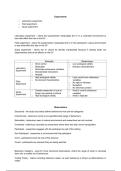
Experiments
o Laboratory experiment
o Field experiment
o Quasi experiment
Laboratory experiment - where the experimenter manipulates the IV in a controlled environment to
see what effect this has on the DV
Field experiment - where the experimenter manipulates the IV in the participant’s natural environment
to see what effect this has on the DV
Quasi experiment - where the IV cannot be directly manipulated because it already exists but
experimenters look at the effects on the DV
Strengths Weaknesses
o Strict control o Low ecological validity
o Replicable o Demand characteristics
Laboratory
o Eliminates extraneous variables
Experiment
o Standardised instructions
o Reliable
o High ecological validity o Less control over extraneous
o No demand characteristics variables
Field o No right to withdraw
Experiment
o Deception
o No informed consent
o Enables researcher to look at o Hard to control extraneous
Quasi
things not practical or ethical variables
Experiment
o High ecological validity o Hard to replicate
Observations
Structured - the study has clearly defined behaviours from pre-set categories
Unstructured - observers record a non-specified wide range of behaviours
Naturalistic - behaviours seen in natural environment and researchers are not involved.
Controlled - behaviours recorded by researchers where there has been some manipulation
Participant - researcher engages with the participant as part of the setting
Non-Participant - researcher is not involved with the participant
Overt - participant knows the role of the observer
Covert - participants are unaware they are being watched
Behaviour Category - used for more structured observations, where the range of study is narrowed
down into a smaller set of behaviours.
Coding Frame - makes recording behaviour easier, as each behaviour is shown as abbreviations or
codes
, lOMoARcPSD|11448692
Strengths Weaknesses
o Can be planned using pilot test o Simple definitions won’t be precise
Structured o Reliable o Low validity
Observation o Inter-rater reliability o Limiting behaviour categories
o Can re-analyse using video data
o Not limited by pre-set categories o Could miss something
Unstructured o Can record more information o All data collected may not be relevant
Observation o Inconsistent
o Subjective recording
o High ecological validity o Extraneous variables
Naturalistic o Not aware of being observed o Low reliability
Observation o Are good for observations where o Validity compromised if observers are
interventions are unethical identified or suspected
o Data likely to be reliable o Low ecological validity
Controlled o Controlled extraneous variables o Aware they are in artificial situation
Observation o High validity o Social situation is limited
o Can explore lots of behaviours o Not representative
o Can see people’s real emotions o Observer would be subjective
Participant o Aware of observer o Ethical issues involved
Observation o Know they are being observed
o Demand characteristics
Non- o Accurate and detailed records o Ethical issues involved
Participant o Observers remain objective o Low validity
Observation o Change behaviour - aware observer
o Unaware of being observed o Validity can be compromised
Covert o Accurate and detailed records o Ethical issues involved
Observation o Hard for observers to record data
without being notices
o Ethical observations o Aware of observer so may not give
Overt
o High reliability genuine reactions
Observation
o Not limited by categories o Time consuming
Time Sampling - set for a period of time so observe for different but specific amounts of times
Event Sampling - observers decide which behaviours to sample and record each time they occur
using a tally chart
Types of time sampling:
1. Instantaneous scan sampling - only the action being performed at the start of each pre-set
interval is recorded
2. Predominant activity sampling - the same time periods and behavioural categories can be used,
but instead of recording only the single behaviour occurring at the moment the time interval ends
3. One zero sampling - the same time periods and behavioural categories can be used but here
the researcher would record whether the behaviour occurred within the time period
Strengths Weaknesses
Can indicate the event order Hard to record all different
Shows time spent on each behaviours
Time
behaviour Demand characteristics
Sampling
Reliable Timings must be precise which
Records occurrence could be hard
, lOMoARcPSD|11448692
Can record every occurrence No indication of time spent on each
Event
Easy to obtain and analyse results category
Sampling
No indication of order of behaviours
Self-Reports
Self-reports are any method which involves asking a participant about their feelings, attitudes, beliefs
and so on. There are two main forms of self-reports which are questionnaires and interviews.
Questionnaire - is a written method of gathering data with people answering questions about
themselves. It uses open questions, closed questions, rating scales, Likert scales and semantic
differentials.
Strengths Weaknesses
Quick and easy Lacks validity
Quantitative and qualitative data Participants could lie
Cost-effective Could be rushed
Results easy to compare Questions could be misinterpreted
Standardised Social desirability bias
Questionnaires Replicable Cannot understand emotion
Generalizable No clue as to time spent on it
Representative Restricted answers
High level of confidence Needs certain levels of
maths/English
Can’t guarantee responses
People could lie on the questionnaire because they may be embarrassed or there could be
consequences if it is criminal. There could be social desirability bias as well. Pilot studies help to
improve the study to check that people will understand the questionnaire.
An interview uses questions spoken by an interviewer to a participant. The questions could be similar
to those in a questionnaire.
Closed questions - individuals select their response from a choice of pre-determined options
Open questions - individuals can respond in any way they like and have no pre-set answers
Rating scales - gives individuals an item and asks them to select from a number of choices to agree
Likert scales - measures attitudes using a statement that participants respond to
Semantic differentials - participants rate their responses between an opposing pair of words
Examples:
Closed - Do you like listening to music? Yes or No
Open - Why do you like listening to music?
Rating Scales - “Listening to music is the best way to do homework” 1 2 3 4 5
Likert Scales - “Music was better in 70’s than 80’s” S. agree, agree, neutral, disagree, S. disagree
Semantic Differentials - I think that music is: Enjoyable _ _ _ _ _ Boring
Experiments
o Laboratory experiment
o Field experiment
o Quasi experiment
Laboratory experiment - where the experimenter manipulates the IV in a controlled environment to
see what effect this has on the DV
Field experiment - where the experimenter manipulates the IV in the participant’s natural environment
to see what effect this has on the DV
Quasi experiment - where the IV cannot be directly manipulated because it already exists but
experimenters look at the effects on the DV
Strengths Weaknesses
o Strict control o Low ecological validity
o Replicable o Demand characteristics
Laboratory
o Eliminates extraneous variables
Experiment
o Standardised instructions
o Reliable
o High ecological validity o Less control over extraneous
o No demand characteristics variables
Field o No right to withdraw
Experiment
o Deception
o No informed consent
o Enables researcher to look at o Hard to control extraneous
Quasi
things not practical or ethical variables
Experiment
o High ecological validity o Hard to replicate
Observations
Structured - the study has clearly defined behaviours from pre-set categories
Unstructured - observers record a non-specified wide range of behaviours
Naturalistic - behaviours seen in natural environment and researchers are not involved.
Controlled - behaviours recorded by researchers where there has been some manipulation
Participant - researcher engages with the participant as part of the setting
Non-Participant - researcher is not involved with the participant
Overt - participant knows the role of the observer
Covert - participants are unaware they are being watched
Behaviour Category - used for more structured observations, where the range of study is narrowed
down into a smaller set of behaviours.
Coding Frame - makes recording behaviour easier, as each behaviour is shown as abbreviations or
codes
, lOMoARcPSD|11448692
Strengths Weaknesses
o Can be planned using pilot test o Simple definitions won’t be precise
Structured o Reliable o Low validity
Observation o Inter-rater reliability o Limiting behaviour categories
o Can re-analyse using video data
o Not limited by pre-set categories o Could miss something
Unstructured o Can record more information o All data collected may not be relevant
Observation o Inconsistent
o Subjective recording
o High ecological validity o Extraneous variables
Naturalistic o Not aware of being observed o Low reliability
Observation o Are good for observations where o Validity compromised if observers are
interventions are unethical identified or suspected
o Data likely to be reliable o Low ecological validity
Controlled o Controlled extraneous variables o Aware they are in artificial situation
Observation o High validity o Social situation is limited
o Can explore lots of behaviours o Not representative
o Can see people’s real emotions o Observer would be subjective
Participant o Aware of observer o Ethical issues involved
Observation o Know they are being observed
o Demand characteristics
Non- o Accurate and detailed records o Ethical issues involved
Participant o Observers remain objective o Low validity
Observation o Change behaviour - aware observer
o Unaware of being observed o Validity can be compromised
Covert o Accurate and detailed records o Ethical issues involved
Observation o Hard for observers to record data
without being notices
o Ethical observations o Aware of observer so may not give
Overt
o High reliability genuine reactions
Observation
o Not limited by categories o Time consuming
Time Sampling - set for a period of time so observe for different but specific amounts of times
Event Sampling - observers decide which behaviours to sample and record each time they occur
using a tally chart
Types of time sampling:
1. Instantaneous scan sampling - only the action being performed at the start of each pre-set
interval is recorded
2. Predominant activity sampling - the same time periods and behavioural categories can be used,
but instead of recording only the single behaviour occurring at the moment the time interval ends
3. One zero sampling - the same time periods and behavioural categories can be used but here
the researcher would record whether the behaviour occurred within the time period
Strengths Weaknesses
Can indicate the event order Hard to record all different
Shows time spent on each behaviours
Time
behaviour Demand characteristics
Sampling
Reliable Timings must be precise which
Records occurrence could be hard
, lOMoARcPSD|11448692
Can record every occurrence No indication of time spent on each
Event
Easy to obtain and analyse results category
Sampling
No indication of order of behaviours
Self-Reports
Self-reports are any method which involves asking a participant about their feelings, attitudes, beliefs
and so on. There are two main forms of self-reports which are questionnaires and interviews.
Questionnaire - is a written method of gathering data with people answering questions about
themselves. It uses open questions, closed questions, rating scales, Likert scales and semantic
differentials.
Strengths Weaknesses
Quick and easy Lacks validity
Quantitative and qualitative data Participants could lie
Cost-effective Could be rushed
Results easy to compare Questions could be misinterpreted
Standardised Social desirability bias
Questionnaires Replicable Cannot understand emotion
Generalizable No clue as to time spent on it
Representative Restricted answers
High level of confidence Needs certain levels of
maths/English
Can’t guarantee responses
People could lie on the questionnaire because they may be embarrassed or there could be
consequences if it is criminal. There could be social desirability bias as well. Pilot studies help to
improve the study to check that people will understand the questionnaire.
An interview uses questions spoken by an interviewer to a participant. The questions could be similar
to those in a questionnaire.
Closed questions - individuals select their response from a choice of pre-determined options
Open questions - individuals can respond in any way they like and have no pre-set answers
Rating scales - gives individuals an item and asks them to select from a number of choices to agree
Likert scales - measures attitudes using a statement that participants respond to
Semantic differentials - participants rate their responses between an opposing pair of words
Examples:
Closed - Do you like listening to music? Yes or No
Open - Why do you like listening to music?
Rating Scales - “Listening to music is the best way to do homework” 1 2 3 4 5
Likert Scales - “Music was better in 70’s than 80’s” S. agree, agree, neutral, disagree, S. disagree
Semantic Differentials - I think that music is: Enjoyable _ _ _ _ _ Boring


