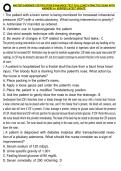
MASTER GARDENER CERTIFICATION EXAM MOCK TEST FULL-LENGTH PRACTICE EXAM WITH
ANSWERS A+ VERIFIED LATEST UPDATE
1. The patient with a brain tumor is being monitored for increased intracranial
pressure (ICP) with a ventriculostomy. What nursing intervention is priority?
A. Administer IV mannitol as ordered.
B. Ventilator use to hyperoxygenate the patient.
C. Use strict aseptic technique with dressing changes.
D. Be aware of changes in ICP related to cerebrospinal fluid leaks.: C
The priority nursing intervention is to use strict aseptic technique with dressing changes and any handling of the
insertion site to prevent the serious complication of infection. IV mannitol or hypertonic saline will be administered
as ordered for increased ICP. Ventilators may be used to maintain oxygenation. CSF leaks may cause inaccurate ICP
readings, or CSF may be drained to decrease ICP, but strict aseptic technique to prevent infection is the nurse's priority
of care.
2. A patient is hospitalized for a frontal skull fracture from a blunt force head
injury. Thin bloody fluid is draining from the patient's nose. What action by
the nurse is most appropriate?
A. Place packing in the patient's nares.
B. Apply a loose gauze pad under the patient's nose.
C. Place the patient in a modified Trendelenburg position.
D. Ask the patient to gently blow the nose to clear the drainage.: B
Cerebrospinal fluid (CSF) rhinorrhea (clear or bloody drainage from the nose) may occur with a frontal skull fracture.
A loose collection pad may be placed under the nose, and if thin bloody fluid is present, the blood will coalesce, and
a yellow halo will form if CSF is present. If clear drainage is present, testing for glucose would indicate the presence
of CSF. Mixed blood and CSF will test positive for glucose because blood contains glucose. If CSF rhinorrhea occurs,
the nurse should inform the provider immediately. The head of the bed may be raised to decrease the CSF pressure
so that a tear can seal. The nurse should not place packing in the nasal cavity, and the patient should not sneeze or
blow the nose.
3. A patient is diagnosed with diabetes insipidus after transsphenoidal resec-
tion of a pituitary adenoma. What should the nurse consider as a sign of
improvement?
A. Serum sodium of 120 mEq/L
B. Urine specific gravity of 1.001
C. Fasting blood glucose of 80 mg/dL
D. Serum osmolality of 290 mOsm/kg: D
, MASTER GARDENER CERTIFICATION EXAM MOCK TEST FULL-LENGTH PRACTICE EXAM WITH
ANSWERS A+ VERIFIED LATEST UPDATE
Laboratory findings in diabetes insipidus include elevated serum osmolality and serum sodium and decreased urine
specific gravity. Normal serum osmolality is 285 to 295 mOsm/kg, normal serum sodium is 136 to 145 mEq/L, and
normal specific gravity is 1.005 to 1.030. High blood glucose levels occur with diabetes.
4. The provider orders intracranial pressure (ICP) readings every hour for a
patient with a traumatic brain injury from a motor vehicle crash. The patient's
ICP reading is 21 mm Hg. It is most important for the nurse to take which
action?
A. Document the ICP reading in the chart.
B. Determine if the patient has a headache.
C. Assess the patient's LOC.
D. Position the patient with head elevated 60 degrees.: C
The patient has an increased ICP (normal ICP ranges from 5 to 15 mm Hg). The most sensitive and reliable indicator
of neurologic status is level of consciousness. The Glasgow Coma Scale may be used to determine the degree of
impaired consciousness.
5. A patient has a systemic BP of 120/60 mm Hg and an ICP of 24 mm Hg.
After calculating the patient's cerebral perfusion pressure (CPP), how does the
nurse interpret the results?
A. High blood flow to the brain
B. Normal intracranial pressure
C. Impaired blood flow to the brain
D. Adequate autoregulation of blood flow: C
Normal CPP is 60 to 100 mm Hg. The CPP is calculated with mean arterial pressure (MAP) minus ICP. MAP = SBP +
2 (DBP)/ 3: 120 mm Hg + 2 (60 mm Hg)/3 = 80 mm Hg. MAP − ICP: 80 mm Hg − 24 mm Hg = 56 mm Hg CPP. The
decreased CPP indicates that there is impaired cerebral blood flow and that autoregulation is impaired. Because the
ICP is 24 mm Hg, treatment is required.
6. A patient with suspected bacterial meningitis just had a lumbar puncture in
which cerebrospinal fluid was obtained for culture. Which medication should
the nurse give first?
A. Codeine
B. Phenytoin
C. Ceftriaxone
D. Acetaminophen: C
, MASTER GARDENER CERTIFICATION EXAM MOCK TEST FULL-LENGTH PRACTICE EXAM WITH
ANSWERS A+ VERIFIED LATEST UPDATE
Bacterial meningitis is a medical emergency. When meningitis is suspected, antibiotic therapy (e.g., ceftriaxone)
is started immediately after the collection of specimens for cultures and even before the diagnosis is confirmed.
Dexamethasone may be given before or with the first dose of antibiotics. The nurse should collaborate with the health
care provider to manage the headache (with codeine), fever (with acetaminophen), and seizures (with phenytoin).
7. The nurse is caring for a patient admitted to the hospital with a head
injury who requires frequent neurologic assessment. Which components are
assessed using the Glasgow Coma Scale (GCS)? (Select all that apply.)
A. Judgment
B. Eye opening
C. Abstract reasoning
D. Best motor response
E. Best verbal response
F. Cranial nerve function: B D E
The three dimensions of the GCS are eye opening, best verbal response, and best motor response. Judgment, abstract
reasoning, and cranial nerve function are not components of the GCS.
8. What nursing intervention should be implemented for a patient with in-
creased intracranial pressure (ICP)?
A. Monitor fluid and electrolyte status carefully.
B. Position the patient in a high Fowler's position.
C. Administer vasoconstrictors to maintain cerebral perfusion.
D. Maintain physical restraints to prevent episodes of agitation.: A
Fluid and electrolyte changes can have an adverse ettect on ICP and must be monitored vigilantly. The head of the
patient's bed should be kept at 30 degrees in most circumstances, and physical restraints are not applied unless
absolutely necessary. Vasoconstrictors are not typically used in the treatment of ICP.
9. The nurse is caring for a patient admitted with a subdural hematoma after a
motor vehicle accident. What change in vital signs would the nurse interpret
as a manifestation of increased intracranial pressure (ICP)?
A. Tachypnea
B. Bradycardia
C. Hypotension
D. Narrowing pulse pressure: B
Bradycardia could indicate increased ICP. Changes in vital signs (known as Cushing's triad) occur with increased ICP.
ANSWERS A+ VERIFIED LATEST UPDATE
1. The patient with a brain tumor is being monitored for increased intracranial
pressure (ICP) with a ventriculostomy. What nursing intervention is priority?
A. Administer IV mannitol as ordered.
B. Ventilator use to hyperoxygenate the patient.
C. Use strict aseptic technique with dressing changes.
D. Be aware of changes in ICP related to cerebrospinal fluid leaks.: C
The priority nursing intervention is to use strict aseptic technique with dressing changes and any handling of the
insertion site to prevent the serious complication of infection. IV mannitol or hypertonic saline will be administered
as ordered for increased ICP. Ventilators may be used to maintain oxygenation. CSF leaks may cause inaccurate ICP
readings, or CSF may be drained to decrease ICP, but strict aseptic technique to prevent infection is the nurse's priority
of care.
2. A patient is hospitalized for a frontal skull fracture from a blunt force head
injury. Thin bloody fluid is draining from the patient's nose. What action by
the nurse is most appropriate?
A. Place packing in the patient's nares.
B. Apply a loose gauze pad under the patient's nose.
C. Place the patient in a modified Trendelenburg position.
D. Ask the patient to gently blow the nose to clear the drainage.: B
Cerebrospinal fluid (CSF) rhinorrhea (clear or bloody drainage from the nose) may occur with a frontal skull fracture.
A loose collection pad may be placed under the nose, and if thin bloody fluid is present, the blood will coalesce, and
a yellow halo will form if CSF is present. If clear drainage is present, testing for glucose would indicate the presence
of CSF. Mixed blood and CSF will test positive for glucose because blood contains glucose. If CSF rhinorrhea occurs,
the nurse should inform the provider immediately. The head of the bed may be raised to decrease the CSF pressure
so that a tear can seal. The nurse should not place packing in the nasal cavity, and the patient should not sneeze or
blow the nose.
3. A patient is diagnosed with diabetes insipidus after transsphenoidal resec-
tion of a pituitary adenoma. What should the nurse consider as a sign of
improvement?
A. Serum sodium of 120 mEq/L
B. Urine specific gravity of 1.001
C. Fasting blood glucose of 80 mg/dL
D. Serum osmolality of 290 mOsm/kg: D
, MASTER GARDENER CERTIFICATION EXAM MOCK TEST FULL-LENGTH PRACTICE EXAM WITH
ANSWERS A+ VERIFIED LATEST UPDATE
Laboratory findings in diabetes insipidus include elevated serum osmolality and serum sodium and decreased urine
specific gravity. Normal serum osmolality is 285 to 295 mOsm/kg, normal serum sodium is 136 to 145 mEq/L, and
normal specific gravity is 1.005 to 1.030. High blood glucose levels occur with diabetes.
4. The provider orders intracranial pressure (ICP) readings every hour for a
patient with a traumatic brain injury from a motor vehicle crash. The patient's
ICP reading is 21 mm Hg. It is most important for the nurse to take which
action?
A. Document the ICP reading in the chart.
B. Determine if the patient has a headache.
C. Assess the patient's LOC.
D. Position the patient with head elevated 60 degrees.: C
The patient has an increased ICP (normal ICP ranges from 5 to 15 mm Hg). The most sensitive and reliable indicator
of neurologic status is level of consciousness. The Glasgow Coma Scale may be used to determine the degree of
impaired consciousness.
5. A patient has a systemic BP of 120/60 mm Hg and an ICP of 24 mm Hg.
After calculating the patient's cerebral perfusion pressure (CPP), how does the
nurse interpret the results?
A. High blood flow to the brain
B. Normal intracranial pressure
C. Impaired blood flow to the brain
D. Adequate autoregulation of blood flow: C
Normal CPP is 60 to 100 mm Hg. The CPP is calculated with mean arterial pressure (MAP) minus ICP. MAP = SBP +
2 (DBP)/ 3: 120 mm Hg + 2 (60 mm Hg)/3 = 80 mm Hg. MAP − ICP: 80 mm Hg − 24 mm Hg = 56 mm Hg CPP. The
decreased CPP indicates that there is impaired cerebral blood flow and that autoregulation is impaired. Because the
ICP is 24 mm Hg, treatment is required.
6. A patient with suspected bacterial meningitis just had a lumbar puncture in
which cerebrospinal fluid was obtained for culture. Which medication should
the nurse give first?
A. Codeine
B. Phenytoin
C. Ceftriaxone
D. Acetaminophen: C
, MASTER GARDENER CERTIFICATION EXAM MOCK TEST FULL-LENGTH PRACTICE EXAM WITH
ANSWERS A+ VERIFIED LATEST UPDATE
Bacterial meningitis is a medical emergency. When meningitis is suspected, antibiotic therapy (e.g., ceftriaxone)
is started immediately after the collection of specimens for cultures and even before the diagnosis is confirmed.
Dexamethasone may be given before or with the first dose of antibiotics. The nurse should collaborate with the health
care provider to manage the headache (with codeine), fever (with acetaminophen), and seizures (with phenytoin).
7. The nurse is caring for a patient admitted to the hospital with a head
injury who requires frequent neurologic assessment. Which components are
assessed using the Glasgow Coma Scale (GCS)? (Select all that apply.)
A. Judgment
B. Eye opening
C. Abstract reasoning
D. Best motor response
E. Best verbal response
F. Cranial nerve function: B D E
The three dimensions of the GCS are eye opening, best verbal response, and best motor response. Judgment, abstract
reasoning, and cranial nerve function are not components of the GCS.
8. What nursing intervention should be implemented for a patient with in-
creased intracranial pressure (ICP)?
A. Monitor fluid and electrolyte status carefully.
B. Position the patient in a high Fowler's position.
C. Administer vasoconstrictors to maintain cerebral perfusion.
D. Maintain physical restraints to prevent episodes of agitation.: A
Fluid and electrolyte changes can have an adverse ettect on ICP and must be monitored vigilantly. The head of the
patient's bed should be kept at 30 degrees in most circumstances, and physical restraints are not applied unless
absolutely necessary. Vasoconstrictors are not typically used in the treatment of ICP.
9. The nurse is caring for a patient admitted with a subdural hematoma after a
motor vehicle accident. What change in vital signs would the nurse interpret
as a manifestation of increased intracranial pressure (ICP)?
A. Tachypnea
B. Bradycardia
C. Hypotension
D. Narrowing pulse pressure: B
Bradycardia could indicate increased ICP. Changes in vital signs (known as Cushing's triad) occur with increased ICP.