

Algemene psychologie
Lessen + ppt
Inleiding
Examenleerstof: slides + hoorcollege (boek doorlezen; al dat niet aan bod komt in colleges niet
kennen). Niet elke data en naam die aan bod komt kennen; basis wel (zie wat in introductie ppt).
Aanbevolen: oefenboek (maar is geen verplichte leerstof).
Practica: online oefeningen, zelfstandig (wel binnen bepaalde deadline!).
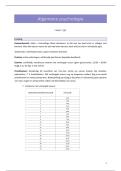
Examen: schriftelijk, meerkeuze examen met verhoogde cesuur (geen giscorrectie). 12/20 = 10/20!
Krijgt 2 uur de tijd. Is niet online!
Proefexamen: donderdag 30 november van 11u-13u, online via canvas toetsen (bij modules;
opdrachten, 1e 6 hoofdstukken. Zelf verhoogde cesuur nog op toepassen nadien! Dag erna wordt
proefexamen on campus besproken. Nabespreking op vrijdag 1 december (= interactief), geen opname
van maar vragen en antwoorden nadien wel beschikbaar op canvas.
g Eindscore met verhoogde cesuur:
1
,Inhoudstafel
1. Hoofdstuk 1: Wat is psychologie?
1.1. Wat is psychologie…
1.1.1.Niet?
1.1.2.Wel?
1.2. Geschiedenis
1.2.1.Ontwikkelingen in de filosofie
1.2.1.1. Oude-Griekse filosofen 500-400 v.C.
1.2.1.2. Wetenschappelijke revolutie 16e eeuw
1.2.1.3. Rationalisme 17e eeuw
1.2.1.4. Empirisme 17e-18e eeuw
1.2.1.5. Intermezzo: nature vs. nurture
1.2.2.Evolutietheorie
1.2.2.1. 19e eeuw: Darwin
1.3. De beginjaren van de psychologie
1.3.1.Psychologische scholen
1.3.1.1. Structuralisme
1.3.1.2. Functionalisme
1.3.1.3. Gestaltpsychologie
1.3.1.4. Psychoanalyse
1.3.1.5. Behaviorisme
1.4. Hedendaagse psychologie
1.4.1.Biopsychosociale benadering
1.5. Onderzoeksmethoden
1.5.1.Theorie
1.5.2.Hypothese
1.5.3.Onderzoek
1.5.3.1. Onderzoeksmethoden
1.5.3.1.1. Beschrijvend
g Naturalistische observatie
g Survey
g Test en gevalsstudies
g Kwalitatief onderzoek
1.5.3.1.2. Correlationeel
1.5.3.1.3. Experimenteel
g Validiteit
g Ethiek bij onderzoek
1.5.3.2. Hypothese ondersteunt door data
1.5.3.3. Hypothese weerlegd door data
1.6. Praktijk wetenschapper
1.7. Conclusie
2
,2. Hoofdstuk 2: Conditionering en leren
2.1. Inleiding
2.2. Klassieke conditionering
2.2.1.Wat is klassieke conditionering?
2.2.1.1. Pavlov
2.2.1.2. Andere voorbeelden
2.2.1.3. Reclame
2.2.2.Kenmerken van klassieke conditionering
2.2.2.1. Voorbeeld
2.2.2.2. Tegenreactie: Little Peter
2.2.3.Problemen behavioristische interpretatie
2.2.3.1. Contiguïteit
2.2.3.2. Problemen
2.2.3.2.1. Leren zonder coniguïteit
2.2.3.2.2. Biologische predispositie
2.2.3.2.3. Blokkering
2.2.4.Conclusie
2.3. Operante conditionering
2.3.1.Thorndike’s puzzlebox (1898)
2.3.2.Skinner
2.3.2.1. Skinnerbox
2.3.2.1.1. Bekrachtiging
g Shaping
g Extinctie
g Differentiële bekrachtiging
g Stimulusgeneralisatie
g Stimulusdiscrimenatie – en controle
g Primaire- vs secundaire bekrachtigers
g Continue- vs partiële bekrachtiging
g Weerstand tegen extinctie
2.3.2.1.2. Straf (punishment)
g Negatieve straf
g Voorwaarden voor een effectieve straf
g Pendelkooi (shuttle box): Mowrer’s tweefactorentheorie (1939)
g Vermijdingsgedrag
g Aangeleerde hulpeloosheid
2.3.3.Observerend leren
2.3.3.1. Albert Bandura
2.3.3.1.1. Bob-doll experiment (Bandura, 1965)
3
, 3. Hoofdstuk 3: Emotie en motivatie
3.1. Deel 1: Emotie
3.1.1.Emotietheorieën
3.1.1.1. James–Lange theorie (einde 19e eeuw)
3.1.1.2. Cannon–Bard theorie (begin 20e eeuw)
3.1.1.3. Cognitieve appraisel theorie Lazarus (’60-’70)
3.1.1.4. Wie heeft gelijk?
3.1.1.4.1. Het emotionele brein
g Twee reacties
g Amygdala
3.1.2.De lichamelijke component van emoties
3.1.2.1. Dimensies
3.1.2.1.1. Zenuwstelsel
3.1.2.1.2. Fight-flight-or-freeze response
3.1.2.1.3. Leugendetector
3.1.2.1.4. Emotie specifieke respons
3.1.3.Emotionele expressie
3.1.3.1. Nature vs. nurture
3.1.3.1.1. Darwin (1872)
3.1.3.1.2. Ekamn (1973)
3.1.3.2. Gezichtsspieren
3.1.3.2.1. Authentiek vs. gespeeld?
3.1.3.2.1.1. Culturele uitingsregels
3.2. Deel 2: Motivatie
3.2.1.Motivatietheorieën
3.2.1.1. Behoeften
3.2.1.1.1. Homeostase
3.2.1.1.2. Behoeftentheorieën
g Drifttheorie Hull (1943)
g Instincttheorie (begin 20e eeuw)
g Opwindingstheorie (begin 20e eeuw)
g Theorie van Maslow (1943)
3.2.1.2. Doelen
3.2.1.2.1. Doelentheorieën
g Intrinsieke en extrinsieke motivatie
g Goal-setting theory (Locke & Latham, 1990)
3.2.2.Conflicterende motieven
g Marshmellow experiment
3.2.2.1. Prestatiemotivatie
3.2.2.1.1. Prestatiemotivatie (Elliot, 1997)
g Taakmotivatie
g Egodoelen
3.2.2.1.2. Egodoelen
4
Lessen + ppt
Inleiding
Examenleerstof: slides + hoorcollege (boek doorlezen; al dat niet aan bod komt in colleges niet
kennen). Niet elke data en naam die aan bod komt kennen; basis wel (zie wat in introductie ppt).
Aanbevolen: oefenboek (maar is geen verplichte leerstof).
Practica: online oefeningen, zelfstandig (wel binnen bepaalde deadline!).
Examen: schriftelijk, meerkeuze examen met verhoogde cesuur (geen giscorrectie). 12/20 = 10/20!
Krijgt 2 uur de tijd. Is niet online!
Proefexamen: donderdag 30 november van 11u-13u, online via canvas toetsen (bij modules;
opdrachten, 1e 6 hoofdstukken. Zelf verhoogde cesuur nog op toepassen nadien! Dag erna wordt
proefexamen on campus besproken. Nabespreking op vrijdag 1 december (= interactief), geen opname
van maar vragen en antwoorden nadien wel beschikbaar op canvas.
g Eindscore met verhoogde cesuur:
1
,Inhoudstafel
1. Hoofdstuk 1: Wat is psychologie?
1.1. Wat is psychologie…
1.1.1.Niet?
1.1.2.Wel?
1.2. Geschiedenis
1.2.1.Ontwikkelingen in de filosofie
1.2.1.1. Oude-Griekse filosofen 500-400 v.C.
1.2.1.2. Wetenschappelijke revolutie 16e eeuw
1.2.1.3. Rationalisme 17e eeuw
1.2.1.4. Empirisme 17e-18e eeuw
1.2.1.5. Intermezzo: nature vs. nurture
1.2.2.Evolutietheorie
1.2.2.1. 19e eeuw: Darwin
1.3. De beginjaren van de psychologie
1.3.1.Psychologische scholen
1.3.1.1. Structuralisme
1.3.1.2. Functionalisme
1.3.1.3. Gestaltpsychologie
1.3.1.4. Psychoanalyse
1.3.1.5. Behaviorisme
1.4. Hedendaagse psychologie
1.4.1.Biopsychosociale benadering
1.5. Onderzoeksmethoden
1.5.1.Theorie
1.5.2.Hypothese
1.5.3.Onderzoek
1.5.3.1. Onderzoeksmethoden
1.5.3.1.1. Beschrijvend
g Naturalistische observatie
g Survey
g Test en gevalsstudies
g Kwalitatief onderzoek
1.5.3.1.2. Correlationeel
1.5.3.1.3. Experimenteel
g Validiteit
g Ethiek bij onderzoek
1.5.3.2. Hypothese ondersteunt door data
1.5.3.3. Hypothese weerlegd door data
1.6. Praktijk wetenschapper
1.7. Conclusie
2
,2. Hoofdstuk 2: Conditionering en leren
2.1. Inleiding
2.2. Klassieke conditionering
2.2.1.Wat is klassieke conditionering?
2.2.1.1. Pavlov
2.2.1.2. Andere voorbeelden
2.2.1.3. Reclame
2.2.2.Kenmerken van klassieke conditionering
2.2.2.1. Voorbeeld
2.2.2.2. Tegenreactie: Little Peter
2.2.3.Problemen behavioristische interpretatie
2.2.3.1. Contiguïteit
2.2.3.2. Problemen
2.2.3.2.1. Leren zonder coniguïteit
2.2.3.2.2. Biologische predispositie
2.2.3.2.3. Blokkering
2.2.4.Conclusie
2.3. Operante conditionering
2.3.1.Thorndike’s puzzlebox (1898)
2.3.2.Skinner
2.3.2.1. Skinnerbox
2.3.2.1.1. Bekrachtiging
g Shaping
g Extinctie
g Differentiële bekrachtiging
g Stimulusgeneralisatie
g Stimulusdiscrimenatie – en controle
g Primaire- vs secundaire bekrachtigers
g Continue- vs partiële bekrachtiging
g Weerstand tegen extinctie
2.3.2.1.2. Straf (punishment)
g Negatieve straf
g Voorwaarden voor een effectieve straf
g Pendelkooi (shuttle box): Mowrer’s tweefactorentheorie (1939)
g Vermijdingsgedrag
g Aangeleerde hulpeloosheid
2.3.3.Observerend leren
2.3.3.1. Albert Bandura
2.3.3.1.1. Bob-doll experiment (Bandura, 1965)
3
, 3. Hoofdstuk 3: Emotie en motivatie
3.1. Deel 1: Emotie
3.1.1.Emotietheorieën
3.1.1.1. James–Lange theorie (einde 19e eeuw)
3.1.1.2. Cannon–Bard theorie (begin 20e eeuw)
3.1.1.3. Cognitieve appraisel theorie Lazarus (’60-’70)
3.1.1.4. Wie heeft gelijk?
3.1.1.4.1. Het emotionele brein
g Twee reacties
g Amygdala
3.1.2.De lichamelijke component van emoties
3.1.2.1. Dimensies
3.1.2.1.1. Zenuwstelsel
3.1.2.1.2. Fight-flight-or-freeze response
3.1.2.1.3. Leugendetector
3.1.2.1.4. Emotie specifieke respons
3.1.3.Emotionele expressie
3.1.3.1. Nature vs. nurture
3.1.3.1.1. Darwin (1872)
3.1.3.1.2. Ekamn (1973)
3.1.3.2. Gezichtsspieren
3.1.3.2.1. Authentiek vs. gespeeld?
3.1.3.2.1.1. Culturele uitingsregels
3.2. Deel 2: Motivatie
3.2.1.Motivatietheorieën
3.2.1.1. Behoeften
3.2.1.1.1. Homeostase
3.2.1.1.2. Behoeftentheorieën
g Drifttheorie Hull (1943)
g Instincttheorie (begin 20e eeuw)
g Opwindingstheorie (begin 20e eeuw)
g Theorie van Maslow (1943)
3.2.1.2. Doelen
3.2.1.2.1. Doelentheorieën
g Intrinsieke en extrinsieke motivatie
g Goal-setting theory (Locke & Latham, 1990)
3.2.2.Conflicterende motieven
g Marshmellow experiment
3.2.2.1. Prestatiemotivatie
3.2.2.1.1. Prestatiemotivatie (Elliot, 1997)
g Taakmotivatie
g Egodoelen
3.2.2.1.2. Egodoelen
4


