

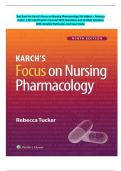
Test Bank for Karch’s Focus on Nursing Pharmacology 9th Edition – Rebecca
Tucker | All 1-60 Chapters Covered With Questions And Verified Solutions
With Detailed Rationales And Case Study.
, TABLE OF CONTENT
Part 1: Introduction to Nursing Pharmacology
• Chapter 1: Introduction to Drugs
• Chapter 2: Drugs and the Body
• Chapter 3: Toxic Effects of Drugs
• Chapter 4: The Nursing Process in Drug Therapy and Patient Safety
• Chapter 5: Dosage Calculations
• Chapter 6: Challenges to Effective Drug Therapy
Part 2: Chemotherapeutic Agents
• Chapter 7: Introduction to Cell Physiology
• Chapter 8: Anti-infective Agents
• Chapter 9: Antibiotics
• Chapter 10: Antiviral Agents
• Chapter 11: Antifungal Agents
• Chapter 12: Antiprotozoal Agents
• Chapter 13: Anthelmintic Agents
• Chapter 14: Antineoplastic Agents
Part 3: Drugs Acting on the Immune System
• Chapter 15: Introduction to the Immune Response and Inflammation
• Chapter 16: Anti-inflammatory, Antiarthritis, and Related Agents
• Chapter 17: Immune Modulators
• Chapter 18: Vaccines and Sera
Part 4: Drugs Acting on the Central and Peripheral Nervous Systems
• Chapter 19: Introduction to Nerves and the Nervous System
• Chapter 20: Anxiolytic and Hypnotic Agents
, • Chapter 21: Antidepressant Agents
• Chapter 22: Psychotherapeutic Agents
• Chapter 23: Antiseizure Agents
• Chapter 24: Antiparkinsonism Agents
• Chapter 25: Muscle Relaxants
• Chapter 26: Opioid Agonists, Opioid Antagonists, and Antimigraine Agents
• Chapter 27: General and Local Anesthetic Agents
• Chapter 28: Neuromuscular Junction Blocking Agents
Part 5: Drugs Acting on the Autonomic Nervous System
• Chapter 29: Introduction to the Autonomic Nervous System
• Chapter 30: Adrenergic Agonists
• Chapter 31: Adrenergic Antagonists
• Chapter 32: Cholinergic Agonists
• Chapter 33: Anticholinergic Agents
Part 6: Drugs Acting on the Endocrine System
• Chapter 34: Introduction to the Endocrine System
• Chapter 35: Hypothalamic and Pituitary Agents
• Chapter 36: Adrenocortical Agents
• Chapter 37: Thyroid and Parathyroid Agents
• Chapter 38: Agents to Control Blood Glucose Levels
Part 7: Drugs Acting on the Reproductive System
• Chapter 39: Introduction to the Reproductive System
• Chapter 40: Drugs Affecting the Female Reproductive System
• Chapter 41: Drugs Affecting the Male Reproductive System
Part 8: Drugs Acting on the Cardiovascular System
• Chapter 42: Introduction to the Cardiovascular System
• Chapter 43: Drugs Affecting Blood Pressure
• Chapter 44: Agents for Treating Heart Failure
• Chapter 45: Antiarrhythmic Agents
• Chapter 46: Antianginal Agents
• Chapter 47: Lipid-Lowering Agents
, • Chapter 48: Drugs Affecting Blood Coagulation
• Chapter 49: Drugs Used to Treat Anemias
Part 9: Drugs Acting on the Renal System
• Chapter 50: Introduction to the Renal System
• Chapter 51: Diuretic Agents
• Chapter 52: Drugs Affecting the Urinary Tract and the Bladder
Part 10: Drugs Acting on the Respiratory System
• Chapter 53: Introduction to the Respiratory System
• Chapter 54: Drugs Acting on the Upper Respiratory Tract
• Chapter 55: Drugs Acting on the Lower Respiratory Tract
Part 11: Drugs Acting on the Gastrointestinal System
• Chapter 56: Introduction to the Gastrointestinal System
• Chapter 57: Drugs Affecting Gastrointestinal Secretions
• Chapter 58: Drugs Affecting Gastrointestinal Motility
• Chapter 59: Antiemetic Agents
• Chapter 60: Vitamin, Minerals, and Complementary/Alternative Medications
Chapter 1: Introduction to Drugs
Multiple Choice Questions
Question 1
A drug is best defined as:
A. Any chemical substance used in food
B. Any substance that alters body function for therapeutic purposes
Tucker | All 1-60 Chapters Covered With Questions And Verified Solutions
With Detailed Rationales And Case Study.
, TABLE OF CONTENT
Part 1: Introduction to Nursing Pharmacology
• Chapter 1: Introduction to Drugs
• Chapter 2: Drugs and the Body
• Chapter 3: Toxic Effects of Drugs
• Chapter 4: The Nursing Process in Drug Therapy and Patient Safety
• Chapter 5: Dosage Calculations
• Chapter 6: Challenges to Effective Drug Therapy
Part 2: Chemotherapeutic Agents
• Chapter 7: Introduction to Cell Physiology
• Chapter 8: Anti-infective Agents
• Chapter 9: Antibiotics
• Chapter 10: Antiviral Agents
• Chapter 11: Antifungal Agents
• Chapter 12: Antiprotozoal Agents
• Chapter 13: Anthelmintic Agents
• Chapter 14: Antineoplastic Agents
Part 3: Drugs Acting on the Immune System
• Chapter 15: Introduction to the Immune Response and Inflammation
• Chapter 16: Anti-inflammatory, Antiarthritis, and Related Agents
• Chapter 17: Immune Modulators
• Chapter 18: Vaccines and Sera
Part 4: Drugs Acting on the Central and Peripheral Nervous Systems
• Chapter 19: Introduction to Nerves and the Nervous System
• Chapter 20: Anxiolytic and Hypnotic Agents
, • Chapter 21: Antidepressant Agents
• Chapter 22: Psychotherapeutic Agents
• Chapter 23: Antiseizure Agents
• Chapter 24: Antiparkinsonism Agents
• Chapter 25: Muscle Relaxants
• Chapter 26: Opioid Agonists, Opioid Antagonists, and Antimigraine Agents
• Chapter 27: General and Local Anesthetic Agents
• Chapter 28: Neuromuscular Junction Blocking Agents
Part 5: Drugs Acting on the Autonomic Nervous System
• Chapter 29: Introduction to the Autonomic Nervous System
• Chapter 30: Adrenergic Agonists
• Chapter 31: Adrenergic Antagonists
• Chapter 32: Cholinergic Agonists
• Chapter 33: Anticholinergic Agents
Part 6: Drugs Acting on the Endocrine System
• Chapter 34: Introduction to the Endocrine System
• Chapter 35: Hypothalamic and Pituitary Agents
• Chapter 36: Adrenocortical Agents
• Chapter 37: Thyroid and Parathyroid Agents
• Chapter 38: Agents to Control Blood Glucose Levels
Part 7: Drugs Acting on the Reproductive System
• Chapter 39: Introduction to the Reproductive System
• Chapter 40: Drugs Affecting the Female Reproductive System
• Chapter 41: Drugs Affecting the Male Reproductive System
Part 8: Drugs Acting on the Cardiovascular System
• Chapter 42: Introduction to the Cardiovascular System
• Chapter 43: Drugs Affecting Blood Pressure
• Chapter 44: Agents for Treating Heart Failure
• Chapter 45: Antiarrhythmic Agents
• Chapter 46: Antianginal Agents
• Chapter 47: Lipid-Lowering Agents
, • Chapter 48: Drugs Affecting Blood Coagulation
• Chapter 49: Drugs Used to Treat Anemias
Part 9: Drugs Acting on the Renal System
• Chapter 50: Introduction to the Renal System
• Chapter 51: Diuretic Agents
• Chapter 52: Drugs Affecting the Urinary Tract and the Bladder
Part 10: Drugs Acting on the Respiratory System
• Chapter 53: Introduction to the Respiratory System
• Chapter 54: Drugs Acting on the Upper Respiratory Tract
• Chapter 55: Drugs Acting on the Lower Respiratory Tract
Part 11: Drugs Acting on the Gastrointestinal System
• Chapter 56: Introduction to the Gastrointestinal System
• Chapter 57: Drugs Affecting Gastrointestinal Secretions
• Chapter 58: Drugs Affecting Gastrointestinal Motility
• Chapter 59: Antiemetic Agents
• Chapter 60: Vitamin, Minerals, and Complementary/Alternative Medications
Chapter 1: Introduction to Drugs
Multiple Choice Questions
Question 1
A drug is best defined as:
A. Any chemical substance used in food
B. Any substance that alters body function for therapeutic purposes


