

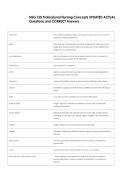
NSG 130 Professional Nursing Concepts UPDATED ACTUAL
Questions and CORRECT Answers
autonomy allows healthcare teams to respect and support a patient's decision to accept or
refuse life sustaining treatments.
ethics formal process of intentionally and critically analyzing with clarity ones moral
judgements. Goal of course of ethics is to enable you to make reliable moral
judgements as a professional.
nonmaleficence selecting interventions that will cause the least amount of harm to achieve the
beneficial outcome- DUTY TO DO NO HARM
beneficence actions guided by compassion
justice leads us to ensure that care is provided on a fair and equal basis regardless of
patients social or financial status
Advocate a person who publicly supports or recommends a particular cause or policy
altruism the belief in or practice of disinterested and selfless oncern for the well being of
others
belief an acceptance that a statement is true or that something exists
code of ethics integrity, objectivity, professional competence and due care; confidentiality,
professional behavior
human dignity belief that all people hold a special value that is tied solely to their humanity.
Nothing to do with class, race, gender, religion or abilities. Only that they are
human.
integrity quality of being honest and having strong moral principles
morality principles concerning the distinction between right and wrong or good and bad
behavior.
Social Justice the view that everyone deserves equal economic, political, social rights and
opportunities
values individual beliefs that motivate people to act one way or another
ethical decision making process 6 step 1. define problem 2. seek resources 3. brainstorm for potential solutions 4.
evaluate alternatives 5. make your decision and implement it 6. evaluate the
decision
, 6 Rights right patient, drug, dosage, time, route and documentation
3 checks checking rights against the MAR, outside room, at bedside
quality research thorough, accurate origional and relevant
client preferences what they want
clinical expertise basic skills of clinical practice as well as the experience of the individual practice
background questions general knowledge
foreground questions ask for specific knowledge to inform clinical decisions or actions
evidence based nursing acquire-search for answers
appraise- is it high quality
apply- decisions
assess- evaluate
evidence based practice providing holistic quality care based on the most up to date research and
knowledge rather than traditional methods, advice from colleagues or personal
beliefs
Informed consent process in which a health care provider educates a patient about the risks benefits
and alternatives of a given procedure or intervention
PICOT 1. Population/pt. problem
2. Intervention-what do you plan to do
3. Comparison-alternative plan
4. Outcome-what outcome do you seek
5. Time- time frame/ type of study
qualitative research a method of inquiry in which the researcher acting as data collection instrument,
seeks to answer questions about how or why a particular phenomenon occurs
research participant human subject experiment trial. A person who voluntarily participates in human
subject research
nurse-patient collaboration joint efforts between various independent team or groups
nurse-nurse collab mentoring support nurses professional and personal development as a mentor you have
many responsibilities including providing clinical education offering career
guidance critical model professionalism and leadership
shared governance shared decision making between the bedside nurses and nurse leaders includes
resources, nursing research/evidence based practice projects, new equipment
purchases and staffing. Promotes positive patient outcomes creates culture of
positivity and inclusion which benefits job satisfaction
it shifts focus from a top down management style to a collaborative focus from
the administrative team to the nurses providing care at the bedside
Questions and CORRECT Answers
autonomy allows healthcare teams to respect and support a patient's decision to accept or
refuse life sustaining treatments.
ethics formal process of intentionally and critically analyzing with clarity ones moral
judgements. Goal of course of ethics is to enable you to make reliable moral
judgements as a professional.
nonmaleficence selecting interventions that will cause the least amount of harm to achieve the
beneficial outcome- DUTY TO DO NO HARM
beneficence actions guided by compassion
justice leads us to ensure that care is provided on a fair and equal basis regardless of
patients social or financial status
Advocate a person who publicly supports or recommends a particular cause or policy
altruism the belief in or practice of disinterested and selfless oncern for the well being of
others
belief an acceptance that a statement is true or that something exists
code of ethics integrity, objectivity, professional competence and due care; confidentiality,
professional behavior
human dignity belief that all people hold a special value that is tied solely to their humanity.
Nothing to do with class, race, gender, religion or abilities. Only that they are
human.
integrity quality of being honest and having strong moral principles
morality principles concerning the distinction between right and wrong or good and bad
behavior.
Social Justice the view that everyone deserves equal economic, political, social rights and
opportunities
values individual beliefs that motivate people to act one way or another
ethical decision making process 6 step 1. define problem 2. seek resources 3. brainstorm for potential solutions 4.
evaluate alternatives 5. make your decision and implement it 6. evaluate the
decision
, 6 Rights right patient, drug, dosage, time, route and documentation
3 checks checking rights against the MAR, outside room, at bedside
quality research thorough, accurate origional and relevant
client preferences what they want
clinical expertise basic skills of clinical practice as well as the experience of the individual practice
background questions general knowledge
foreground questions ask for specific knowledge to inform clinical decisions or actions
evidence based nursing acquire-search for answers
appraise- is it high quality
apply- decisions
assess- evaluate
evidence based practice providing holistic quality care based on the most up to date research and
knowledge rather than traditional methods, advice from colleagues or personal
beliefs
Informed consent process in which a health care provider educates a patient about the risks benefits
and alternatives of a given procedure or intervention
PICOT 1. Population/pt. problem
2. Intervention-what do you plan to do
3. Comparison-alternative plan
4. Outcome-what outcome do you seek
5. Time- time frame/ type of study
qualitative research a method of inquiry in which the researcher acting as data collection instrument,
seeks to answer questions about how or why a particular phenomenon occurs
research participant human subject experiment trial. A person who voluntarily participates in human
subject research
nurse-patient collaboration joint efforts between various independent team or groups
nurse-nurse collab mentoring support nurses professional and personal development as a mentor you have
many responsibilities including providing clinical education offering career
guidance critical model professionalism and leadership
shared governance shared decision making between the bedside nurses and nurse leaders includes
resources, nursing research/evidence based practice projects, new equipment
purchases and staffing. Promotes positive patient outcomes creates culture of
positivity and inclusion which benefits job satisfaction
it shifts focus from a top down management style to a collaborative focus from
the administrative team to the nurses providing care at the bedside


