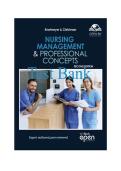
,NURSING MANAGEMENT & PROFESSIONAL CONCEPTS 2E
(OPEN RN) 2026 – 240+ HIGH-LEVEL MCQS, RATIONALES
& ANALYSIS" AUTHORED BY ERNSTMEYER & CHRISTMAN
| COMPLETE TEST PREP FOR MANAGEMENT OF CARE
Chapter 1 – Overview of Management & Professional Issues
1. Professional Responsibility & Advocacy
Question: A nurse is caring for a client with a complex medical history. Which action by
the nurse best demonstrates the "what" of nursing as defined by the American Nurses
Association (ANA)?
• A. Administering a scheduled antibiotic to a client with a confirmed infection.
• B. Teaching a family how to manage a client's response to chronic heart failure.
• C. Completing a head-to-toe assessment on a newly admitted patient.
• D. Clocking in on time to ensure adequate unit staffing levels.
Correct Answer: B
• Rationale: The ANA defines the "what" of nursing as the "diagnosis and
treatment of human responses" and advocacy. While options A and C are
technical nursing tasks, option B directly addresses the treatment of a human
response (the family's ability to manage a condition) and the promotion of health.
• Reference: Chapter 1.1: Overview – The "What" of Nursing.
2. Legal Scope of Practice
Question: A Registered Nurse (RN) from Illinois is working a travel assignment in
Wisconsin. Which document must the nurse consult to define the legal "how" of their
practice in this new setting?
• A. The Illinois Nurse Practice Act.
, • B. The American Nurses Association (ANA) Code of Ethics.
• C. The Wisconsin Nurse Practice Act.
• D. The hospital's mission and vision statement.
Correct Answer: C
• Rationale: RNs must legally follow the regulations set by the Nurse Practice Act
(NPA) of the state in which they are currently practicing. The state legislature
enacts the NPA to set standards for safe care within that specific jurisdiction.
• Reference: Chapter 1.1: State Boards of Nursing and Nurse Practice Acts.
3. Standards of Professional Performance
Question: A nurse identifies that a unit protocol for wound care is outdated and does
not align with recent clinical research. The nurse initiates a committee to review and
update the protocol. This behavior best aligns with which ANA standard?
• A. Standard 1: Assessment
• B. Standard 14: Scholarly Inquiry
• C. Standard 5: Implementation
• D. Standard 11: Leadership
Correct Answer: B
• Rationale: Standard 14 (Scholarly Inquiry) involves the nurse integrating
evidence and research findings into practice. While this is also a form of
leadership, the specific act of updating clinical protocols based on research is the
hallmark of scholarly inquiry and Evidence-Based Practice (EBP).
• Reference: Standards and Conceptual Approach; Chapter 1.1: Standards of
Practice.
4. Ethical Frameworks (Analysis)
Question: A nurse is faced with an ethical dilemma regarding a client's end-of-life care.
Which resource provides the primary ethical framework for nursing practice across all
roles and settings in the U.S.?
• A. The Patient's Bill of Rights.
• B. The ANA Code of Ethics for Nurses with Interpretive Statements.
• C. The State Board of Nursing Disciplinary Guidelines.
• D. The hospital's Ethics Committee bylaws.
Correct Answer: B
, • Rationale: The ANA Code of Ethics establishes the definitive ethical framework
for the nursing profession in the United States. It guides nurses in distinguishing
"right" from "wrong" and sets the ethical obligations for the profession.
• Reference: Chapter 1.1: Overview; Chapter 6.1: Ethical Practice Introduction.
5. Professionalism and Lifelong Learning
Question: Which activity by a nurse is considered a core component of
"professionalism" and maintaining competency as described in the ANA Standards?
• A. Working overtime twice a month to help with staffing shortages.
• B. Participating in a "Lifelong Learner" mindset by obtaining a specialty
certification.
• C. Following the facility's dress code policy strictly.
• D. Avoiding any clinical errors during a 12-month period.
Correct Answer: B
• Rationale: Professionalism in nursing requires maintaining active licensure and
a commitment to lifelong learning, such as acquiring certifications or staying
updated on EBP. This ensures the nurse remains "competent" as defined by the
ANA.
• Reference: Chapter 1.1: Overview; Chapter 11.6: Lifelong Learner.
6. The "How" of Nursing (Analysis)
Scenario: A nurse is reviewing a new facility protocol for the administration of high-alert
medications. According to the ANA, which of the following defines the "how" of nursing
practice in this context?
• A. The nurse’s personal experience with the medication.
• B. The state’s Nurse Practice Act and agency policies.
• C. The patient's preference for the timing of administration.
• D. The physician’s specific orders for the patient.
Correct Answer: B
• Rationale: The "how" of nursing practice is defined as the methods and manners
used to practice professionally, which includes the state’s Nurse Practice Act,
agency policies, protocols, and the ANA Standards of Practice.
• Reference: Chapter 1.1: Overview – The "How" of Nursing.
(OPEN RN) 2026 – 240+ HIGH-LEVEL MCQS, RATIONALES
& ANALYSIS" AUTHORED BY ERNSTMEYER & CHRISTMAN
| COMPLETE TEST PREP FOR MANAGEMENT OF CARE
Chapter 1 – Overview of Management & Professional Issues
1. Professional Responsibility & Advocacy
Question: A nurse is caring for a client with a complex medical history. Which action by
the nurse best demonstrates the "what" of nursing as defined by the American Nurses
Association (ANA)?
• A. Administering a scheduled antibiotic to a client with a confirmed infection.
• B. Teaching a family how to manage a client's response to chronic heart failure.
• C. Completing a head-to-toe assessment on a newly admitted patient.
• D. Clocking in on time to ensure adequate unit staffing levels.
Correct Answer: B
• Rationale: The ANA defines the "what" of nursing as the "diagnosis and
treatment of human responses" and advocacy. While options A and C are
technical nursing tasks, option B directly addresses the treatment of a human
response (the family's ability to manage a condition) and the promotion of health.
• Reference: Chapter 1.1: Overview – The "What" of Nursing.
2. Legal Scope of Practice
Question: A Registered Nurse (RN) from Illinois is working a travel assignment in
Wisconsin. Which document must the nurse consult to define the legal "how" of their
practice in this new setting?
• A. The Illinois Nurse Practice Act.
, • B. The American Nurses Association (ANA) Code of Ethics.
• C. The Wisconsin Nurse Practice Act.
• D. The hospital's mission and vision statement.
Correct Answer: C
• Rationale: RNs must legally follow the regulations set by the Nurse Practice Act
(NPA) of the state in which they are currently practicing. The state legislature
enacts the NPA to set standards for safe care within that specific jurisdiction.
• Reference: Chapter 1.1: State Boards of Nursing and Nurse Practice Acts.
3. Standards of Professional Performance
Question: A nurse identifies that a unit protocol for wound care is outdated and does
not align with recent clinical research. The nurse initiates a committee to review and
update the protocol. This behavior best aligns with which ANA standard?
• A. Standard 1: Assessment
• B. Standard 14: Scholarly Inquiry
• C. Standard 5: Implementation
• D. Standard 11: Leadership
Correct Answer: B
• Rationale: Standard 14 (Scholarly Inquiry) involves the nurse integrating
evidence and research findings into practice. While this is also a form of
leadership, the specific act of updating clinical protocols based on research is the
hallmark of scholarly inquiry and Evidence-Based Practice (EBP).
• Reference: Standards and Conceptual Approach; Chapter 1.1: Standards of
Practice.
4. Ethical Frameworks (Analysis)
Question: A nurse is faced with an ethical dilemma regarding a client's end-of-life care.
Which resource provides the primary ethical framework for nursing practice across all
roles and settings in the U.S.?
• A. The Patient's Bill of Rights.
• B. The ANA Code of Ethics for Nurses with Interpretive Statements.
• C. The State Board of Nursing Disciplinary Guidelines.
• D. The hospital's Ethics Committee bylaws.
Correct Answer: B
, • Rationale: The ANA Code of Ethics establishes the definitive ethical framework
for the nursing profession in the United States. It guides nurses in distinguishing
"right" from "wrong" and sets the ethical obligations for the profession.
• Reference: Chapter 1.1: Overview; Chapter 6.1: Ethical Practice Introduction.
5. Professionalism and Lifelong Learning
Question: Which activity by a nurse is considered a core component of
"professionalism" and maintaining competency as described in the ANA Standards?
• A. Working overtime twice a month to help with staffing shortages.
• B. Participating in a "Lifelong Learner" mindset by obtaining a specialty
certification.
• C. Following the facility's dress code policy strictly.
• D. Avoiding any clinical errors during a 12-month period.
Correct Answer: B
• Rationale: Professionalism in nursing requires maintaining active licensure and
a commitment to lifelong learning, such as acquiring certifications or staying
updated on EBP. This ensures the nurse remains "competent" as defined by the
ANA.
• Reference: Chapter 1.1: Overview; Chapter 11.6: Lifelong Learner.
6. The "How" of Nursing (Analysis)
Scenario: A nurse is reviewing a new facility protocol for the administration of high-alert
medications. According to the ANA, which of the following defines the "how" of nursing
practice in this context?
• A. The nurse’s personal experience with the medication.
• B. The state’s Nurse Practice Act and agency policies.
• C. The patient's preference for the timing of administration.
• D. The physician’s specific orders for the patient.
Correct Answer: B
• Rationale: The "how" of nursing practice is defined as the methods and manners
used to practice professionally, which includes the state’s Nurse Practice Act,
agency policies, protocols, and the ANA Standards of Practice.
• Reference: Chapter 1.1: Overview – The "How" of Nursing.