GNRS 558: EXAM 3 2025-2026|ACTUAL
300Qs&As|GRADED A+|AZUSA PACIFIC UNIVERSITY
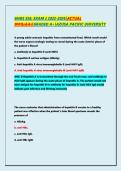
A young adult contracts hepatitis from contaminated food. Which result would
the nurse expect serologic testing to reveal during the acute (icteric) phase of
the patient's illness?
a. Antibody to hepatitis D (anti-HDV)
b. Hepatitis B surface antigen (HBsAg)
c. Anti-hepatitis A virus immunoglobulin G (anti-HAV IgG)
d. Anti-hepatitis A virus immunoglobulin M (anti-HAV IgM)
ANS: D Hepatitis A is transmitted through the oral-fecal route, and antibody to
HAV IgM appears during the acute phase of hepatitis A. The patient would not
have antigen for hepatitis B or antibody for hepatitis D. Anti-HAV IgG would
indicate past infection and lifelong immunity
The nurse evaluates that administration of hepatitis B vaccine to a healthy
patient was effective when the patient's later blood specimen reveals the
presence of
a. HBsAg.
b. anti-HBs.
c. anti-HBc IgG.
d. anti-HBc IgM.
,ANS: B The presence of surface antibody to hepatitis B (anti-HBs) is a marker
of a positive response to the vaccine or previous illness with hepatitis B. The
other laboratory values indicate current infection with hepatitis B.
A patient in the outpatient clinic is diagnosed with acute hepatitis C (HCV)
infection. Which action would the nurse take?
a. Schedule the patient for HCV genotype testing.
b. Administer the HCV vaccine and immune globulin.
c. Teach the patient about direct-acting antiviral treatment.
d. Explain that the infection will resolve over a few months.
ANS: A Genotyping of HCV has an important role in managing treatment and is
done before drug therapy is initiated. Because most patients with acute HCV
infection convert to the chronic state, the nurse should not teach the patient
that the HCV will resolve in a few months. Immune globulin or vaccine is not
available for HCV. Direct-acting antiviral drugs are used for chronic HCV
infection.
Which topic would the nurse plan to teach the patient diagnosed with acute
hepatitis B?
a. Administering a-interferon
b. Measures for improving appetite
c. Side effects of nucleotide analogs
d. Ways to increase activity and exercise
,ANS: B Maintaining adequate nutritional intake is important for regeneration
of hepatocytes. Interferon and antivirals may be used for chronic hepatitis B,
but they are not prescribed for acute hepatitis B infection. Rest is
recommended
Which information from a 70-yr-old patient during a health history indicates
to the nurse that the patient should be screened for hepatitis C? a. The patient
had a blood transfusion in 2005.
b. The patient used IV drugs about 30 years ago.
c. The patient frequently eats in fast-food restaurants.
d. The patient traveled to a country with poor sanitation.
ANS: B Any patient with a history of IV drug use should be tested for hepatitis
C. Blood transfusions given after 1992 (when an antibody test for hepatitis C
became available) do not pose a risk for hepatitis C. Hepatitis C is not spread
by the oral-fecal route and therefore is not caused by contaminated food or by
traveling in underdeveloped countries.
A patient admitted with an abrupt onset of jaundice and nausea has abnormal
liver function studies, but serologic testing is negative for viral causes of
hepatitis. Which question would the nurse ask?
a. ―Have you taken corticosteroids?‖
b. ―Do you have a history of IV drug use?‖
c. ―Do you use any over-the-counter drugs?‖
d. ―Have you recently traveled to another country?‖
, ANS: C The patient's symptoms, lack of antibodies for hepatitis, and the
abrupt onset of symptoms suggest toxic hepatitis, which can be caused by
commonly used over-the-counter drugs such as acetaminophen (Tylenol).
Travel to a foreign country and a history of IV drug use are risk factors for
viral hepatitis. Corticosteroid use does not cause acute liver dysfunction.
A patient has cirrhosis and 4+ pitting edema. Which focused data would the
nurse assess?
a. Hemoglobin
b. Temperature
c. Activity level
d. Albumin level
ANS: D The low oncotic pressure caused by hypoalbuminemia is a major
pathophysiologic factor in the development of edema. The other parameters
are not directly associated with the patient's edema.
Which topic is most important for the nurse to include in teaching for a 41-yr-
old patient diagnosed with early alcoholic cirrhosis?
a. Taking lactulose
b. Avoiding all alcohol use
c. Maintaining good nutrition
d. Using vitamin B supplements
ANS: B The disease progression can be stopped or reversed by alcohol
abstinence. The other interventions may be used when cirrhosis becomes more
300Qs&As|GRADED A+|AZUSA PACIFIC UNIVERSITY
A young adult contracts hepatitis from contaminated food. Which result would
the nurse expect serologic testing to reveal during the acute (icteric) phase of
the patient's illness?
a. Antibody to hepatitis D (anti-HDV)
b. Hepatitis B surface antigen (HBsAg)
c. Anti-hepatitis A virus immunoglobulin G (anti-HAV IgG)
d. Anti-hepatitis A virus immunoglobulin M (anti-HAV IgM)
ANS: D Hepatitis A is transmitted through the oral-fecal route, and antibody to
HAV IgM appears during the acute phase of hepatitis A. The patient would not
have antigen for hepatitis B or antibody for hepatitis D. Anti-HAV IgG would
indicate past infection and lifelong immunity
The nurse evaluates that administration of hepatitis B vaccine to a healthy
patient was effective when the patient's later blood specimen reveals the
presence of
a. HBsAg.
b. anti-HBs.
c. anti-HBc IgG.
d. anti-HBc IgM.
,ANS: B The presence of surface antibody to hepatitis B (anti-HBs) is a marker
of a positive response to the vaccine or previous illness with hepatitis B. The
other laboratory values indicate current infection with hepatitis B.
A patient in the outpatient clinic is diagnosed with acute hepatitis C (HCV)
infection. Which action would the nurse take?
a. Schedule the patient for HCV genotype testing.
b. Administer the HCV vaccine and immune globulin.
c. Teach the patient about direct-acting antiviral treatment.
d. Explain that the infection will resolve over a few months.
ANS: A Genotyping of HCV has an important role in managing treatment and is
done before drug therapy is initiated. Because most patients with acute HCV
infection convert to the chronic state, the nurse should not teach the patient
that the HCV will resolve in a few months. Immune globulin or vaccine is not
available for HCV. Direct-acting antiviral drugs are used for chronic HCV
infection.
Which topic would the nurse plan to teach the patient diagnosed with acute
hepatitis B?
a. Administering a-interferon
b. Measures for improving appetite
c. Side effects of nucleotide analogs
d. Ways to increase activity and exercise
,ANS: B Maintaining adequate nutritional intake is important for regeneration
of hepatocytes. Interferon and antivirals may be used for chronic hepatitis B,
but they are not prescribed for acute hepatitis B infection. Rest is
recommended
Which information from a 70-yr-old patient during a health history indicates
to the nurse that the patient should be screened for hepatitis C? a. The patient
had a blood transfusion in 2005.
b. The patient used IV drugs about 30 years ago.
c. The patient frequently eats in fast-food restaurants.
d. The patient traveled to a country with poor sanitation.
ANS: B Any patient with a history of IV drug use should be tested for hepatitis
C. Blood transfusions given after 1992 (when an antibody test for hepatitis C
became available) do not pose a risk for hepatitis C. Hepatitis C is not spread
by the oral-fecal route and therefore is not caused by contaminated food or by
traveling in underdeveloped countries.
A patient admitted with an abrupt onset of jaundice and nausea has abnormal
liver function studies, but serologic testing is negative for viral causes of
hepatitis. Which question would the nurse ask?
a. ―Have you taken corticosteroids?‖
b. ―Do you have a history of IV drug use?‖
c. ―Do you use any over-the-counter drugs?‖
d. ―Have you recently traveled to another country?‖
, ANS: C The patient's symptoms, lack of antibodies for hepatitis, and the
abrupt onset of symptoms suggest toxic hepatitis, which can be caused by
commonly used over-the-counter drugs such as acetaminophen (Tylenol).
Travel to a foreign country and a history of IV drug use are risk factors for
viral hepatitis. Corticosteroid use does not cause acute liver dysfunction.
A patient has cirrhosis and 4+ pitting edema. Which focused data would the
nurse assess?
a. Hemoglobin
b. Temperature
c. Activity level
d. Albumin level
ANS: D The low oncotic pressure caused by hypoalbuminemia is a major
pathophysiologic factor in the development of edema. The other parameters
are not directly associated with the patient's edema.
Which topic is most important for the nurse to include in teaching for a 41-yr-
old patient diagnosed with early alcoholic cirrhosis?
a. Taking lactulose
b. Avoiding all alcohol use
c. Maintaining good nutrition
d. Using vitamin B supplements
ANS: B The disease progression can be stopped or reversed by alcohol
abstinence. The other interventions may be used when cirrhosis becomes more