Civil Partnership
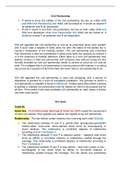
P wants to know the validity of the civil partnership, the law on nullity (S49
and S50 Civil Partnership Act 2004) will be looked at. It would be viewed P
as petitioner and R as respondent.
R and P wants to end their civil partnership, the law on both nullity (S49 and
S50) and dissolution (S44 Civil Partnership Act 2004) will be looked at. It
would be viewed P as petitioner and R as respondent.
S49 will regarded the civil partnership is void as its presumed never have existed,
and in such case a degree of nullity does not alter the status of the parties but is
merely a declaration of the existing position. The civil partnership was prevented
from becoming a valid civil partnership if either party lacks the capacity to contract it
or if the ceremony is formally defective. Either party to a void civil partnership may
lawfully contract a valid civil partnership with someone else without having the first
formally annulled as void civil partnership needs no decree to annul as it is void ab
initio. If it is alleged that a civil partnership is void any person with interest in so doing
may prove as a question of fact that there has never been a civil partnership at all.
S50 will regarded the civil partnership is valid and subsisting until a decree of
dissolution is granted by a court of competent jurisdiction. The grounds on which a
civil partnership is voidable is found in S50(a)-(e). If either party dies before a decree
is granted a voidable civil partnership must be treated as valid for all purpose and for
all time. Third parties must treat avoidable civil partnership as valid unless a decree
has been pronounced.
S11-Void
Capacity
Same Sex - Civil Partnership, Marriage & Death Act 2019 repeal the requirement
of same sex parties. Now opposite sex parties can register to be civil partnership.
Relationship - The law forbids certain relatives from marrying each other S3(1)(d).
The relationship between R and P is parent-child, grandparent-grandchild,
brother-sister, aunt-uncle, niece-nephew which know as consanguinity or
blood relatives. This relationship is prohibited degrees of relationship
according to Part 1 Schedule 1.
The relationship between R and P is adoptive parent – adoptive child which
know as affinity or non-blood relatives or relationship created through the
marriage. This relationship is prohibited degrees of relationship according to
Part 1 Schedule 1.
The relationship between R and P is step parent – step child, parent in law –
son/daughter in law which know as affinity or non-blood relatives or
relationship created through the marriage. The law allows civil partnership
, between a step parent and step child if both are over 21 at the date of civil
partnership and there has never been a parent-child relationship between
them. The allow civil partnership between a parent in law – son/daughter in
law (Part 1 Schedule 1).
Age – Following the fact, R/P is age 13 at the time of civil partnership which against
the law where both parties must have attained the age of 16 during civil partnership
(S3(1)(c)). Further, this cannot be avoided by civil partnership abord in country
where civil partnership with those under 16 are permitted. In, Pugh, domiciled
English man married 15 years old Hungarian girl in Australia. Although in both
Hungarian and Australian this marriage will valid, in England it is regarded as void.
Pearce J states this rule is absolute for any English person.
Bigamy - The fact that that R already lawfully married or civil partnership with X at
the time of civil partnership with P, thus the civil partnership between R and P will be
void according to S3(1)(b) and at the same this it is an criminal offence under S7
Offence Against Person Act 1861 with maximum 7 years of imprisonment or fine or
both.
However, if R can prove that he doesn’t know where is X, under S55, decree of
presumption of death and dissolution of marriage or civil partnership will be issues. R
as petitioner has to show the civil partner (X) has missing for 7 years or more and
reasonable ground to believe civil partner dead.
Formalities
R and P have entered civil partnership knowingly in disregard of certain
requirements, according S49(1)(b) such civil partnership will be void. That due notice
of proposed civil partnership has not been given, that the civil partnership document
has not been issued, that the civil partnership document is void under S17(3) or
S27(2) (registration after end of time allowed for registering), that the place of
registration is a place other than that specified in the notices or (notice) of proposed
civil partnership and the civil partnership document, that a civil partnership registrar
is not present, that the place of registration is on premises that are not approved
premises although the registration is purportedly in accordance with S6(3A)(a), the
civil partnership documents is void under paragraph 6(5) of Schedule 2 (civil
partnership between child and another person forbidden).
S12-Voidable
Grounds
Consent - R/P did not validly consent to the civil partnership due to the
consequence of duress, mistake, unsoundness of mind or otherwise (S50(a)).
P wants to know the validity of the civil partnership, the law on nullity (S49
and S50 Civil Partnership Act 2004) will be looked at. It would be viewed P
as petitioner and R as respondent.
R and P wants to end their civil partnership, the law on both nullity (S49 and
S50) and dissolution (S44 Civil Partnership Act 2004) will be looked at. It
would be viewed P as petitioner and R as respondent.
S49 will regarded the civil partnership is void as its presumed never have existed,
and in such case a degree of nullity does not alter the status of the parties but is
merely a declaration of the existing position. The civil partnership was prevented
from becoming a valid civil partnership if either party lacks the capacity to contract it
or if the ceremony is formally defective. Either party to a void civil partnership may
lawfully contract a valid civil partnership with someone else without having the first
formally annulled as void civil partnership needs no decree to annul as it is void ab
initio. If it is alleged that a civil partnership is void any person with interest in so doing
may prove as a question of fact that there has never been a civil partnership at all.
S50 will regarded the civil partnership is valid and subsisting until a decree of
dissolution is granted by a court of competent jurisdiction. The grounds on which a
civil partnership is voidable is found in S50(a)-(e). If either party dies before a decree
is granted a voidable civil partnership must be treated as valid for all purpose and for
all time. Third parties must treat avoidable civil partnership as valid unless a decree
has been pronounced.
S11-Void
Capacity
Same Sex - Civil Partnership, Marriage & Death Act 2019 repeal the requirement
of same sex parties. Now opposite sex parties can register to be civil partnership.
Relationship - The law forbids certain relatives from marrying each other S3(1)(d).
The relationship between R and P is parent-child, grandparent-grandchild,
brother-sister, aunt-uncle, niece-nephew which know as consanguinity or
blood relatives. This relationship is prohibited degrees of relationship
according to Part 1 Schedule 1.
The relationship between R and P is adoptive parent – adoptive child which
know as affinity or non-blood relatives or relationship created through the
marriage. This relationship is prohibited degrees of relationship according to
Part 1 Schedule 1.
The relationship between R and P is step parent – step child, parent in law –
son/daughter in law which know as affinity or non-blood relatives or
relationship created through the marriage. The law allows civil partnership
, between a step parent and step child if both are over 21 at the date of civil
partnership and there has never been a parent-child relationship between
them. The allow civil partnership between a parent in law – son/daughter in
law (Part 1 Schedule 1).
Age – Following the fact, R/P is age 13 at the time of civil partnership which against
the law where both parties must have attained the age of 16 during civil partnership
(S3(1)(c)). Further, this cannot be avoided by civil partnership abord in country
where civil partnership with those under 16 are permitted. In, Pugh, domiciled
English man married 15 years old Hungarian girl in Australia. Although in both
Hungarian and Australian this marriage will valid, in England it is regarded as void.
Pearce J states this rule is absolute for any English person.
Bigamy - The fact that that R already lawfully married or civil partnership with X at
the time of civil partnership with P, thus the civil partnership between R and P will be
void according to S3(1)(b) and at the same this it is an criminal offence under S7
Offence Against Person Act 1861 with maximum 7 years of imprisonment or fine or
both.
However, if R can prove that he doesn’t know where is X, under S55, decree of
presumption of death and dissolution of marriage or civil partnership will be issues. R
as petitioner has to show the civil partner (X) has missing for 7 years or more and
reasonable ground to believe civil partner dead.
Formalities
R and P have entered civil partnership knowingly in disregard of certain
requirements, according S49(1)(b) such civil partnership will be void. That due notice
of proposed civil partnership has not been given, that the civil partnership document
has not been issued, that the civil partnership document is void under S17(3) or
S27(2) (registration after end of time allowed for registering), that the place of
registration is a place other than that specified in the notices or (notice) of proposed
civil partnership and the civil partnership document, that a civil partnership registrar
is not present, that the place of registration is on premises that are not approved
premises although the registration is purportedly in accordance with S6(3A)(a), the
civil partnership documents is void under paragraph 6(5) of Schedule 2 (civil
partnership between child and another person forbidden).
S12-Voidable
Grounds
Consent - R/P did not validly consent to the civil partnership due to the
consequence of duress, mistake, unsoundness of mind or otherwise (S50(a)).