

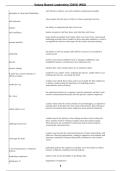
Values Based Leadership (D253) WGU
self reflection, balance, true self-confidence and genuine humility
principles of value-based leadership
when people take the time to reflect on what is important and why
self-reflection
balance the ability to understand all sides of an issue
self-confidence leaders recognize what they know and what they don't know
keeps leaders grounded, don't forget where you came from, values-based
leadership principle allows leaders to thrive and team members to work to
genuine humility accomplish the mission with respect for the leader's decision-making
the ability to motivate people and mobilize resources to accomplish a
leadership common goal
positive and virtuous attributes such as integrity, truthfulness, and
honesty straightforwardness, creating trust, most important trait
positive change attribute that values-based leaders use to influence others
K and P five critical elements of model the way, inspire vision, challenge the process, enable others to act,
effective leaders challenge the process, encourage the heart
Leaders must clarify their values and set an example for their employees
to imitate, underscoring the importance of modeling positive
model the way characteristics such as honesty
the emotional element of a company's mission statement, and this vision
must be communicated honestly and with passion, inspires employees
the vision
Leaders often make the critical mistake of micromanaging, as opposed to
trusting others to do their job. Trust stems from honesty, and creating an
enable others to act honest environment allows other employees more personal autonomy
Leaders need to be attentive to how things are done, not just what gets
done, and they must be willing to address areas that require change.
challenge the process These practices are essential for continuous improvement, progress
toward goals, and innovation
Leaders must nurture the emotional dimension of their relationships with
followers. Showing appreciation, creating a supportive environment, and
encourage the heart fostering community sentiment help build commitment to the leader's
vision
CAL) Characteristics of admired leadership qualities the employees said they were more likely to follow,
learners honesty, competent, inspiring, forward-looking
leadership competence leader's track record and ability to get things done
malignancy #1 degradation of reputation
1
, Values Based Leadership (D253) WGU
(mis) matches between values of employee and values of the organization
malignancy #2
increased surveillance incurs; health consequences, lack of trust in
employees, backlash of perceived restrictions of control, undermining of
malignancy #3 positive behavior, overestimated influence of monitoring
T/F When dishonest behavior is tolerated, an unspoken signal is given
True that dishonesty is acceptable behavior
model the path, inspire a joint vision and aim, challenge the framework
and current path, inspire others to take ownership and act, encourage
leadership qualities people's efforts and encourage them
Values-based leaders ensure that they are aware of their employee's
emotions during the review and that they are upfront about areas that
need improvement. Employees need to know how they are doing in order
balancing empathy with honesty to set goals, create action plans, and improve
honesty is absent leaders lack credibility when
Values-based leaders demonstrate integrity when their words and actions
are consistent, ethical, and intentional, doing the right thing
integrity
includes being open, positive, self-aware, and genuine, and believing in
authenticity honest relationships
uncertainty with an emotional exposure, most accurate measure of
Vulnerability courage
communications, teamwork, self-development, and development of
four basic requirements of effective
others
human relations
misinformation, assumptions, and lack of detail can lead to employees
Communicate with clarity making mistakes despite a leader's best intentions
a definition of what should be completed and how to do so, without
acknowledgement from the other person, may lead to unmet expectations.
Otherwise someone may say yes, even if they don't believe it is worth the
come to an agreement effort or feel incapable of achieving it
relevant boundaries, such as how much money employees can spend,
what resources they can pull in, or who they need to notify at various
establish available freedoms milestones along the way, empowers employees to be able to make
decisions and own the outcomes
to deliver on a relatively unimportant commitment at the expense of an
determine and communicate a important one is a poor use of time. therefore, accountabilities must be
hierarchy of action prioritized.
2
self reflection, balance, true self-confidence and genuine humility
principles of value-based leadership
when people take the time to reflect on what is important and why
self-reflection
balance the ability to understand all sides of an issue
self-confidence leaders recognize what they know and what they don't know
keeps leaders grounded, don't forget where you came from, values-based
leadership principle allows leaders to thrive and team members to work to
genuine humility accomplish the mission with respect for the leader's decision-making
the ability to motivate people and mobilize resources to accomplish a
leadership common goal
positive and virtuous attributes such as integrity, truthfulness, and
honesty straightforwardness, creating trust, most important trait
positive change attribute that values-based leaders use to influence others
K and P five critical elements of model the way, inspire vision, challenge the process, enable others to act,
effective leaders challenge the process, encourage the heart
Leaders must clarify their values and set an example for their employees
to imitate, underscoring the importance of modeling positive
model the way characteristics such as honesty
the emotional element of a company's mission statement, and this vision
must be communicated honestly and with passion, inspires employees
the vision
Leaders often make the critical mistake of micromanaging, as opposed to
trusting others to do their job. Trust stems from honesty, and creating an
enable others to act honest environment allows other employees more personal autonomy
Leaders need to be attentive to how things are done, not just what gets
done, and they must be willing to address areas that require change.
challenge the process These practices are essential for continuous improvement, progress
toward goals, and innovation
Leaders must nurture the emotional dimension of their relationships with
followers. Showing appreciation, creating a supportive environment, and
encourage the heart fostering community sentiment help build commitment to the leader's
vision
CAL) Characteristics of admired leadership qualities the employees said they were more likely to follow,
learners honesty, competent, inspiring, forward-looking
leadership competence leader's track record and ability to get things done
malignancy #1 degradation of reputation
1
, Values Based Leadership (D253) WGU
(mis) matches between values of employee and values of the organization
malignancy #2
increased surveillance incurs; health consequences, lack of trust in
employees, backlash of perceived restrictions of control, undermining of
malignancy #3 positive behavior, overestimated influence of monitoring
T/F When dishonest behavior is tolerated, an unspoken signal is given
True that dishonesty is acceptable behavior
model the path, inspire a joint vision and aim, challenge the framework
and current path, inspire others to take ownership and act, encourage
leadership qualities people's efforts and encourage them
Values-based leaders ensure that they are aware of their employee's
emotions during the review and that they are upfront about areas that
need improvement. Employees need to know how they are doing in order
balancing empathy with honesty to set goals, create action plans, and improve
honesty is absent leaders lack credibility when
Values-based leaders demonstrate integrity when their words and actions
are consistent, ethical, and intentional, doing the right thing
integrity
includes being open, positive, self-aware, and genuine, and believing in
authenticity honest relationships
uncertainty with an emotional exposure, most accurate measure of
Vulnerability courage
communications, teamwork, self-development, and development of
four basic requirements of effective
others
human relations
misinformation, assumptions, and lack of detail can lead to employees
Communicate with clarity making mistakes despite a leader's best intentions
a definition of what should be completed and how to do so, without
acknowledgement from the other person, may lead to unmet expectations.
Otherwise someone may say yes, even if they don't believe it is worth the
come to an agreement effort or feel incapable of achieving it
relevant boundaries, such as how much money employees can spend,
what resources they can pull in, or who they need to notify at various
establish available freedoms milestones along the way, empowers employees to be able to make
decisions and own the outcomes
to deliver on a relatively unimportant commitment at the expense of an
determine and communicate a important one is a poor use of time. therefore, accountabilities must be
hierarchy of action prioritized.
2



