

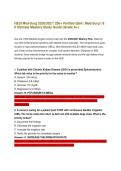
HESI Med-Surg 2026/2027: 250+ Verified Q&A | Med-Surg I &
II Ultimate Mastery Study Guide (Grade A+)
Ace your HESI Medical-Surgical nursing exam with this 2026/2027 Mastery Pack, featuring
over 250 verified practice questions with detailed clinical rationales. This comprehensive guide
focuses on high-yield prioritization (ABCs), Next-Generation NCLEX (NGN) case study cues,
and critical nursing interventions for complex multi-system disorders. Designed for BSN
students, these materials bridge the gap between textbook theory and the high-stakes critical
thinking required for first-pass success on the HESI.
1. A patient with Chronic Kidney Disease (CKD) is prescribed Spironolactone.
Which lab value is the priority for the nurse to monitor?
A. Sodium 135 mEq/L
B. Potassium 5.8 mEq/L
C. Glucose 110 mg/dL
D. Magnesium 2.0 mEq/L
Answer: B. POTASSIUM 5.8 MEQ/L
Rationale: Spironolactone is a potassium-sparing diuretic. In CKD, the kidneys cannot
excrete potassium effectively, placing the patient at high risk for life-threatening
hyperkalemia.
2. A nurse is caring for a patient post-TURP with continuous bladder irrigation
(CBI). The nurse notes the return is dark red with multiple large clots. What is the
priority action?
A. Document the findings
B. Decrease the irrigation rate
C. Increase the irrigation rate
D. Notify the provider for immediate surgery
Answer: C. INCREASE THE IRRIGATION RATE
Rationale: To keep the catheter patent and prevent total occlusion by clots, the irrigation
rate must be increased until the drainage turns light pink.
,3. Which assessment finding is the most critical for a patient who just returned
from a thyroidectomy?
A. Complaints of mild throat pain
B. Difficulty swallowing water
C. Laryngeal stridor and hoarseness
D. A heart rate of 88 bpm
Answer: C. LARYNGEAL STRIDOR AND HOARSENESS
Rationale: Stridor indicates an airway obstruction, likely due to laryngeal nerve damage
or edema. This is a medical emergency.
4. A patient is prescribed Apixaban (Eliquis) for Atrial Fibrillation. Which
symptom should the nurse instruct the patient to report immediately?
A. Dry mouth
B. Increased appetite
C. Frequent nosebleeds (epistaxis)
D. Occasional mild headaches
Answer: C. FREQUENT NOSEBLEEDS (EPISTAXIS)
Rationale: Apixaban is an anticoagulant. Epistaxis, hematuria, or bruising are signs of
excessive bleeding that require intervention.
5. A patient presents to the ER with symptoms of a stroke. What is the first
diagnostic test the nurse anticipates?
A. MRI of the brain
B. Non-contrast CT scan of the head
C. Lumbar puncture
D. EEG
Answer: B. NON-CONTRAST CT SCAN OF THE HEAD
Rationale: A CT scan is the fastest way to differentiate between an ischemic and a
hemorrhagic stroke, which determines treatment.
6. Which medication order should a nurse question for a patient with a history of
a Gastrointestinal (GI) bleed?
A. Acetaminophen
B. Ibuprofen
C. Famotidine
D. Pantoprazole
Answer: B. IBUPROFEN
,Rationale: NSAIDs like Ibuprofen inhibit prostaglandins that protect the stomach lining,
increasing the risk of GI bleeding.
7. A patient with heart failure gains 3 lbs in 24 hours. What is the priority nursing
intervention?
A. Assess for peripheral edema
B. Auscultate lung sounds
C. Check the patient's heart rate
D. Ask the patient about their diet
Answer: B. AUSCULTATE LUNG SOUNDS
Rationale: Rapid weight gain suggests fluid overload. The priority is to check for
pulmonary edema (crackles), a life-threatening "Breathing" issue.
8. What is the priority education for a patient taking Methotrexate for Rheumatoid
Arthritis?
A. Take the medication with milk
B. Avoid large crowds and report fever or sore throat
C. Expect the urine to turn bright orange
D. Increase intake of green leafy vegetables
Answer: B. AVOID LARGE CROWDS AND REPORT FEVER OR SORE THROAT
Rationale: Methotrexate is an immunosuppressant that causes bone marrow
suppression, increasing infection risk.
9. A patient is 2 hours post-op from a hip arthroplasty. The nurse notes the
patient’s toes are cool and the pedal pulse is absent. What is the priority action?
A. Elevate the leg on two pillows
B. Apply a warm compress
C. Notify the surgeon immediately
D. Encourage ankle pumps
Answer: C. NOTIFY THE SURGEON IMMEDIATELY
Rationale: These are signs of neurovascular compromise or arterial occlusion, which is
a surgical emergency.
10. A nurse is treating a patient with Type 1 Diabetes who is found unconscious
and diaphoretic. What is the priority action?
A. Administer 10 units of regular insulin
B. Administer Glucagon IM or IV Dextrose
C. Give 4 oz of orange juice orally
, D. Check the blood glucose level first
Answer: B. ADMINISTER GLUCAGON IM OR IV DEXTROSE
Rationale: If the patient is unconscious, they cannot swallow. Glucagon or Dextrose is
the fastest way to treat severe hypoglycemia.
11. Which electrolyte imbalance causes a positive Chvostek’s sign (facial
twitching)?
A. Hyperkalemia
B. Hypocalcemia
C. Hyponatremia
D. Hypermagnesemia
Answer: B. HYPOCALCEMIA
Rationale: Low calcium increases neuromuscular irritability, leading to facial twitching
and carpal spasms.
12. A patient with COPD is on 2L of oxygen and has an SpO2 of 90%. What should
the nurse do?
A. Increase the oxygen to 6L
B. Document this as a normal finding for COPD
C. Notify the provider for intubation
D. Switch to a non-rebreather mask
Answer: B. DOCUMENT THIS AS A NORMAL FINDING FOR COPD
Rationale: COPD patients often have a lower baseline SpO2 (88-92%). High oxygen
can actually depress their drive to breathe.
13. A patient with Atrial Fibrillation is scheduled for cardioversion. Which
medication is essential for weeks prior?
A. Digoxin
B. Warfarin (Anticoagulant)
C. Furosemide
D. Amiodarone
Answer: B. WARFARIN (ANTICOAGULANT)
Rationale: Anticoagulation prevents clots from being dislodged from the atria during the
procedure, preventing a stroke.
14. A nurse notes continuous bubbling in the water seal chamber of a chest tube.
What does this indicate?
A. The lung has fully re-expanded
II Ultimate Mastery Study Guide (Grade A+)
Ace your HESI Medical-Surgical nursing exam with this 2026/2027 Mastery Pack, featuring
over 250 verified practice questions with detailed clinical rationales. This comprehensive guide
focuses on high-yield prioritization (ABCs), Next-Generation NCLEX (NGN) case study cues,
and critical nursing interventions for complex multi-system disorders. Designed for BSN
students, these materials bridge the gap between textbook theory and the high-stakes critical
thinking required for first-pass success on the HESI.
1. A patient with Chronic Kidney Disease (CKD) is prescribed Spironolactone.
Which lab value is the priority for the nurse to monitor?
A. Sodium 135 mEq/L
B. Potassium 5.8 mEq/L
C. Glucose 110 mg/dL
D. Magnesium 2.0 mEq/L
Answer: B. POTASSIUM 5.8 MEQ/L
Rationale: Spironolactone is a potassium-sparing diuretic. In CKD, the kidneys cannot
excrete potassium effectively, placing the patient at high risk for life-threatening
hyperkalemia.
2. A nurse is caring for a patient post-TURP with continuous bladder irrigation
(CBI). The nurse notes the return is dark red with multiple large clots. What is the
priority action?
A. Document the findings
B. Decrease the irrigation rate
C. Increase the irrigation rate
D. Notify the provider for immediate surgery
Answer: C. INCREASE THE IRRIGATION RATE
Rationale: To keep the catheter patent and prevent total occlusion by clots, the irrigation
rate must be increased until the drainage turns light pink.
,3. Which assessment finding is the most critical for a patient who just returned
from a thyroidectomy?
A. Complaints of mild throat pain
B. Difficulty swallowing water
C. Laryngeal stridor and hoarseness
D. A heart rate of 88 bpm
Answer: C. LARYNGEAL STRIDOR AND HOARSENESS
Rationale: Stridor indicates an airway obstruction, likely due to laryngeal nerve damage
or edema. This is a medical emergency.
4. A patient is prescribed Apixaban (Eliquis) for Atrial Fibrillation. Which
symptom should the nurse instruct the patient to report immediately?
A. Dry mouth
B. Increased appetite
C. Frequent nosebleeds (epistaxis)
D. Occasional mild headaches
Answer: C. FREQUENT NOSEBLEEDS (EPISTAXIS)
Rationale: Apixaban is an anticoagulant. Epistaxis, hematuria, or bruising are signs of
excessive bleeding that require intervention.
5. A patient presents to the ER with symptoms of a stroke. What is the first
diagnostic test the nurse anticipates?
A. MRI of the brain
B. Non-contrast CT scan of the head
C. Lumbar puncture
D. EEG
Answer: B. NON-CONTRAST CT SCAN OF THE HEAD
Rationale: A CT scan is the fastest way to differentiate between an ischemic and a
hemorrhagic stroke, which determines treatment.
6. Which medication order should a nurse question for a patient with a history of
a Gastrointestinal (GI) bleed?
A. Acetaminophen
B. Ibuprofen
C. Famotidine
D. Pantoprazole
Answer: B. IBUPROFEN
,Rationale: NSAIDs like Ibuprofen inhibit prostaglandins that protect the stomach lining,
increasing the risk of GI bleeding.
7. A patient with heart failure gains 3 lbs in 24 hours. What is the priority nursing
intervention?
A. Assess for peripheral edema
B. Auscultate lung sounds
C. Check the patient's heart rate
D. Ask the patient about their diet
Answer: B. AUSCULTATE LUNG SOUNDS
Rationale: Rapid weight gain suggests fluid overload. The priority is to check for
pulmonary edema (crackles), a life-threatening "Breathing" issue.
8. What is the priority education for a patient taking Methotrexate for Rheumatoid
Arthritis?
A. Take the medication with milk
B. Avoid large crowds and report fever or sore throat
C. Expect the urine to turn bright orange
D. Increase intake of green leafy vegetables
Answer: B. AVOID LARGE CROWDS AND REPORT FEVER OR SORE THROAT
Rationale: Methotrexate is an immunosuppressant that causes bone marrow
suppression, increasing infection risk.
9. A patient is 2 hours post-op from a hip arthroplasty. The nurse notes the
patient’s toes are cool and the pedal pulse is absent. What is the priority action?
A. Elevate the leg on two pillows
B. Apply a warm compress
C. Notify the surgeon immediately
D. Encourage ankle pumps
Answer: C. NOTIFY THE SURGEON IMMEDIATELY
Rationale: These are signs of neurovascular compromise or arterial occlusion, which is
a surgical emergency.
10. A nurse is treating a patient with Type 1 Diabetes who is found unconscious
and diaphoretic. What is the priority action?
A. Administer 10 units of regular insulin
B. Administer Glucagon IM or IV Dextrose
C. Give 4 oz of orange juice orally
, D. Check the blood glucose level first
Answer: B. ADMINISTER GLUCAGON IM OR IV DEXTROSE
Rationale: If the patient is unconscious, they cannot swallow. Glucagon or Dextrose is
the fastest way to treat severe hypoglycemia.
11. Which electrolyte imbalance causes a positive Chvostek’s sign (facial
twitching)?
A. Hyperkalemia
B. Hypocalcemia
C. Hyponatremia
D. Hypermagnesemia
Answer: B. HYPOCALCEMIA
Rationale: Low calcium increases neuromuscular irritability, leading to facial twitching
and carpal spasms.
12. A patient with COPD is on 2L of oxygen and has an SpO2 of 90%. What should
the nurse do?
A. Increase the oxygen to 6L
B. Document this as a normal finding for COPD
C. Notify the provider for intubation
D. Switch to a non-rebreather mask
Answer: B. DOCUMENT THIS AS A NORMAL FINDING FOR COPD
Rationale: COPD patients often have a lower baseline SpO2 (88-92%). High oxygen
can actually depress their drive to breathe.
13. A patient with Atrial Fibrillation is scheduled for cardioversion. Which
medication is essential for weeks prior?
A. Digoxin
B. Warfarin (Anticoagulant)
C. Furosemide
D. Amiodarone
Answer: B. WARFARIN (ANTICOAGULANT)
Rationale: Anticoagulation prevents clots from being dislodged from the atria during the
procedure, preventing a stroke.
14. A nurse notes continuous bubbling in the water seal chamber of a chest tube.
What does this indicate?
A. The lung has fully re-expanded


