Species, Cells, and Evolution
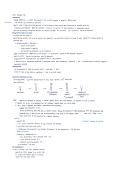
1. Use your understanding of Gibb’s free energy, endergonic reactions, and exergonic reactions to predict whether a chemical reaction occurs spontaneously or requires energy input. 2. Use rules of thumb about anabolic and catabolic reactions to predict whether a reaction is exergonic or endergonic. 3. Explain how the energy of activation slows some chemical reactions, and how this barrier can be overcome by an enzyme. 4. Explain the roles of dehydration and hydrolysis reactions in the formation and breakdown of polymer macromolecules using monomers. 5. Analyze whether a macromolecule monomer is a monosaccharide, an amino acid, or a nucleotide. Gibbs free energy, deltaG, Exergonic (spontaneous) reaction, Endergonic reaction, Anabolic and catabolic reactions, Energy of activation, Catalyst, Enzyme, Lock and key, induced fit, Monomer, polymer, Dehydration (condensation) reactions, Hydrolysis reactions, Macromolecules, Carbohydrate, monosaccharide, polysaccharide, Amino acid, Protein, Nucleotide, Nucleic acid
Written for
Document information
- Uploaded on
- April 22, 2026
- Number of pages
- 2
- Written in
- 2025/2026
- Type
- Class notes
- Professor(s)
- Seth blair
- Contains
- All classes
Subjects
- gibbs free energy
- deltag
- endergonic reaction
- energy of activation
- catalyst
- enzyme
- lock and key
-
induced fit
-
monomer
-
polymer
-
dehydration c
-
exergonic spontaneous reaction
-
anabolic and catabolic reactions