

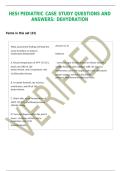
HESI PEDIATRIC CASE STUDY QUESTIONS AND
ANSWERS: DEHYDRATION
Terms in this set (23)
What assessment findings will lead the Answer (s): B
nurse to believe an infant is
moderately dehydrated? Rational:
A. Rectal temperature of 99°F (37.2°C), - Common signs of dehydration in infants include a
heart rate (HR) of 120 sunken fontanel, slow capillary refill, dry mucous
beats/minute, and a respiratory rate membranes, poor skin turgor, pale color, decreased
of 28 breaths/minute. urinary output, normal to low blood
pressure, and normal to high heart rate.
B. A sunken fontanel, dry mucous
membranes, and HR of 160
beats/minute.
C. Warm skin, rectal temperature of
100°F (37.8°C), and blood pressure
100/60 mmHg.
D. Two wet diapers within the past 8
hours, +3 edema of feet, and a
respiratory rate of 30
breaths/minute.
, To obtain more information about Answer (s): B, C
the client's current status, which
questions are a priority for the Rational:
nurse to ask family? (Select all that
apply. One, some, or all options - If the infant is not taking formula, clear
may be correct.) liquid replacement fluids can help to
maintain
A. "Do you have any hydration.
other children?"
- Weight is the most important determinant
B."Have you offered fluids other in fluid loss. The nurse needs baseline
than formula?" data to
compare to infants current condition inorder to
C. "What was the client's determine hydration status.
last weight?"
D."Has the client completed all
their immunizations?"
E. "How many hours does the
client normally sleep each day?"
Lab Values Answer (s): A
- 137 meq/L (mmol/L)
Rational:
Based on the client's lab values,
which type of dehydration does the Classification of dehydration, based on the serum
nurse suspect? sodium level 130 to 150 mEq/L is Isonatremic
meaning that sodium and water are lost in equal
A. Isonatremic proportions.
B.Hyponatremic
C. Hypernatremic
D.Hypokalemic
ANSWERS: DEHYDRATION
Terms in this set (23)
What assessment findings will lead the Answer (s): B
nurse to believe an infant is
moderately dehydrated? Rational:
A. Rectal temperature of 99°F (37.2°C), - Common signs of dehydration in infants include a
heart rate (HR) of 120 sunken fontanel, slow capillary refill, dry mucous
beats/minute, and a respiratory rate membranes, poor skin turgor, pale color, decreased
of 28 breaths/minute. urinary output, normal to low blood
pressure, and normal to high heart rate.
B. A sunken fontanel, dry mucous
membranes, and HR of 160
beats/minute.
C. Warm skin, rectal temperature of
100°F (37.8°C), and blood pressure
100/60 mmHg.
D. Two wet diapers within the past 8
hours, +3 edema of feet, and a
respiratory rate of 30
breaths/minute.
, To obtain more information about Answer (s): B, C
the client's current status, which
questions are a priority for the Rational:
nurse to ask family? (Select all that
apply. One, some, or all options - If the infant is not taking formula, clear
may be correct.) liquid replacement fluids can help to
maintain
A. "Do you have any hydration.
other children?"
- Weight is the most important determinant
B."Have you offered fluids other in fluid loss. The nurse needs baseline
than formula?" data to
compare to infants current condition inorder to
C. "What was the client's determine hydration status.
last weight?"
D."Has the client completed all
their immunizations?"
E. "How many hours does the
client normally sleep each day?"
Lab Values Answer (s): A
- 137 meq/L (mmol/L)
Rational:
Based on the client's lab values,
which type of dehydration does the Classification of dehydration, based on the serum
nurse suspect? sodium level 130 to 150 mEq/L is Isonatremic
meaning that sodium and water are lost in equal
A. Isonatremic proportions.
B.Hyponatremic
C. Hypernatremic
D.Hypokalemic


