
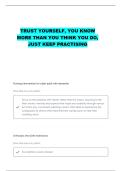
Nursing Intervention for older adult with dementia
Give this one a try later!
focus on the positives, the "haves" rather than the losses. Allowing to tell
their stories. worship and express their hope and creativity through various
art forms (e.g., movement, painting, music). often able to experience the
compassion of others when they feel their caring touch or hear their
soothing voice.
Orthodox Jews Diet restrictions
Give this one a try later!
No shellfish or pork; Kosher
, Muslim Ramadan Fasting
Give this one a try later!
devout Muslims eat no food and avoid beverages during daylight hours
before breaking their fast after sunset.
What is the Fitchett screening protocol?
Give this one a try later!
"Is spirituality or religion (S/R) important to you as you cope with illness?" If
a patient responds with "yes," then the clinician can ask, "How much
strength/comfort do you get now?"
Synthetic-Conventional faith
Give this one a try later!
(adolescents and teens) generally conform to the beliefs of those around
them, because they have yet not reflected or studied these beliefs
objectively.
Mythic-Literal faith
Give this one a try later!
Give this one a try later!
focus on the positives, the "haves" rather than the losses. Allowing to tell
their stories. worship and express their hope and creativity through various
art forms (e.g., movement, painting, music). often able to experience the
compassion of others when they feel their caring touch or hear their
soothing voice.
Orthodox Jews Diet restrictions
Give this one a try later!
No shellfish or pork; Kosher
, Muslim Ramadan Fasting
Give this one a try later!
devout Muslims eat no food and avoid beverages during daylight hours
before breaking their fast after sunset.
What is the Fitchett screening protocol?
Give this one a try later!
"Is spirituality or religion (S/R) important to you as you cope with illness?" If
a patient responds with "yes," then the clinician can ask, "How much
strength/comfort do you get now?"
Synthetic-Conventional faith
Give this one a try later!
(adolescents and teens) generally conform to the beliefs of those around
them, because they have yet not reflected or studied these beliefs
objectively.
Mythic-Literal faith
Give this one a try later!


