

Written by students who passed Immediately available after payment Read online or as PDF Wrong document? Swap it for free 4.6 TrustPilot
logo-home
Document preview thumbnail
Preview 3 out of 26 pages
Exam (elaborations)

HESI RN Fundamentals Exam 2026/2027 | ACTUAL EXAM | 55 Q&A with Expert Explanations | Newly Released | Pass Guaranteed - A+ Graded

Document preview thumbnail
Preview 3 out of 26 pages

Ace your HESI RN Fundamentals Exam with this newly released 2026/2027 actual exam featuring 55 questions, correct answers, and expert explanations – all graded A+. This A+ Graded resource provides comprehensive coverage of essential fundamentals of nursing topics for registered nursing students. Content includes: nursing process (ADPIE – assessment (subjective vs. objective data), diagnosis (nursing vs. medical), planning (SMART goals), implementation, evaluation; critical thinking and clinical judgment); safety and infection control (standard precautions – hand hygiene (CDC indications, proper technique), PPE (donning/doffing order), transmission-based precautions (contact, droplet, airborne), sterile technique, surgical asepsis vs. medical asepsis; fall prevention – risk assessment (Morse scale), bed alarms, low beds, call light within reach; restraints – types (physical, chemical), application (quick-release tie), monitoring (every 15-30 minutes), documentation, alternatives (repositioning, distraction); incident reporting, sentinel events); vital signs and assessment (temperature – routes (oral, rectal, axillary, tympanic, temporal) and normal ranges; pulse – sites (radial, apical), rate, rhythm, strength; respiration – rate, depth, rhythm, effort; blood pressure – Korotkoff sounds, cuff size (width 40% of arm circumference), positioning, common errors; pulse oximetry – normal range 95-100%, factors affecting accuracy (nail polish, poor perfusion, motion); pain assessment – PQRST, pain scales (numeric, Wong-Baker, FLACC), reassessment after intervention); basic care and comfort (hygiene – bathing (bed bath, tub bath), perineal care (female/male), oral care (conscious/unconscious), denture care, foot care, nail care; bedmaking – occupied vs. unoccupied; pressure injury prevention – Braden Scale (sensory, moisture, activity, mobility, nutrition, friction/shear), repositioning every 2 hours, support surfaces (mattresses, cushions), pressure injury staging (NPUAP Stage 1-4, unstageable, deep tissue injury)); mobility and body mechanics (range of motion – active vs. passive, techniques for major joints; positioning – Fowler's, semi-Fowler's, supine, prone, lateral, Sims', Trendelenburg; transferring – bed to stretcher, bed to chair, gait belt, mechanical lifts (Hoyer lift); complications of immobility – DVT (prevention: compression devices, anticoagulants, leg exercises), contractures (ROM), orthostatic hypotension (slow position changes), constipation (fluids, fiber, stool softeners), atelectasis (incentive spirometry)); nutrition and hydration (therapeutic diets – clear liquid, full liquid, soft, mechanical soft, pureed, NPO, dysphagia diets (IDDSI levels); enteral nutrition – NG tube placement verification (pH 5.5, X-ray, CO2 detector), feeding administration (continuous vs. intermittent), residual monitoring (hold if 250-500 mL), complications (aspiration, diarrhea, constipation); fluid balance – intake/output measurement, signs of dehydration (dry mucous membranes, poor skin turgor, oliguria, orthostatic hypotension) vs. fluid overload (edema, crackles, distended neck veins, hypertension)); elimination (urinary – indwelling urinary catheter insertion/removal, care (perineal hygiene, secure tubing, maintain closed system), prevention of CAUTI; intermittent catheterization (straight cath), bladder scanning; condom catheter; urine specimen collection (clean catch, sterile from catheter); bowel – enema administration (types: cleansing (tap water, normal saline, soap suds), retention (oil retention, medicated)), steps, contraindications; ostomy care – pouching system (one-piece vs. two-piece), skin barrier, stoma assessment (color: pink/red, edema, output), irrigation, dietary considerations); medication administration (rights of administration (7-10 rights: patient, drug, dose, route, time, documentation, reason, response), medication orders (standing, PRN, single, stat, now), routes – oral (sublingual, buccal), topical (transdermal, ophthalmic, otic, nasal, vaginal, rectal), inhalation (metered-dose inhaler, nebulizer), parenteral (intradermal, subcutaneous, intramuscular, intravenous); dosage calculations – oral solids/liquids, injectables, IV flow rates (mL/hr, gtt/min), safe dose range verification; medication safety – high-alert medications (heparin, insulin, opioids), look-alike/sound-alike, error prevention strategies (independent double check, barcode scanning), medication reconciliation); oxygenation and respiratory care (oxygen delivery systems – nasal cannula (1-6 L/min, 24-44%), simple mask (5-8 L/min, 40-60%), partial/non-rebreather (10-15 L/min, 60-80% / 80-95%), Venturi mask (24-50%, precise FiO2); pulse oximetry monitoring; incentive spirometry – teaching (inhale slowly, hold, exhale), evaluation; deep breathing and coughing exercises (huff cough, quad cough); suctioning – oral, nasal, tracheostomy (sterile vs. clean, pre-oxygenation, duration 10-15 seconds, complications: hypoxia, trauma, bradycardia); tracheostomy care – inner cannula cleaning, stoma site care, tie changes, emergency equipment at bedside); wound care (wound assessment – size, depth, tunneling, undermining, exudate (amount, color, consistency), wound bed tissue (granulation, slough, eschar), periwound skin; wound cleansing – normal saline, irrigation (using syringe and catheter), antiseptics (avoid cytotoxic agents); dressing selection – dry gauze (for dry wounds), wet-to-dry (for debridement), transparent film (for stage 1 pressure injury), hydrocolloid (for light to moderate exudate), foam (for moderate to heavy exudate), alginate (for heavy exudate/bleeding), negative pressure wound therapy; drainage management – Penrose drain, Jackson-Pratt (JP), Hemovac (emptying, stripping, recording output); wound culture – Levine technique (rotate swab over 1 cm²) or Z-track technique); perioperative care (preoperative – assessment (allergies, medications, NPO status), informed consent (surgeon obtains, nurse witnesses), skin preparation, preoperative medications; intraoperative – positioning safety (padding, preventing nerve damage), monitoring, maintaining normothermia; postoperative – immediate recovery (VS, airway, oxygen, pain), complications: hemorrhage (increased pulse, decreased BP, cool skin), DVT (calf pain, swelling), pulmonary embolism (sudden dyspnea, chest pain), wound dehiscence/evisceration (cover with sterile saline-soaked gauze, notify provider), infection (fever, purulent drainage), urinary retention (bladder scan, catheterize PRN), paralytic ileus (absent bowel sounds, abdominal distention); postoperative exercises – incentive spirometry, early ambulation, leg exercises); pain management (pain assessment (reassessment after intervention), pharmacologic – non-opioids (acetaminophen, NSAIDs), opioids (morphine, hydromorphone, fentanyl), patient-controlled analgesia (PCA pump, monitor for respiratory depression, sedation scale), epidural analgesia (monitor catheter site, lower extremity motor/sensory function, respiratory depression); non-pharmacologic – distraction, guided imagery, relaxation, heat/cold therapy, repositioning); end-of-life care (palliative vs. hospice care (eligibility: prognosis ≤6 months), advance directives – living will, durable power of attorney for healthcare, DNR/DNI; symptom management – dyspnea (opioids, fans, positioning), pain (around-the-clock dosing, breakthrough doses), terminal restlessness (benzodiazepines, haloperidol), death rattle (positioning, anticholinergics), nausea/vomiting (antiemetics), constipation (bowel regimen); family support, grief and bereavement, post-mortem care (prepare body, cultural/religious rituals, organ donation, autopsy); legal and ethical issues (HIPAA – privacy, confidentiality (minimum necessary standard), patient rights, informed consent (components: risks, benefits, alternatives, right to refuse; nurse's role: witness, ensure understanding, verify signature), advance directives, DNR orders, patient advocacy, ethical principles – autonomy (respect patient choices), beneficence (do good), nonmaleficence (do no harm), justice (fairness), fidelity (keep promises); negligence vs. malpractice (elements: duty, breach, causation, damages); incident reporting, sentinel events, Good Samaritan laws, nursing licensure (LPN vs. RN scope of practice), delegation (five rights of delegation, tasks for LPN and UAP, supervision). Each answer includes an expert explanation detailing clinical reasoning, nursing interventions, evidence-based practice, safety priorities, and NCLEX-style test-taking strategies. With fully verified Q&A and our Pass Guarantee, this is the definitive tool to pass your HESI RN Fundamentals Exam on the first attempt. Get instant access now.

Content preview

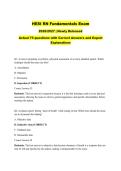
HESI RN Fundamentals Exam
2026/2027 | Newly Released

Actual 75 questions with Correct Answers and Expert
Explanations


Q1: A nurse is preparing to perform a physical assessment on a newly admitted patient. Which
technique should the nurse use first?

A. Auscultation

B. Palpation

C. Percussion

D. Inspection [CORRECT]

Correct Answer: D

Rationale: The best answer is inspection because it is the first technique used in every physical
assessment, allowing the nurse to observe general appearance and specific abnormalities before
touching the patient.


Q2: A patient reports feeling "short of breath" while resting in bed. Which term should the nurse
use to document this finding?
A. Objective data

B. Subjective data [CORRECT]

C. Validated data

D. Measurable data

Correct Answer: B

Rationale: The best answer is subjective data because shortness of breath is a symptom that can
only be felt and reported by the patient, making it unmeasurable by the nurse.

,Q3: A nurse is reviewing a patient's medical record and notes the patient has a prescription for
contact precautions. Which infectious disease requires this specific type of precaution?

A. Pulmonary tuberculosis

B. Rubella

C. Clostridium difficile infection [CORRECT]

D. Influenza

Correct Answer: C

Rationale: The best answer is Clostridium difficile because it is transmitted through direct
contact with spores in the environment or on the hands of healthcare workers, requiring the use
of gown and gloves.


Q4: A postoperative patient is prescribed to receive morphine 4 mg intravenously every 4 hours
as needed for pain. The medication is available as 10 mg/mL. How many mL should the nurse
administer?

A. 0.2 mL

B. 0.4 mL [CORRECT]

C. 2.5 mL

D. 4.0 mL

Correct Answer: B

Rationale: The best answer is 0.4 mL because dividing the prescribed dose (4 mg) by the
available concentration (10 mg/mL) ensures the patient receives the correct volume of the
medication.


Q5: A nurse is caring for a patient who has a new tracheostomy. Which action by the nurse
demonstrates the correct use of medical asepsis?

A. Wearing sterile gloves when suctioning the tracheostomy

B. Washing hands before and after providing tracheostomy care [CORRECT]

C. Applying a sterile dressing to the tracheostomy site

D. Using a sterile catheter for oral suctioning

Correct Answer: B

, Rationale: The best answer is handwashing because medical asepsis (clean technique) focuses
on reducing the number of microorganisms, and hand hygiene is the foundational practice for all
patient care.


Q6: A nurse enters the room of a patient who is on airborne precautions for suspected
tuberculosis. In which order should the nurse don the personal protective equipment (PPE)?
Select all that apply in the correct sequence.

A. Gown [CORRECT]

B. N95 respirator [CORRECT]

C. Gloves [CORRECT]

D. Eye protection

Correct Answer: A, B, C

Rationale: The best answers are gown, N95 respirator, and gloves in that specific order, as the
mask must be applied before touching the front of the gown, and gloves are put on last.


Q7: A nurse is preparing to administer a scheduled oral medication to a patient. The patient asks,
"What is this pill for?" Which of the "6 Rights" of medication administration is the nurse
verifying by checking the medication's purpose in the reference guide?

A. Right dose

B. Right route

C. Right reason [CORRECT]

D. Right documentation

Correct Answer: C

Rationale: The best answer is right reason because explaining and verifying the medication's
purpose ensures it aligns with the patient's current diagnosis and provider orders.


Document information

Uploaded on
April 20, 2026
Number of pages
26
Written in
2025/2026
Type
Exam (elaborations)
Contains
Questions & answers
$16.00

Wrong document? Swap it for free Within 14 days of purchase and before downloading, you can choose a different document. You can simply spend the amount again.
Written by students who passed
Immediately available after payment
Read online or as PDF

Seller avatar
Reputation scores are based on the amount of documents a seller has sold for a fee and the reviews they have received for those documents. There are three levels: Bronze, Silver and Gold. The better the reputation, the more your can rely on the quality of the sellers work.
TutorRicks
3.6
(49)
Sold
348
Followers
51
Items
2907
Last sold
11 hours ago


Why students choose Stuvia

Created by fellow students, verified by reviews

Quality you can trust: written by students who passed their tests and reviewed by others who've used these notes.

Didn't get what you expected? Choose another document

No worries! You can instantly pick a different document that better fits what you're looking for.

Pay as you like, start learning right away

No subscription, no commitments. Pay the way you're used to via credit card and download your PDF document instantly.

Student with book image

“Bought, downloaded, and aced it. It really can be that simple.”

Alisha Student

Working on your references?

Create accurate citations in APA, MLA and Harvard with our free citation generator.

Working on your references?

Frequently asked questions
