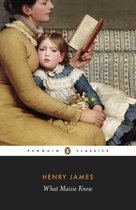
Henry James, What Maisie Knew (1897)
Maisie is very young, "the age for which all stories are true and all conceptions
are stories" (chap. 2). Her parents (Beale and ida Farange) are divorced. The
child is to live 6 months of the year with each of them «in rotation». Miss
Overmore is Maisie's governess, hired by Mrs Farange to take care of Maisie
when the latter stays with her. Miss Overmore has recently met Maisie's father
as she and the child were taking a walk in a park.
It was Miss Overmore herself who explained to Maisie that she had had a hope
of being allowed to accompany her to her father's, and that this hope had been
dashed by the way her mother took it. "She says that if I ever do such a thing as
enter his service I must never, in this house, expect to show my face again. So
I’ve promised not to attempt to go with you. If I wait patiently till you come
back here we shall certainly be together once more."
Waiting patiently, and above all waiting till she should come back there,
seemed to Maisie a long way round - it reminded her of all the things she had
been told, first and last, that she should have if she'd be good, and that, in spite
of her goodness, she had never had at all. "Then who'll take care of me at
papa's?"
"Heaven only knows, my own precious!" Miss Overmore replied,
tenderly embracing her. There was indeed no doubt that she was dear to this
beautiful friend. What could have proved it better than the fact that before a
week was out, in spite of their distressing separation, and her mother's
prohibition, and Miss Overmore's scruples and Miss Overmore's promise, the
beautiful friend had turned up at her father's? The little lady already engaged
there to come by the hour, a fat dark little lady with a foreign name and dirty
fingers, who wore, throughout, a bonnet that had at first given her a deceptive
air of not staying long, besides asking her pupil questions that had nothing to do
with lessons, questions that Beale Farange himself, when two or three were
repeated to him, admitted to be awfully vulgar - this strange apparition faded
before the bright creature who had braved everything for Maisie's sake. The
bright creature told her little charge frankly what had happened - that she had
really been unable to hold out. She had broken her vow to Mrs. Farange; she
had struggled for three days and then had come straight to Maisie's papa and
told him the simple truth. She adored his daughter; she couldn't give her up; she
would make any sacrifice for her. On this basis it had been arranged that she
should stay; her courage had been rewarded; she left Maisie in no doubt as to
the amount of courage she had required. Some of the things she said made a
particular impression on the child - her declaration, for instance, that when her
, pupil should get older she would understand better just how "dreadfully bold" a
young lady, to do exactly what she had done, had to be.
"Fortunately your papa appreciates it; he appreciates it immensely" - that
was one of the things Miss Overmore also said, with a striking insistence on the
adverb. Maisie herself was no less impressed with what her friend had gone
through, especially after hearing of the terrible letter that had come from Mrs.
Farange. Mamma had been so angry that, in Miss Overmore's own words, she
had loaded her with insult - proof enough indeed that they must never look
forward to being together again under mamma's roof.
Henry James, What Maisie Knew, 1897, Chap. II
Pistes pour un commentaire
de l’extrait
Elements for an introduction :
Lead-in:
In his critical essay The Art of Fiction 1884), Henry James stated/claimed
that the only reason for the existence of a novel is that it does attempt to
represent life". The cynicism and self-interest of adults, false appearances and
the irony of life are what James settled down to represent in this text excerpted
from his short novel What Maisie Knew (1897).
"Story":
In this passage, Maisie - whose parents are divorced and who is to spend
six months with her mother and the rest of the year with her father "in rotation"
- appears to consider and reassess what she knows and what she has been told
about her situation and the situation of her governess, Miss Overmore. The pair
appears dearly fond of one another. We learn in the course of the passage that
Miss Overmore has chosen to disobey her employer - Maisie's mother - to go
and work at the child's father's while the latter has already hired "a fat dark little
lady" to take care of Maisie.
Maisie is very young, "the age for which all stories are true and all conceptions
are stories" (chap. 2). Her parents (Beale and ida Farange) are divorced. The
child is to live 6 months of the year with each of them «in rotation». Miss
Overmore is Maisie's governess, hired by Mrs Farange to take care of Maisie
when the latter stays with her. Miss Overmore has recently met Maisie's father
as she and the child were taking a walk in a park.
It was Miss Overmore herself who explained to Maisie that she had had a hope
of being allowed to accompany her to her father's, and that this hope had been
dashed by the way her mother took it. "She says that if I ever do such a thing as
enter his service I must never, in this house, expect to show my face again. So
I’ve promised not to attempt to go with you. If I wait patiently till you come
back here we shall certainly be together once more."
Waiting patiently, and above all waiting till she should come back there,
seemed to Maisie a long way round - it reminded her of all the things she had
been told, first and last, that she should have if she'd be good, and that, in spite
of her goodness, she had never had at all. "Then who'll take care of me at
papa's?"
"Heaven only knows, my own precious!" Miss Overmore replied,
tenderly embracing her. There was indeed no doubt that she was dear to this
beautiful friend. What could have proved it better than the fact that before a
week was out, in spite of their distressing separation, and her mother's
prohibition, and Miss Overmore's scruples and Miss Overmore's promise, the
beautiful friend had turned up at her father's? The little lady already engaged
there to come by the hour, a fat dark little lady with a foreign name and dirty
fingers, who wore, throughout, a bonnet that had at first given her a deceptive
air of not staying long, besides asking her pupil questions that had nothing to do
with lessons, questions that Beale Farange himself, when two or three were
repeated to him, admitted to be awfully vulgar - this strange apparition faded
before the bright creature who had braved everything for Maisie's sake. The
bright creature told her little charge frankly what had happened - that she had
really been unable to hold out. She had broken her vow to Mrs. Farange; she
had struggled for three days and then had come straight to Maisie's papa and
told him the simple truth. She adored his daughter; she couldn't give her up; she
would make any sacrifice for her. On this basis it had been arranged that she
should stay; her courage had been rewarded; she left Maisie in no doubt as to
the amount of courage she had required. Some of the things she said made a
particular impression on the child - her declaration, for instance, that when her
, pupil should get older she would understand better just how "dreadfully bold" a
young lady, to do exactly what she had done, had to be.
"Fortunately your papa appreciates it; he appreciates it immensely" - that
was one of the things Miss Overmore also said, with a striking insistence on the
adverb. Maisie herself was no less impressed with what her friend had gone
through, especially after hearing of the terrible letter that had come from Mrs.
Farange. Mamma had been so angry that, in Miss Overmore's own words, she
had loaded her with insult - proof enough indeed that they must never look
forward to being together again under mamma's roof.
Henry James, What Maisie Knew, 1897, Chap. II
Pistes pour un commentaire
de l’extrait
Elements for an introduction :
Lead-in:
In his critical essay The Art of Fiction 1884), Henry James stated/claimed
that the only reason for the existence of a novel is that it does attempt to
represent life". The cynicism and self-interest of adults, false appearances and
the irony of life are what James settled down to represent in this text excerpted
from his short novel What Maisie Knew (1897).
"Story":
In this passage, Maisie - whose parents are divorced and who is to spend
six months with her mother and the rest of the year with her father "in rotation"
- appears to consider and reassess what she knows and what she has been told
about her situation and the situation of her governess, Miss Overmore. The pair
appears dearly fond of one another. We learn in the course of the passage that
Miss Overmore has chosen to disobey her employer - Maisie's mother - to go
and work at the child's father's while the latter has already hired "a fat dark little
lady" to take care of Maisie.