

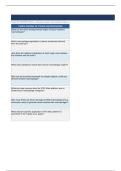
Cover the ANSWER column, recall your answer, then reveal to check. Leave cells blank until you can answer confidently.
THREE ORIGINS OF TISSUE MACROPHAGES
What are the three developmental origins of tissue-resident
macrophages?
Which macrophage population is almost exclusively derived
from the yolk sac?
How does the relative contribution of each origin vary between
the intestine and the brain?
What does parabiosis reveal about tissue macrophage origins?
Why can an incoming monocyte not simply replace a yolk-sac-
derived resident macrophage?
What two-step process does the iPSC-iMac platform use to
model tissue macrophage ontogeny?
Why must iPSCs be driven through an EMP intermediate (not a
monocyte route) to generate tissue-resident-like macrophages?
What disease-specific application of the iMac platform is
described in the Takata et al. paper?
,al to check. Leave cells blank until you can answer confidently.
YOUR ANSWER
TISSUE MESIDANT MACS
it tells us that when two mice are combiens
blood stremas we would expect that some of the
tissue R macswoudl replace in tissues but the
opposite happens telling us that they are self
renewing
monocytes arent as pluripotent as YS dervied
where they have one single origin
1. expose iMACs to PSC to see what happens 2.
expose the iMACs to tissue residnet signals
to
, ALVEOLAR MACROPHAGES & THEIR NICHE
What niche signal (and its cellular source) establishes alveolar
macrophage identity?
Name the two transcription factors expressed sequentially
during alveolar macrophage differentiation and state the order.
What is the tissue-specific function of alveolar macrophages?
What molecule acts as the 'functional-demand signal' for
surfactant clearance, and which transcription factor does it
induce?
What disease results from loss of GM-CSF signalling in the lung,
and what is the pathological consequence?
In autoimmune PAP, what is the precise molecular mechanism
— does the antibody block the receptor or neutralise the ligand?
Why does autoimmune PAP present primarily as surfactant
accumulation rather than overwhelming infection?
Name a therapeutic approach that exploits knowledge of the
GM-CSF/PPARγ axis to treat PAP.
, YOUR ANSWER
GM-CSF from endothelial cells in the lungs
PU.1 and PYVAR
To kill debris and regulate surfactant levels to
ensure lungs have suffficent surface area
THREE ORIGINS OF TISSUE MACROPHAGES
What are the three developmental origins of tissue-resident
macrophages?
Which macrophage population is almost exclusively derived
from the yolk sac?
How does the relative contribution of each origin vary between
the intestine and the brain?
What does parabiosis reveal about tissue macrophage origins?
Why can an incoming monocyte not simply replace a yolk-sac-
derived resident macrophage?
What two-step process does the iPSC-iMac platform use to
model tissue macrophage ontogeny?
Why must iPSCs be driven through an EMP intermediate (not a
monocyte route) to generate tissue-resident-like macrophages?
What disease-specific application of the iMac platform is
described in the Takata et al. paper?
,al to check. Leave cells blank until you can answer confidently.
YOUR ANSWER
TISSUE MESIDANT MACS
it tells us that when two mice are combiens
blood stremas we would expect that some of the
tissue R macswoudl replace in tissues but the
opposite happens telling us that they are self
renewing
monocytes arent as pluripotent as YS dervied
where they have one single origin
1. expose iMACs to PSC to see what happens 2.
expose the iMACs to tissue residnet signals
to
, ALVEOLAR MACROPHAGES & THEIR NICHE
What niche signal (and its cellular source) establishes alveolar
macrophage identity?
Name the two transcription factors expressed sequentially
during alveolar macrophage differentiation and state the order.
What is the tissue-specific function of alveolar macrophages?
What molecule acts as the 'functional-demand signal' for
surfactant clearance, and which transcription factor does it
induce?
What disease results from loss of GM-CSF signalling in the lung,
and what is the pathological consequence?
In autoimmune PAP, what is the precise molecular mechanism
— does the antibody block the receptor or neutralise the ligand?
Why does autoimmune PAP present primarily as surfactant
accumulation rather than overwhelming infection?
Name a therapeutic approach that exploits knowledge of the
GM-CSF/PPARγ axis to treat PAP.
, YOUR ANSWER
GM-CSF from endothelial cells in the lungs
PU.1 and PYVAR
To kill debris and regulate surfactant levels to
ensure lungs have suffficent surface area


