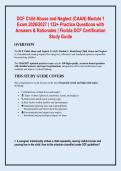
DCF Child Abuse and Neglect (CAAN) Module 1
Exam 2026/2027 | 132+ Practice Questions with
Answers & Rationales | Florida DCF Certification
Study Guide
OVERVIEW
The DCF Child Abuse and Neglect (CAAN) Module 1: Identifying Child Abuse and Neglect
is a foundational training required for caregivers, educators, and mandated reporters responsible
for protecting children.
This 2026/2027 updated practice exam includes 100 high-quality, scenario-based questions
with detailed answers and expert explanations, designed to reflect real certification exam
standards and improve critical thinking.
THIS STUDY GUIDE COVERS
This comprehensive exam focuses on the most frequently tested and high-yield topics,
including:
👶 Definitions of child abuse and neglect
🚨 Types of abuse (physical, emotional, sexual, and neglect)
🔍 Behavioral and physical warning signs
⚠️ Risk factors within families and environments
📢 Mandated reporting laws and responsibilities
🧾 Documentation and observation best practices
🏠 Environmental and supervisory neglect
🧾 Emotional and psychological impact of abuse
1. A caregiver intentionally strikes a child repeatedly, leaving visible bruises and
causing fear in the child. How is this situation classified under DCF guidelines?
,A. Discipline
B. Physical abuse
C. Emotional neglect
D. Accidental injury
✔ Answer: B
Explanation: Physical abuse involves intentional use of force resulting in injury or potential
harm. Repeated striking with visible injuries clearly meets this definition.
2. A child is frequently left unsupervised at home for several hours despite being too
young to care for themselves safely. What is the most appropriate classification?
A. Emotional abuse
B. Physical abuse
C. Neglect due to lack of supervision
D. Acceptable independence
✔ Answer: C
Explanation: Neglect includes failure to provide appropriate supervision, especially when
the child’s age makes independent care unsafe.
3. A caregiver consistently yells at a child, calling them worthless and unwanted,
leading to withdrawal and anxiety. What type of abuse is most likely occurring?
A. Physical abuse
B. Emotional abuse
C. Sexual abuse
D. Neglect
✔ Answer: B
Explanation: Emotional abuse includes verbal attacks, humiliation, and rejection that harm
a child’s psychological development.
4. A mandated reporter observes suspicious bruising but is unsure if abuse
occurred. What is their legal responsibility?
A. Wait for confirmation
B. Report immediately based on reasonable suspicion
,C. Confront the caregiver
D. Ignore the situation
✔ Answer: B
Explanation: Reporting is required when there is reasonable suspicion, not confirmed
proof.
5. A child presents with bruises shaped like a belt buckle and injuries in different
healing stages. What does this indicate?
A. Normal play injury
B. Possible repeated physical abuse
C. Medical condition
D. Athletic injury
✔ Answer: B
Explanation: Patterned injuries and varying healing stages strongly suggest repeated
abuse.
6. A child suddenly becomes withdrawn, avoids eye contact, and shows fear when a
specific caregiver arrives. What should be considered?
A. Personality change
B. Possible abuse or trauma
C. Normal mood variation
D. Academic stress
✔ Answer: B
Explanation: Behavioral changes and fear responses are key indicators of possible abuse.
7. A caregiver fails to provide adequate food, resulting in a child consistently
appearing malnourished and fatigued. What type of maltreatment is this?
A. Emotional abuse
B. Physical abuse
C. Neglect
D. Discipline
, ✔ Answer: C
Explanation: Failure to provide basic needs such as food is a primary form of neglect.
8. Why is it important for caregivers to document observations of suspected abuse
accurately and objectively?
A. For personal records only
B. To support investigations with factual evidence
C. To confront families
D. To delay reporting
✔ Answer: B
Explanation: Accurate documentation ensures reliable evidence for investigations and
protects the child.
9. A child describes inappropriate touching by an adult. What is the most appropriate
classification?
A. Emotional abuse
B. Physical abuse
C. Sexual abuse
D. Neglect
✔ Answer: C
Explanation: Any inappropriate sexual contact with a child constitutes sexual abuse.
10. Which factor most increases the likelihood of child abuse occurring within a
family environment?
A. Stable employment
B. Strong support system
C. Caregiver substance abuse and stress
D. Access to education
✔ Answer: C
Explanation: Substance abuse and stress impair judgment and increase abuse risk.
Exam 2026/2027 | 132+ Practice Questions with
Answers & Rationales | Florida DCF Certification
Study Guide
OVERVIEW
The DCF Child Abuse and Neglect (CAAN) Module 1: Identifying Child Abuse and Neglect
is a foundational training required for caregivers, educators, and mandated reporters responsible
for protecting children.
This 2026/2027 updated practice exam includes 100 high-quality, scenario-based questions
with detailed answers and expert explanations, designed to reflect real certification exam
standards and improve critical thinking.
THIS STUDY GUIDE COVERS
This comprehensive exam focuses on the most frequently tested and high-yield topics,
including:
👶 Definitions of child abuse and neglect
🚨 Types of abuse (physical, emotional, sexual, and neglect)
🔍 Behavioral and physical warning signs
⚠️ Risk factors within families and environments
📢 Mandated reporting laws and responsibilities
🧾 Documentation and observation best practices
🏠 Environmental and supervisory neglect
🧾 Emotional and psychological impact of abuse
1. A caregiver intentionally strikes a child repeatedly, leaving visible bruises and
causing fear in the child. How is this situation classified under DCF guidelines?
,A. Discipline
B. Physical abuse
C. Emotional neglect
D. Accidental injury
✔ Answer: B
Explanation: Physical abuse involves intentional use of force resulting in injury or potential
harm. Repeated striking with visible injuries clearly meets this definition.
2. A child is frequently left unsupervised at home for several hours despite being too
young to care for themselves safely. What is the most appropriate classification?
A. Emotional abuse
B. Physical abuse
C. Neglect due to lack of supervision
D. Acceptable independence
✔ Answer: C
Explanation: Neglect includes failure to provide appropriate supervision, especially when
the child’s age makes independent care unsafe.
3. A caregiver consistently yells at a child, calling them worthless and unwanted,
leading to withdrawal and anxiety. What type of abuse is most likely occurring?
A. Physical abuse
B. Emotional abuse
C. Sexual abuse
D. Neglect
✔ Answer: B
Explanation: Emotional abuse includes verbal attacks, humiliation, and rejection that harm
a child’s psychological development.
4. A mandated reporter observes suspicious bruising but is unsure if abuse
occurred. What is their legal responsibility?
A. Wait for confirmation
B. Report immediately based on reasonable suspicion
,C. Confront the caregiver
D. Ignore the situation
✔ Answer: B
Explanation: Reporting is required when there is reasonable suspicion, not confirmed
proof.
5. A child presents with bruises shaped like a belt buckle and injuries in different
healing stages. What does this indicate?
A. Normal play injury
B. Possible repeated physical abuse
C. Medical condition
D. Athletic injury
✔ Answer: B
Explanation: Patterned injuries and varying healing stages strongly suggest repeated
abuse.
6. A child suddenly becomes withdrawn, avoids eye contact, and shows fear when a
specific caregiver arrives. What should be considered?
A. Personality change
B. Possible abuse or trauma
C. Normal mood variation
D. Academic stress
✔ Answer: B
Explanation: Behavioral changes and fear responses are key indicators of possible abuse.
7. A caregiver fails to provide adequate food, resulting in a child consistently
appearing malnourished and fatigued. What type of maltreatment is this?
A. Emotional abuse
B. Physical abuse
C. Neglect
D. Discipline
, ✔ Answer: C
Explanation: Failure to provide basic needs such as food is a primary form of neglect.
8. Why is it important for caregivers to document observations of suspected abuse
accurately and objectively?
A. For personal records only
B. To support investigations with factual evidence
C. To confront families
D. To delay reporting
✔ Answer: B
Explanation: Accurate documentation ensures reliable evidence for investigations and
protects the child.
9. A child describes inappropriate touching by an adult. What is the most appropriate
classification?
A. Emotional abuse
B. Physical abuse
C. Sexual abuse
D. Neglect
✔ Answer: C
Explanation: Any inappropriate sexual contact with a child constitutes sexual abuse.
10. Which factor most increases the likelihood of child abuse occurring within a
family environment?
A. Stable employment
B. Strong support system
C. Caregiver substance abuse and stress
D. Access to education
✔ Answer: C
Explanation: Substance abuse and stress impair judgment and increase abuse risk.