
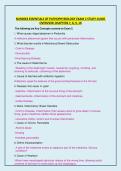
NUR2063 ESSENTIALS OF PATHOPHYSIOLOGY EXAM 2 STUDY GUIDE
OVERVIEW CHAPTERS 7, 8, 9, 10
The following are Key Concepts covered on Exam 2.
1. What causes ridged abdomen in Peritonitis
A reflective abdominal spasm that occurs with peritoneal inflammation.
2. What disorder results in Mechanical Bowel Obstruction
- Crohn’s Disease
- Diverticulitis
-Hirschsprung Disease
3. The cause of Hiatal Hernia
- Weaking of the diaphragm muscle, caused by coughing, vomiting, and
straining to defecate. (straining of the abdomen)
4. Cause of diarrhea with antibiotic ingestion
Antibiotics upset the balance of the good and bad bacteria in the GI tract.
5. Diseases that cause H. pylori
- Gastritis- inflammation of the mucous lining of the stomach
- Gastroenteritis- inflammation of the stomach and intestines
- Celiac Disease-
6. Name Inflammatory Bowel Disorders
- Crohn’s Disease- inflammation that causes ulcers to grow deep in mucosa
lining, gives intestines cobble stone appearance.
- Ulcerative Colitis- rectum and mucosa inflammation
7. Cause of Chronic Pancreatitis
- Alcohol abuse
-Smoking
-inherited pancreatitis
8. Define Intussusception
- A part of the intestines enters an adjacent part of the intestines. Serious
condition!!
9. Cause of Heartburn
-When lower esophageal sphincter relaxes at the wrong time, allowing acidic
contents of stomach to come back up into esophagus.
,10. Fecal Impaction/mechanical bowel obstruction
- Fecal impaction is blockage from hard stool.
- Mechanical Bowel Obstruction is blockage by something other than stool.
11. Cause of Acute Pancreatitis
- Cholelithiasis (formation of gallstones) causing blockage
- Alcohol consumption
- Bile duct blockage
- Hypercalcemia
12. Transmission of Hepatitis A, B, C, E
- Hep A: Waterborne, Venereal (sex), Fecal-oral
- Hep B: Perinatal, blood/skin, venereal
- Hep C: Venereal, blood/skin
- Hep E: Waterborne, fecal/oral, perinatal
13. Cause of cleft Lip and Palate
When soft tissue of lip and mouth do not form properly
- a lack of folic acid during pregnancy, caused by genetic and environmental
factors during pregnancy
14. Clinical Manifestations of Appendicitis
- Range from asymptomatic to sudden to severe.
- Pain in umbilicus than pain radiates all over RT lower quadrant
- Fever, chills, nausea/vomiting, Abdominal distension
, 15. Complications of GERD Hint: complication
-Esophagitis (inflammation of esophagus)
- Ulcers
- Barret esophagus (pre-cancerous)
- Cancers
16. Consequences of untreated gastroenteritis
- Severe dehydration
- Electrolyte imbalance
- Kidney failure
- Sometimes death
17. Clinical manifestations of bile duct obstruction
- jaundice (yellowing of eyes and skin)
- Clay colored stool
- Dark urine
- Fever accompanied with nausea/vomiting
18. Define
dysphagia
Difficulty
swallowing
19. Clinical manifestations of gastritis
- indigestion, heart burn, epigastric pain, abdominal cramping, nausea/vomiting,
peptic ulcers, and dark-tarry stool
20. Know how to identify duodenal and gastric ulcers
- Duodenal: Epigastric pain, none in the morning but starts 2-4 hours after being
awake. Food relieves it for a while.
- Gastric: Less frequent, pain worsen with eating/food
21. Know ulcerative colitis
Progressive inflammation of the rectum & colon. Mucosa becomes swollen and
frail. Leads to necrosis.
Clinical manifestations: Imbalance of nutrients, Ph, and fluid/electrolytes.
Persistent rectal spasms (tenesmus), weight loss, and abdominal cramping.
Treatment: Dietary management and medication or surgery
OVERVIEW CHAPTERS 7, 8, 9, 10
The following are Key Concepts covered on Exam 2.
1. What causes ridged abdomen in Peritonitis
A reflective abdominal spasm that occurs with peritoneal inflammation.
2. What disorder results in Mechanical Bowel Obstruction
- Crohn’s Disease
- Diverticulitis
-Hirschsprung Disease
3. The cause of Hiatal Hernia
- Weaking of the diaphragm muscle, caused by coughing, vomiting, and
straining to defecate. (straining of the abdomen)
4. Cause of diarrhea with antibiotic ingestion
Antibiotics upset the balance of the good and bad bacteria in the GI tract.
5. Diseases that cause H. pylori
- Gastritis- inflammation of the mucous lining of the stomach
- Gastroenteritis- inflammation of the stomach and intestines
- Celiac Disease-
6. Name Inflammatory Bowel Disorders
- Crohn’s Disease- inflammation that causes ulcers to grow deep in mucosa
lining, gives intestines cobble stone appearance.
- Ulcerative Colitis- rectum and mucosa inflammation
7. Cause of Chronic Pancreatitis
- Alcohol abuse
-Smoking
-inherited pancreatitis
8. Define Intussusception
- A part of the intestines enters an adjacent part of the intestines. Serious
condition!!
9. Cause of Heartburn
-When lower esophageal sphincter relaxes at the wrong time, allowing acidic
contents of stomach to come back up into esophagus.
,10. Fecal Impaction/mechanical bowel obstruction
- Fecal impaction is blockage from hard stool.
- Mechanical Bowel Obstruction is blockage by something other than stool.
11. Cause of Acute Pancreatitis
- Cholelithiasis (formation of gallstones) causing blockage
- Alcohol consumption
- Bile duct blockage
- Hypercalcemia
12. Transmission of Hepatitis A, B, C, E
- Hep A: Waterborne, Venereal (sex), Fecal-oral
- Hep B: Perinatal, blood/skin, venereal
- Hep C: Venereal, blood/skin
- Hep E: Waterborne, fecal/oral, perinatal
13. Cause of cleft Lip and Palate
When soft tissue of lip and mouth do not form properly
- a lack of folic acid during pregnancy, caused by genetic and environmental
factors during pregnancy
14. Clinical Manifestations of Appendicitis
- Range from asymptomatic to sudden to severe.
- Pain in umbilicus than pain radiates all over RT lower quadrant
- Fever, chills, nausea/vomiting, Abdominal distension
, 15. Complications of GERD Hint: complication
-Esophagitis (inflammation of esophagus)
- Ulcers
- Barret esophagus (pre-cancerous)
- Cancers
16. Consequences of untreated gastroenteritis
- Severe dehydration
- Electrolyte imbalance
- Kidney failure
- Sometimes death
17. Clinical manifestations of bile duct obstruction
- jaundice (yellowing of eyes and skin)
- Clay colored stool
- Dark urine
- Fever accompanied with nausea/vomiting
18. Define
dysphagia
Difficulty
swallowing
19. Clinical manifestations of gastritis
- indigestion, heart burn, epigastric pain, abdominal cramping, nausea/vomiting,
peptic ulcers, and dark-tarry stool
20. Know how to identify duodenal and gastric ulcers
- Duodenal: Epigastric pain, none in the morning but starts 2-4 hours after being
awake. Food relieves it for a while.
- Gastric: Less frequent, pain worsen with eating/food
21. Know ulcerative colitis
Progressive inflammation of the rectum & colon. Mucosa becomes swollen and
frail. Leads to necrosis.
Clinical manifestations: Imbalance of nutrients, Ph, and fluid/electrolytes.
Persistent rectal spasms (tenesmus), weight loss, and abdominal cramping.
Treatment: Dietary management and medication or surgery


