
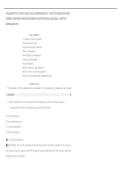
COLORADO POST STUDY GUIDE (2026 COMPREHENSIVE): – PRACTICE QUESTIONS AND
CORRECT ANSWERS (VERIFIED ANSWERS) PLUS RATIONALES 2026 Q&A | INSTANT
DOWNLOAD PDF.
*CORE DOMAINS*
*Criminal Justice System*
*Constitutional Law*
*Colorado Revised Statutes*
*Patrol Procedures*
*Investigative Procedures*
*Traffic Enforcement*
*Victim Rights*
*Arrest, Search, and Seizure*
*Use of Force and De-escalation*
*Ethics and Professional Responsibility*
*INTRODUCTION*
*The purpose of this comprehensive assessment is to evaluate the competency and readin
1. Which amendment to the United States Constitution protects individuals against
unreasonable searches and seizures by government officials?
A. First Amendment
B. Second Amendment
C. Fourth Amendment
D. Fifth Amendment
🟢 C. Fourth Amendment
🔴 RATIONALE: The Fourth Amendment specifically protects the right of people to be secure in
their persons, houses, papers, and effects against unreasonable searches and seizures, requiring
probable cause for warrants.
, 2. A Colorado peace officer may conduct a "Terry" stop (investigatory stop) based on which
legal standard?
A. Reasonable suspicion
B. Probable cause
C. Clear and convincing evidence
D. Proof beyond a reasonable doubt
🟢 A. Reasonable suspicion
🔴 RATIONALE: Under Terry v. Ohio and Colorado law, an officer may temporarily detain a
person for questioning if they have a reasonable suspicion that the person has committed, is
committing, or is about to commit a crime.
3. According to Colorado Revised Statutes, what is the primary distinction between Robbery
and Aggravated Robbery?
A. The value of the property taken exceeds $2,000
B. The use of a deadly weapon or the representation of one
C. The victim sustains serious bodily injury
D. The crime occurs in a residential dwelling
🟢 B. The use of a deadly weapon or the representation of one
🔴 RATIONALE: Robbery involves taking property by force or intimidation; it is elevated to
Aggravated Robbery when the offender is armed with a deadly weapon and has the intent to
kill, maim, or wound if resisted.
4. During a high-stress encounter, an officer utilizes a de-escalation technique by
maintaining a calm tone and creating distance. This is an example of:
A. Passive resistance
B. Tactical repositioning
,C. Officer presence
D. Non-verbal communication and distance management
🟢 D. Non-verbal communication and distance management
🔴 RATIONALE: De-escalation involves using time, distance, and communication to stabilize a
situation and reduce the need for physical force.
5. Which of the following is a mandatory requirement for a valid "consent search"?
A. The consent must be in writing
B. The person giving consent must be the owner of the property
C. The consent must be given voluntarily and intelligently
D. The officer must have at least reasonable suspicion before asking
🟢 C. The consent must be given voluntarily and intelligently
🔴 RATIONALE: For a consent search to be constitutional, the individual must provide consent
freely, without coercion or duress, and have the authority to grant that consent.
6. Under Colorado law, "Serious Bodily Injury" is defined as an injury that involves:
A. Temporary disfigurement
B. Any break or fracture of a bone
C. A substantial risk of death or permanent disfigurement
D. Any physical pain or impairment
🟢 C. A substantial risk of death or permanent disfigurement
🔴 RATIONALE: Serious Bodily Injury (SBI) is a higher legal threshold than bodily injury,
requiring a substantial risk of death, serious permanent disfigurement, or protracted loss of
organ function.
7. While patrolling a neighborhood, an officer sees a man running away from a closed
jewelry store at 2:00 AM carrying a heavy duffel bag. The officer stops the man. This stop
is:
, A. Illegal because running is not a crime
B. Legal because the officer has reasonable suspicion based on the totality of circumstances
C. Illegal because the officer did not see a crime committed
D. Legal only if the officer has a warrant for the man’s arrest
🟢 B. Legal because the officer has reasonable suspicion based on the totality of circumstances
🔴 RATIONALE: The time of day, the location (near a closed business), and the subject’s
behavior (running with a heavy bag) provide the officer with reasonable suspicion for an
investigatory stop.
8. When an officer is interviewing a witness to a crime, which type of questioning is generally
most effective for gathering accurate information?
A. Leading questions
B. Yes/No questions
C. Open-ended questions
D. Rapid-fire questions
🟢 C. Open-ended questions
🔴 RATIONALE: Open-ended questions encourage witnesses to provide detailed, narrative
accounts of what they observed without being influenced by the officer's suggestions.
9. In the Colorado court system, which court has jurisdiction over felony criminal cases?
A. Municipal Court
B. County Court
C. District Court
D. Small Claims Court
🟢 C. District Court
🔴 RATIONALE: In Colorado, District Courts are courts of general jurisdiction that handle felony
criminal cases, while County Courts typically handle misdemeanors and traffic infractions.
CORRECT ANSWERS (VERIFIED ANSWERS) PLUS RATIONALES 2026 Q&A | INSTANT
DOWNLOAD PDF.
*CORE DOMAINS*
*Criminal Justice System*
*Constitutional Law*
*Colorado Revised Statutes*
*Patrol Procedures*
*Investigative Procedures*
*Traffic Enforcement*
*Victim Rights*
*Arrest, Search, and Seizure*
*Use of Force and De-escalation*
*Ethics and Professional Responsibility*
*INTRODUCTION*
*The purpose of this comprehensive assessment is to evaluate the competency and readin
1. Which amendment to the United States Constitution protects individuals against
unreasonable searches and seizures by government officials?
A. First Amendment
B. Second Amendment
C. Fourth Amendment
D. Fifth Amendment
🟢 C. Fourth Amendment
🔴 RATIONALE: The Fourth Amendment specifically protects the right of people to be secure in
their persons, houses, papers, and effects against unreasonable searches and seizures, requiring
probable cause for warrants.
, 2. A Colorado peace officer may conduct a "Terry" stop (investigatory stop) based on which
legal standard?
A. Reasonable suspicion
B. Probable cause
C. Clear and convincing evidence
D. Proof beyond a reasonable doubt
🟢 A. Reasonable suspicion
🔴 RATIONALE: Under Terry v. Ohio and Colorado law, an officer may temporarily detain a
person for questioning if they have a reasonable suspicion that the person has committed, is
committing, or is about to commit a crime.
3. According to Colorado Revised Statutes, what is the primary distinction between Robbery
and Aggravated Robbery?
A. The value of the property taken exceeds $2,000
B. The use of a deadly weapon or the representation of one
C. The victim sustains serious bodily injury
D. The crime occurs in a residential dwelling
🟢 B. The use of a deadly weapon or the representation of one
🔴 RATIONALE: Robbery involves taking property by force or intimidation; it is elevated to
Aggravated Robbery when the offender is armed with a deadly weapon and has the intent to
kill, maim, or wound if resisted.
4. During a high-stress encounter, an officer utilizes a de-escalation technique by
maintaining a calm tone and creating distance. This is an example of:
A. Passive resistance
B. Tactical repositioning
,C. Officer presence
D. Non-verbal communication and distance management
🟢 D. Non-verbal communication and distance management
🔴 RATIONALE: De-escalation involves using time, distance, and communication to stabilize a
situation and reduce the need for physical force.
5. Which of the following is a mandatory requirement for a valid "consent search"?
A. The consent must be in writing
B. The person giving consent must be the owner of the property
C. The consent must be given voluntarily and intelligently
D. The officer must have at least reasonable suspicion before asking
🟢 C. The consent must be given voluntarily and intelligently
🔴 RATIONALE: For a consent search to be constitutional, the individual must provide consent
freely, without coercion or duress, and have the authority to grant that consent.
6. Under Colorado law, "Serious Bodily Injury" is defined as an injury that involves:
A. Temporary disfigurement
B. Any break or fracture of a bone
C. A substantial risk of death or permanent disfigurement
D. Any physical pain or impairment
🟢 C. A substantial risk of death or permanent disfigurement
🔴 RATIONALE: Serious Bodily Injury (SBI) is a higher legal threshold than bodily injury,
requiring a substantial risk of death, serious permanent disfigurement, or protracted loss of
organ function.
7. While patrolling a neighborhood, an officer sees a man running away from a closed
jewelry store at 2:00 AM carrying a heavy duffel bag. The officer stops the man. This stop
is:
, A. Illegal because running is not a crime
B. Legal because the officer has reasonable suspicion based on the totality of circumstances
C. Illegal because the officer did not see a crime committed
D. Legal only if the officer has a warrant for the man’s arrest
🟢 B. Legal because the officer has reasonable suspicion based on the totality of circumstances
🔴 RATIONALE: The time of day, the location (near a closed business), and the subject’s
behavior (running with a heavy bag) provide the officer with reasonable suspicion for an
investigatory stop.
8. When an officer is interviewing a witness to a crime, which type of questioning is generally
most effective for gathering accurate information?
A. Leading questions
B. Yes/No questions
C. Open-ended questions
D. Rapid-fire questions
🟢 C. Open-ended questions
🔴 RATIONALE: Open-ended questions encourage witnesses to provide detailed, narrative
accounts of what they observed without being influenced by the officer's suggestions.
9. In the Colorado court system, which court has jurisdiction over felony criminal cases?
A. Municipal Court
B. County Court
C. District Court
D. Small Claims Court
🟢 C. District Court
🔴 RATIONALE: In Colorado, District Courts are courts of general jurisdiction that handle felony
criminal cases, while County Courts typically handle misdemeanors and traffic infractions.


