

EKG'S DYSRHYTHM AS 601006pm
40606pm
readingEKGpaper
40606pm
of
0.09seconds
1
0.20seconds
20406pm
30 6seconds
1 theRatriumsendsaactionpotentialsignalfromtheSAnode
2 signalspreadsacrossbothatriacausingmuscledepolarization some
enduringatrialsystole 1m91
SAnodeAvnodee's
3 signalleavesatrias enterstheventriclesviatheAVnode
4 signalentersbundleofHis
5 spreadsthroughbundlebranches purkinjefibersinventriclewallsCONTRATIONOCCURS ventricularsystole
6 signalpassesoutofventricles ventricularwallsrelaxventriculardiastole
7 ventricularrepolarization HOWTOANALYZE
1 determine HR R R
2 determineregular vs irregular
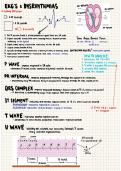
P WAVE impulseoriginatedinSAnode 3 Pwave measurePRinterval
abnormal PmeansactionimpulseoriginatedoutsideSAnode 4 measureQRScomplex
5 nametherhythm
PR INTERVAL impulseprogressednormallythroughthesystemtotheventricles
abnormallylongPRindicatesdelayofprogressionofimpulsethroughAVnodebundleofHis
QRSif duration
COMPLEX impulse progressednormally depolarizationof R Lventriclehasoccurred
isabnormallylargerthanimpulsecamefromsomewhereelsein
ST SEGMENTindicatesthatnormalrepolarization of R L ventricleshasoccured
DEPRESSION representsmyocardialischemia
ELEVATION representscardiacmuscleinjuryornecrosis if R R 40.8 regular
irregular
T WAVE indicatesnormalrepolarization
abnormal T wavemeansabnormalventricularrepolarization
U WAVE usuallynotvisablebuttypicallyfollowsT wave
mayindicatehypokalemia
second 1second
60seconds
1 2 345 1 23 45 6 secondstrip 10
1 2 3 4 5 6 7 8
18
80bp
1 ifn
, therelationshipbetweenelectricalconductivity themechanical
typesofdysrhythmias
Ma ofoxygen conductionblockreentrycircuit
PHYSIOLOGICAL AFFECTS OF
TACHYCARDIA BRADYCARDIA
fesdshlss.to orthopnea
xiety nervousness jugularveindistention
dizziness syncope weaknessfatigue
palpitations cool skin
Paf
Iffghypnea urineoutput
ATRIAL RHYTHMS
rate60100regularrhythm
NORMAL SINUS RHYTHM PR 0.120.20QRS 0.040.12
dissentihias
bradycardia
aYiEm
atrialdysrhythmias
ir u:i:ii:i:a'Psit
SINUS BRADYCARDIA
Ñu canpaceitiiiie.in
decreaseinrateofatrialdepolarization
duetoslowingofSAnode
myocardialO2demand
CAUSES SYMPTOMS es sa.onmisieis.az 8i92onaas2eas2ozgaszaso60 6 10
Vagalstimulation
hyperkalemia illness 3 10
39
hypothyroidism confuse
SleofbetablockersCCB YBpP rate 60bpm regularrhythm PR 0.12 0.20
hypoxemia QRS0.04 0.12
diaphoresis M
ON ATROPINE SULFATE
NURSING INTERVENTIONS treatssignificantbradycardiaasomerablocks a
checkforunderlyingcause if symptomatic bradycardia
apply02 hypotensive givefluids
1mm
pl
mhg9 g5mihnimum:o.gmg
druginduced notifyphysician adverse
ATROPINE pacemaker fiftieth.fi EYfIYutIiIYoIns baggedvigorously
40606pm
readingEKGpaper
40606pm
of
0.09seconds
1
0.20seconds
20406pm
30 6seconds
1 theRatriumsendsaactionpotentialsignalfromtheSAnode
2 signalspreadsacrossbothatriacausingmuscledepolarization some
enduringatrialsystole 1m91
SAnodeAvnodee's
3 signalleavesatrias enterstheventriclesviatheAVnode
4 signalentersbundleofHis
5 spreadsthroughbundlebranches purkinjefibersinventriclewallsCONTRATIONOCCURS ventricularsystole
6 signalpassesoutofventricles ventricularwallsrelaxventriculardiastole
7 ventricularrepolarization HOWTOANALYZE
1 determine HR R R
2 determineregular vs irregular
P WAVE impulseoriginatedinSAnode 3 Pwave measurePRinterval
abnormal PmeansactionimpulseoriginatedoutsideSAnode 4 measureQRScomplex
5 nametherhythm
PR INTERVAL impulseprogressednormallythroughthesystemtotheventricles
abnormallylongPRindicatesdelayofprogressionofimpulsethroughAVnodebundleofHis
QRSif duration
COMPLEX impulse progressednormally depolarizationof R Lventriclehasoccurred
isabnormallylargerthanimpulsecamefromsomewhereelsein
ST SEGMENTindicatesthatnormalrepolarization of R L ventricleshasoccured
DEPRESSION representsmyocardialischemia
ELEVATION representscardiacmuscleinjuryornecrosis if R R 40.8 regular
irregular
T WAVE indicatesnormalrepolarization
abnormal T wavemeansabnormalventricularrepolarization
U WAVE usuallynotvisablebuttypicallyfollowsT wave
mayindicatehypokalemia
second 1second
60seconds
1 2 345 1 23 45 6 secondstrip 10
1 2 3 4 5 6 7 8
18
80bp
1 ifn
, therelationshipbetweenelectricalconductivity themechanical
typesofdysrhythmias
Ma ofoxygen conductionblockreentrycircuit
PHYSIOLOGICAL AFFECTS OF
TACHYCARDIA BRADYCARDIA
fesdshlss.to orthopnea
xiety nervousness jugularveindistention
dizziness syncope weaknessfatigue
palpitations cool skin
Paf
Iffghypnea urineoutput
ATRIAL RHYTHMS
rate60100regularrhythm
NORMAL SINUS RHYTHM PR 0.120.20QRS 0.040.12
dissentihias
bradycardia
aYiEm
atrialdysrhythmias
ir u:i:ii:i:a'Psit
SINUS BRADYCARDIA
Ñu canpaceitiiiie.in
decreaseinrateofatrialdepolarization
duetoslowingofSAnode
myocardialO2demand
CAUSES SYMPTOMS es sa.onmisieis.az 8i92onaas2eas2ozgaszaso60 6 10
Vagalstimulation
hyperkalemia illness 3 10
39
hypothyroidism confuse
SleofbetablockersCCB YBpP rate 60bpm regularrhythm PR 0.12 0.20
hypoxemia QRS0.04 0.12
diaphoresis M
ON ATROPINE SULFATE
NURSING INTERVENTIONS treatssignificantbradycardiaasomerablocks a
checkforunderlyingcause if symptomatic bradycardia
apply02 hypotensive givefluids
1mm
pl
mhg9 g5mihnimum:o.gmg
druginduced notifyphysician adverse
ATROPINE pacemaker fiftieth.fi EYfIYutIiIYoIns baggedvigorously


