

BSM2601 ASSIGNMENT 2 2026
DUE 16 APRIL 2026
Question 1
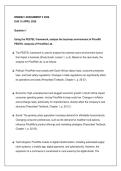
Using the PESTEL Framework, analyse the business environment of PriceRit
PESTEL Analysis of PriceRite Ltd.
The PESTEL framework is used to analyse the external macro-environment factors
that impact a business (Study Guide, Lesson 1, p. 6). Based on the case study, the
analysis for PriceRite Ltd. is as follows:
Political: PriceRite must comply with South African labour laws, consumer protection
laws, and food safety regulations. Changes in trade regulations can significantly affect
its operations and costs (Prescribed Textbook, Chapter 1, p. 26-27).
Economic: High unemployment and sluggish economic growth in South Africa impact
consumer spending power, forcing PriceRite to keep costs low. Changes in inflation
and exchange rates, particularly for imported items, directly affect the company's cost
structure (Prescribed Textbook, Chapter 1, p. 20-21).
Social: The growing urban population increases demand for affordable food products.
Changing consumer preferences, such as the demand for healthier food options,
influence PriceRite's product offerings and marketing strategies (Prescribed Textbook,
Chapter 1, p. 22-23).
Technological: PriceRite invests in digital transformation, including automated supply
chain systems, a mobile app, digital payments, and cybersecurity. However, the
expansion of e-commerce is constrained in rural areas by the digital divide. The
, partnership with Cash Bank to create a shopping and banking app is a key
technological initiative (Prescribed Textbook, Chapter 1, p. 24-25).
Environmental: South Africa faces risks from climate change and water scarcity. In
response, PriceRite has embraced green practices, such as reducing plastic
packaging and improving energy efficiency in its retail stores. There is also a growing
regulatory emphasis on environmental responsibility (Prescribed Textbook, Chapter 1,
p. 25-26).
Legal: PriceRite must adhere to a complex legal framework, including South African
labour laws e.g. minimum wage laws, consumer protection laws, and food safety
regulations. These laws can significantly affect its operations and costs (Prescribed
Textbook, Chapter 1, p. 26-27).
DUE 16 APRIL 2026
Question 1
Using the PESTEL Framework, analyse the business environment of PriceRit
PESTEL Analysis of PriceRite Ltd.
The PESTEL framework is used to analyse the external macro-environment factors
that impact a business (Study Guide, Lesson 1, p. 6). Based on the case study, the
analysis for PriceRite Ltd. is as follows:
Political: PriceRite must comply with South African labour laws, consumer protection
laws, and food safety regulations. Changes in trade regulations can significantly affect
its operations and costs (Prescribed Textbook, Chapter 1, p. 26-27).
Economic: High unemployment and sluggish economic growth in South Africa impact
consumer spending power, forcing PriceRite to keep costs low. Changes in inflation
and exchange rates, particularly for imported items, directly affect the company's cost
structure (Prescribed Textbook, Chapter 1, p. 20-21).
Social: The growing urban population increases demand for affordable food products.
Changing consumer preferences, such as the demand for healthier food options,
influence PriceRite's product offerings and marketing strategies (Prescribed Textbook,
Chapter 1, p. 22-23).
Technological: PriceRite invests in digital transformation, including automated supply
chain systems, a mobile app, digital payments, and cybersecurity. However, the
expansion of e-commerce is constrained in rural areas by the digital divide. The
, partnership with Cash Bank to create a shopping and banking app is a key
technological initiative (Prescribed Textbook, Chapter 1, p. 24-25).
Environmental: South Africa faces risks from climate change and water scarcity. In
response, PriceRite has embraced green practices, such as reducing plastic
packaging and improving energy efficiency in its retail stores. There is also a growing
regulatory emphasis on environmental responsibility (Prescribed Textbook, Chapter 1,
p. 25-26).
Legal: PriceRite must adhere to a complex legal framework, including South African
labour laws e.g. minimum wage laws, consumer protection laws, and food safety
regulations. These laws can significantly affect its operations and costs (Prescribed
Textbook, Chapter 1, p. 26-27).


