
RN ADULT MEDICAL SURGICAL PROCTORED
CERTIFICATION EVALUATION 2026 SOLVED
QUESTIONS
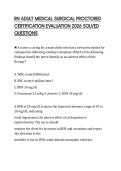
◉ A nurse is caring for a male client who has a new prescription for
cyclosporine following a kidney transplant. Which of the following
findings should the nurse identify as an adverse effect of this
therapy?
A. WBC count 8,000/mm3
B. RBC count 6 million/mm3
C. BUN 24 mg/dL
D. Potassium 3.5 mEq/L Answer: C. BUN 24 mg/dL
A BUN of 24 mg/dL is above the expected reference range of 10 to
20 mg/dL, indicating
renal impairment. An adverse effect of cyclosporine is
nephrotoxicity. The nurse should
monitor the client for increases in BUN and creatinine and report
any elevation to the
provider. A rise in BUN could indicate transplant rejection.
,◉ A nurse is caring for a client who has dumping syndrome
following a gastric resection. The nurse should monitor the client for
which of the following complications of dumping syndrome?
A. Weight gain
B. Iron-deficiency anemia
C. Hypercalcemia
D. Reduced heart rate Answer: B. Iron-deficiency anemia
The nurse should monitor the client for manifestations of anemia,
such as pallor,
tachycardia, and fatigue. Rapid emptying of the stomach contents
into the intestine can lead
to reduced absorption of iron in the duodenum, causing iron-
deficiency anemia.
◉ A nurse is assessing a client who takes salmeterol to treat
moderate asthma. Which of the following findings should indicate to
the nurse that the medication has been effective?
A. The client's daily peak expiratory flow (PEF) measures 85% above
personal best.
B. The client's ABGs shows a pH level of 7.32.
,C. The client's forced expiratory volume is decreased after treatment
with medication.
D. The client's wheezing is limited to expiratory. Answer: A. The
client's daily peak expiratory flow (PEF) measures 85% above
personal best.
A client who has asthma should use a peak flow meter twice daily to
monitor asthma
control. A PEF in the green zone, or 80% or above personal best,
indicates the effectiveness
of medication therapy.
◉ A nurse is providing teaching about health promotion activities
for a client who has a new diagnosis of type 1 diabetes mellitus.
Which of the following statements by the client indicates an
understanding of the teaching?
A. "If I can keep my hemoglobin A1C less than 6.5%, I will be cured
of diabetes."
B. "I will check my blood sugar level before exercising."
C. "I should have my eyes checked every 2 years."
D. "I should soak my feet daily in warm, soapy water." Answer: B. "I
will check my blood sugar level before exercising."
, Clients who have diabetes mellitus should not exercise if their blood
glucose level is less
than 80 mg/dL or greater than 250 mg/dL. A client who has type 1
diabetes mellitus and is
hyperglycemic can experience even higher blood glucose levels.
Hypoglycemia can also
occur during exercise and up to 24 hr following exercise. The nurse
should instruct the
client to monitor blood glucose levels before, during, and following
exercise.
◉ A nurse is providing teaching to a client who has a new
prescription for warfarin. Which of the following medications should
the nurse instruct the client to avoid? (Select all that apply.)
A. Ferrous sulfate
B. Echinacea
C. Aspirin
D. Dextromethorphan
E. Naproxen Answer: C. Aspirin
E. Naproxen
Aspirin is an antiplatelet medication. It can increase the risk of
bleeding
CERTIFICATION EVALUATION 2026 SOLVED
QUESTIONS
◉ A nurse is caring for a male client who has a new prescription for
cyclosporine following a kidney transplant. Which of the following
findings should the nurse identify as an adverse effect of this
therapy?
A. WBC count 8,000/mm3
B. RBC count 6 million/mm3
C. BUN 24 mg/dL
D. Potassium 3.5 mEq/L Answer: C. BUN 24 mg/dL
A BUN of 24 mg/dL is above the expected reference range of 10 to
20 mg/dL, indicating
renal impairment. An adverse effect of cyclosporine is
nephrotoxicity. The nurse should
monitor the client for increases in BUN and creatinine and report
any elevation to the
provider. A rise in BUN could indicate transplant rejection.
,◉ A nurse is caring for a client who has dumping syndrome
following a gastric resection. The nurse should monitor the client for
which of the following complications of dumping syndrome?
A. Weight gain
B. Iron-deficiency anemia
C. Hypercalcemia
D. Reduced heart rate Answer: B. Iron-deficiency anemia
The nurse should monitor the client for manifestations of anemia,
such as pallor,
tachycardia, and fatigue. Rapid emptying of the stomach contents
into the intestine can lead
to reduced absorption of iron in the duodenum, causing iron-
deficiency anemia.
◉ A nurse is assessing a client who takes salmeterol to treat
moderate asthma. Which of the following findings should indicate to
the nurse that the medication has been effective?
A. The client's daily peak expiratory flow (PEF) measures 85% above
personal best.
B. The client's ABGs shows a pH level of 7.32.
,C. The client's forced expiratory volume is decreased after treatment
with medication.
D. The client's wheezing is limited to expiratory. Answer: A. The
client's daily peak expiratory flow (PEF) measures 85% above
personal best.
A client who has asthma should use a peak flow meter twice daily to
monitor asthma
control. A PEF in the green zone, or 80% or above personal best,
indicates the effectiveness
of medication therapy.
◉ A nurse is providing teaching about health promotion activities
for a client who has a new diagnosis of type 1 diabetes mellitus.
Which of the following statements by the client indicates an
understanding of the teaching?
A. "If I can keep my hemoglobin A1C less than 6.5%, I will be cured
of diabetes."
B. "I will check my blood sugar level before exercising."
C. "I should have my eyes checked every 2 years."
D. "I should soak my feet daily in warm, soapy water." Answer: B. "I
will check my blood sugar level before exercising."
, Clients who have diabetes mellitus should not exercise if their blood
glucose level is less
than 80 mg/dL or greater than 250 mg/dL. A client who has type 1
diabetes mellitus and is
hyperglycemic can experience even higher blood glucose levels.
Hypoglycemia can also
occur during exercise and up to 24 hr following exercise. The nurse
should instruct the
client to monitor blood glucose levels before, during, and following
exercise.
◉ A nurse is providing teaching to a client who has a new
prescription for warfarin. Which of the following medications should
the nurse instruct the client to avoid? (Select all that apply.)
A. Ferrous sulfate
B. Echinacea
C. Aspirin
D. Dextromethorphan
E. Naproxen Answer: C. Aspirin
E. Naproxen
Aspirin is an antiplatelet medication. It can increase the risk of
bleeding


