

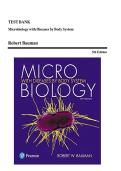
TEST BANK
H
Microbiology with Diseases by Body System
H H H H H
Robert Bauman
H
5th Edition
H
,Table of Contents
H H
Chapter 1 A Brief History of Microbiology
H H H H H H 2
Chapter 2 The Chemistry of Microbiology
H H H H H 19
Chapter 3 Cell Structure and Function
H H H H H 38
Chapter 4 Microscopy, Staining, and Classification
H H H H H 60
Chapter 5 Microbial Metabolism
H H H 80
Chapter 6 Microbial Nutrition and Growth
H H H H H 99
Chapter 7 Microbial Genetics
H H H 118
Chapter 8 Recombinant DNA Technology
H H H H 137
Chapter 9 Controlling Microbial Growth in the Environment
H H H H H H H 155
Chapter 10 Controlling Microbial Growth in the Body - Antimicrobial Drugs
H H H H H H H H H H 173
Chapter 11 Characterizing and Classifying Prokaryotes
H H H H H 192
Chapter 12 Characterizing and Classifying Eukaryotes
H H H H H 210
Chapter 13 Characterizing and Classifying Viruses, Viroids, and Prions
H H H H H H H H 228
Chapter 14 Infection, Infectious Diseases, and Epidemiology
H H H H H H 246
Chapter 15 Innate Immunity
H H H 265
Chapter 16 Adaptive Immunity
H H H 283
Chapter 17 Immunization and Immune Testing
H H H H H 302
Chapter 18 Immune Disorders
H H H 321
Chapter 19 Microbial Diseases of the Skin and Wounds
H H H H H H H H 339
Chapter 20 Microbial Diseases of the Nervous System and Eyes
H H H H H H H H H 357
Chapter 21 Microbial Cardiovascular and Systemic Diseases
H H H H H H 375
Chapter 22 Microbial Diseases of the Respiratory System
H H H H H H H 393
Chapter 23 Microbial Diseases of the Digestive System
H H H H H H H 411
Chapter 24 Microbial Diseases of the Urinary and Reproductive Systems
H H H H H H H H H 429
Chapter 25 Applied and Industrial Microbiology
H H H H H 445
Chapter 26 Microbial Ecology and Microbiomes
H H H H H 462
, Test Bank - Microbiology with Diseases by Body System, 5e (Bauman,
H H H H H H H H H H
2017)
Microbiology with Diseases by Body System, 5e (Bauman)
H H H H H H H
Chapter 1 A Brief History of Microbiology
H H H H H H H
1.1 Multiple Choice Questions H H
1) Antoni van Leeuwenhoek was the first person in history to
H H H H H H H H H
A) use a magnifying glass.
H H H
B) develop a taxonomic system.
H H H
C) view microorganisms and record these observations.
H H H H H
D) disprove spontaneous generation.
H H
E) use the germ theory of disease.
H H H H H
Answer: C
H H
Bloom's Taxonomy: Knowledge
H H
Section: The Early Years of Microbiology
H H H H H
Learning Outcome: 1.1
H H H
2) The microbes commonly known as
H H H H H are single-celled eukaryotes that are generally
H H H H H
motile.
H
A) archaea
B) bacteria
C) fungi
D) protozoa
E) viruses
Answer:
H
HD
Bloom's Taxonomy: Comprehension
H H
Section: The Early Years of Microbiology
H H H H H H
Learning Outcome: 1.3
H H H
3) Which of the following are prokaryotes?
H H H H H
A) algae
B) molds
C) protozoa
D) archaea
E) worms
Answer:
H
HD
Bloom's Taxonomy: Comprehension
H H
Section: The Early Years of Microbiology
H H H H H H
Learning Outcome: 1.5
H H H
1|Page
H H H H H
, Test Bank - Microbiology with Diseases by Body System, 5e (Bauman,
H H H H H H H H H H
2017)
4) Louis Pasteur demonstrated that fermentation to produce alcohol is caused by
H H H H H H H H H H
A) aerobes.
B) facultative anaerobes. H
C) obligate parasites.
H
D) archaea.
E) prokaryotes.
Answer: B H
Bloom's Taxonomy: Knowledge
H H
Section: The Golden Age of Microbiology
H H H H H
Learning Outcome: 1.6
H H H
5) Which of the following scientists provided evidence in favor of the concept of
H H H H H H H H H H H H
spontaneous generation?
H H
A) Pasteur
B) Needham
C) Redi
D) Buchner
E) Spallanzani
Answer: B
H H
Bloom's Taxonomy: Knowledge
H H
Section: The Golden Age of Microbiology
H H H H H
Learning Outcome: 1.7
H H H
6) Pasteur's experiments on fermentation laid the foundation for
H H H H H H H
A) industrial microbiology. H
B) epidemiology.
C) immunology.
D) abiogenesis.
E) antisepsis.
Answer: A
H H
Bloom's Taxonomy: Comprehension
H H
Section: The Golden Age of Microbiology
H H H H H H
Learning Outcome: 1.10
H H H
7) Which of the following statements about fungi is FALSE?
H H H H H H H H
A) Fungi are eukaryotes.
H H
B) Molds are multicellular.
H H
C) Fungi have a cell wall.
H H H H
D) Fungi are photosynthetic.
H H
E) Yeasts are unicellular.
H H
Answer: D H
Bloom's Taxonomy: Comprehension
H H
Section: The Early Years of Microbiology
H H H H H H
Learning Outcome: 1.3
H H H
2|Page
H H H H H
H
Microbiology with Diseases by Body System
H H H H H
Robert Bauman
H
5th Edition
H
,Table of Contents
H H
Chapter 1 A Brief History of Microbiology
H H H H H H 2
Chapter 2 The Chemistry of Microbiology
H H H H H 19
Chapter 3 Cell Structure and Function
H H H H H 38
Chapter 4 Microscopy, Staining, and Classification
H H H H H 60
Chapter 5 Microbial Metabolism
H H H 80
Chapter 6 Microbial Nutrition and Growth
H H H H H 99
Chapter 7 Microbial Genetics
H H H 118
Chapter 8 Recombinant DNA Technology
H H H H 137
Chapter 9 Controlling Microbial Growth in the Environment
H H H H H H H 155
Chapter 10 Controlling Microbial Growth in the Body - Antimicrobial Drugs
H H H H H H H H H H 173
Chapter 11 Characterizing and Classifying Prokaryotes
H H H H H 192
Chapter 12 Characterizing and Classifying Eukaryotes
H H H H H 210
Chapter 13 Characterizing and Classifying Viruses, Viroids, and Prions
H H H H H H H H 228
Chapter 14 Infection, Infectious Diseases, and Epidemiology
H H H H H H 246
Chapter 15 Innate Immunity
H H H 265
Chapter 16 Adaptive Immunity
H H H 283
Chapter 17 Immunization and Immune Testing
H H H H H 302
Chapter 18 Immune Disorders
H H H 321
Chapter 19 Microbial Diseases of the Skin and Wounds
H H H H H H H H 339
Chapter 20 Microbial Diseases of the Nervous System and Eyes
H H H H H H H H H 357
Chapter 21 Microbial Cardiovascular and Systemic Diseases
H H H H H H 375
Chapter 22 Microbial Diseases of the Respiratory System
H H H H H H H 393
Chapter 23 Microbial Diseases of the Digestive System
H H H H H H H 411
Chapter 24 Microbial Diseases of the Urinary and Reproductive Systems
H H H H H H H H H 429
Chapter 25 Applied and Industrial Microbiology
H H H H H 445
Chapter 26 Microbial Ecology and Microbiomes
H H H H H 462
, Test Bank - Microbiology with Diseases by Body System, 5e (Bauman,
H H H H H H H H H H
2017)
Microbiology with Diseases by Body System, 5e (Bauman)
H H H H H H H
Chapter 1 A Brief History of Microbiology
H H H H H H H
1.1 Multiple Choice Questions H H
1) Antoni van Leeuwenhoek was the first person in history to
H H H H H H H H H
A) use a magnifying glass.
H H H
B) develop a taxonomic system.
H H H
C) view microorganisms and record these observations.
H H H H H
D) disprove spontaneous generation.
H H
E) use the germ theory of disease.
H H H H H
Answer: C
H H
Bloom's Taxonomy: Knowledge
H H
Section: The Early Years of Microbiology
H H H H H
Learning Outcome: 1.1
H H H
2) The microbes commonly known as
H H H H H are single-celled eukaryotes that are generally
H H H H H
motile.
H
A) archaea
B) bacteria
C) fungi
D) protozoa
E) viruses
Answer:
H
HD
Bloom's Taxonomy: Comprehension
H H
Section: The Early Years of Microbiology
H H H H H H
Learning Outcome: 1.3
H H H
3) Which of the following are prokaryotes?
H H H H H
A) algae
B) molds
C) protozoa
D) archaea
E) worms
Answer:
H
HD
Bloom's Taxonomy: Comprehension
H H
Section: The Early Years of Microbiology
H H H H H H
Learning Outcome: 1.5
H H H
1|Page
H H H H H
, Test Bank - Microbiology with Diseases by Body System, 5e (Bauman,
H H H H H H H H H H
2017)
4) Louis Pasteur demonstrated that fermentation to produce alcohol is caused by
H H H H H H H H H H
A) aerobes.
B) facultative anaerobes. H
C) obligate parasites.
H
D) archaea.
E) prokaryotes.
Answer: B H
Bloom's Taxonomy: Knowledge
H H
Section: The Golden Age of Microbiology
H H H H H
Learning Outcome: 1.6
H H H
5) Which of the following scientists provided evidence in favor of the concept of
H H H H H H H H H H H H
spontaneous generation?
H H
A) Pasteur
B) Needham
C) Redi
D) Buchner
E) Spallanzani
Answer: B
H H
Bloom's Taxonomy: Knowledge
H H
Section: The Golden Age of Microbiology
H H H H H
Learning Outcome: 1.7
H H H
6) Pasteur's experiments on fermentation laid the foundation for
H H H H H H H
A) industrial microbiology. H
B) epidemiology.
C) immunology.
D) abiogenesis.
E) antisepsis.
Answer: A
H H
Bloom's Taxonomy: Comprehension
H H
Section: The Golden Age of Microbiology
H H H H H H
Learning Outcome: 1.10
H H H
7) Which of the following statements about fungi is FALSE?
H H H H H H H H
A) Fungi are eukaryotes.
H H
B) Molds are multicellular.
H H
C) Fungi have a cell wall.
H H H H
D) Fungi are photosynthetic.
H H
E) Yeasts are unicellular.
H H
Answer: D H
Bloom's Taxonomy: Comprehension
H H
Section: The Early Years of Microbiology
H H H H H H
Learning Outcome: 1.3
H H H
2|Page
H H H H H


