
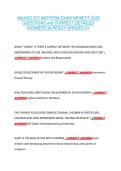
WILKES 527 MIDTERM EXAM NEWEST 2026
QUESTIONS and CORRECT DETAILED
ANSWERS ALREADY GRADED A+
WHICH "GIVENS" IS THERE A CONFLICT BETWEEN THE GROUNDLESSNESS AND
RANDOMNESS OF OUR UNIVERSE, AND A WISH FOR GROUND AND STRUCTURE -
CORRECT ANSWER-Freedom and Responsibility
DYADIC DEVELOPMENTAL PSYCHOTHERAPY - CORRECT ANSWER-Attachment-
focused therapy
WHO DEVELOPED (DDP) DYADIC DEVELOPMENTAL PSYCHOTHERAPY - CORRECT
ANSWER-Hughes and Becker-Weidman
THIS THERAPY IS USED FOR COMPLEX TRAUMA, CHILDREN IN FOSTER CARE,
CHILDREN WHO HAVE EXPERIENCED ABUSE, TRAUMA OR NEGLECT - CORRECT
ANSWER-DDP Dyadic developmental psychotherapy
WHAT IS THE GOAL OF DDP WITH CHILDREN - CORRECT ANSWER-Assist
children with developing attachment-based relationships with parents or
caregivers
,WHICH THERAPY HAS A FAMILY FOCUSED APPROACH - CORRECT ANSWER-
DDP Dyadic developmental psychotherapy
ATTACHMENT BASED THERAPY - CORRECT ANSWER-DDP
WHAT DOES "PACE" STAND FOR IN DDP THERAPY - CORRECT ANSWER--Playful
-Accepting
-Curiosity
-Empathy
IS PHYSICAL RESTRAINT A TREATMENT WITH DDP - CORRECT ANSWER-
Physical restraint is not treatment
WHAT KIND OF PHYSICAL TOUCH THERAPY IS USED WITH DDP - CORRECT
ANSWER-Holding and cradling
WHAT IS THE PHENOMENOLOGICAL APPROACH AIMED TOWARDS - CORRECT
ANSWER-it is aimed toward awareness/insight
, A MAJOR PART OF GESALT THERAPY - CORRECT ANSWER-"Awareness"
FIELD THEORY PERSPECTIVE - CORRECT ANSWER-The interaction between the
individual and the field-or environment
EXISTENTIAL PERSPECTIVE - CORRECT ANSWER-brings into focus the existence
of people, and their relations with other people
WHAT ARE THE 4 ATTRIBUTES OF DIALOGUE IN GESTALT THERAPY - CORRECT
ANSWER-Inclusion
Presence
Commitment
Lived Dialogue
6 KEY PRINCIPLES OF EXISTENTIAL PSYCHOTHERAPY - CORRECT ANSWER-1.
We have the capacity for self-awareness
2. Because we are free beings-we accept the responsibility that accompanies our
freedoms
3.We have a concern to preserve our uniqueness and identity
4.Our existence is never fixed- we can re-create ourselves
QUESTIONS and CORRECT DETAILED
ANSWERS ALREADY GRADED A+
WHICH "GIVENS" IS THERE A CONFLICT BETWEEN THE GROUNDLESSNESS AND
RANDOMNESS OF OUR UNIVERSE, AND A WISH FOR GROUND AND STRUCTURE -
CORRECT ANSWER-Freedom and Responsibility
DYADIC DEVELOPMENTAL PSYCHOTHERAPY - CORRECT ANSWER-Attachment-
focused therapy
WHO DEVELOPED (DDP) DYADIC DEVELOPMENTAL PSYCHOTHERAPY - CORRECT
ANSWER-Hughes and Becker-Weidman
THIS THERAPY IS USED FOR COMPLEX TRAUMA, CHILDREN IN FOSTER CARE,
CHILDREN WHO HAVE EXPERIENCED ABUSE, TRAUMA OR NEGLECT - CORRECT
ANSWER-DDP Dyadic developmental psychotherapy
WHAT IS THE GOAL OF DDP WITH CHILDREN - CORRECT ANSWER-Assist
children with developing attachment-based relationships with parents or
caregivers
,WHICH THERAPY HAS A FAMILY FOCUSED APPROACH - CORRECT ANSWER-
DDP Dyadic developmental psychotherapy
ATTACHMENT BASED THERAPY - CORRECT ANSWER-DDP
WHAT DOES "PACE" STAND FOR IN DDP THERAPY - CORRECT ANSWER--Playful
-Accepting
-Curiosity
-Empathy
IS PHYSICAL RESTRAINT A TREATMENT WITH DDP - CORRECT ANSWER-
Physical restraint is not treatment
WHAT KIND OF PHYSICAL TOUCH THERAPY IS USED WITH DDP - CORRECT
ANSWER-Holding and cradling
WHAT IS THE PHENOMENOLOGICAL APPROACH AIMED TOWARDS - CORRECT
ANSWER-it is aimed toward awareness/insight
, A MAJOR PART OF GESALT THERAPY - CORRECT ANSWER-"Awareness"
FIELD THEORY PERSPECTIVE - CORRECT ANSWER-The interaction between the
individual and the field-or environment
EXISTENTIAL PERSPECTIVE - CORRECT ANSWER-brings into focus the existence
of people, and their relations with other people
WHAT ARE THE 4 ATTRIBUTES OF DIALOGUE IN GESTALT THERAPY - CORRECT
ANSWER-Inclusion
Presence
Commitment
Lived Dialogue
6 KEY PRINCIPLES OF EXISTENTIAL PSYCHOTHERAPY - CORRECT ANSWER-1.
We have the capacity for self-awareness
2. Because we are free beings-we accept the responsibility that accompanies our
freedoms
3.We have a concern to preserve our uniqueness and identity
4.Our existence is never fixed- we can re-create ourselves


