TEST BANK
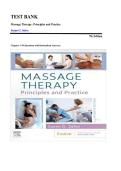
Massage Therapy: Principles and Practice
Susan G. Salvo
7th Edition
Chapters 1-30 (Questions with Rationalized Answers)
PR
O
FD
O
C
,Table of Contents
UNIT ONE: Foundations for Practice, Complementary and Integrative Methods, and Business
Practices
1. History of Massage: Prehistoric Times to the Modern Era and Professional Societies, Organizations,
and Associations
2. The Therapeutic Relationship: Ethics, Cultural Competencies, and Boundaries
3. Tools of the Trade: Tables, Accessories, Linens, Lubricants, Aromatherapy, Essential Oils, and the
Massage Environment
4. Career Longevity: Wellness, Wellbeing, and Self-Care
5. Evidence-Informed Practice and Research Literacy
6. Massage Therapy Research
7. Body Mechanics, Client Positioning, and Draping
8. Massage Techniques, Mobilizations, Stretches, Endangerment Sites, and Contraindications
PR
9. Concepts of Disease, Standard Precautions, Transmission-Based Precautions, Disinfection
Procedures, and Emergency Preparedness
10. Professional Standards: Scope of Practice, Standards of Care, Assessments, Documentation,
Informed Consent, Treatment Planning, and Referrals
11. Special Populations: Massage for Pregnant and Postpartum Clients, Infants, Children, Adolescents,
O
Aging Adults, and Those With Visual, Hearing, and Mobility Impairments
12. Hydrotherapy: Clinical Applications, Spa Applications, and Spa Procedures
13. Foot Reflexology: Principles and Practice
FD
14. Clinical Massage: Pain Theories and Pain Management, Clinical Assessments, and Clinical
Application Methods
15. Seated Massage: Principles and Practice
16. Asian Bodywork Therapy: Shiatsu, Thai Massage, and Ayurvedic Principles
17. Business Practices: Getting Started, Marketing, Professional Development, Accounting, and
O
Planning
UNIT TWO: Anatomy, Physiology, Kinesiology, and Pathology
18. Introduction to the Human Body: Medical Terminology, Cells, Tissues, and Body Compass
C
19. Skeletal System, Pathologies, Disorders, and Injuries
20. Muscular System, Pathologies, Disorders, and Injuries
21. Kinesiology
22. Integumentary System, Pathologies, Conditions, and Injuries
23. Nervous System, Pathologies, Disorders, and Injuries
24. Endocrine System and Pathologies
25. Reproductive System, Pathologies, Conditions, and Disorders
26. Cardiovascular System, Pathologies, and Disorders
27. Lymphatic System, Pathologies, and Conditions
28. Respiratory System, Pathologies, Conditions, and Disorders
29. Digestive System, Pathologies, Dysfunctions, and Disorders
30. Urinary System, Pathologies, and Disorders
,Chapter 01: History of Massage: Prehistoric Times to the Modern Era and Professional
Societies, Organizations, and Associations.
MULTIPLE CHOICE
1. Which method is defined as manipulation of soft tissue using pressure and traction for
clinical, therapeutic, and palliative purposes?
a. Acupuncture
b. Ayurveda
c. Polarity therapy
d. Massage therapy
ANS: D
Massage therapy the manipulation of soft tissue using compression and
decompression/traction for clinical, therapeutic, and palliative purposes or for wellness and
PR
self-care purposes.
2. Which origin for the word massage is Greek?
a. Mashesh
b. Masso
c. Masser
O
d. Makeh
ANS: B
The origin of the word massage is unclear, but can be traced to numerous sources: the Hebrew
FD
mashesh, the Greek masso and massin, the Latin massa, the Arabic mass’h, the Sanskrit
makeh, and the French masser.
3. When was the earliest the term massage was used by most European-based cultures?
a. 1600s
O
b. 1700s
c. 1800s
d. 1900s
C
ANS: C
By the early 1800s, the term massage was used by most European-based cultures.
Historically, massage was referred to by its techniques such as friction or rubbing.
4. The first written records of massage date back to 3000 BCE in which country?
a. India
b. China
c. Egypt
d. Greece
ANS: B
Written records regarding the practice of massage go back to 3000 BCE in China.
Acupuncture was not mentioned in Chinese writings until 90 BCE.
5. Which work is commonly referred to as the classic scripture of traditional Chinese medicine?
, a. Tao Te Ching
b. Nei Ching
c. Ayur-Veda
d. Corpus Hippocraticum
ANS: B
At the time of Hwang Ti, various ideas and beliefs were compiled under the name of the
Yellow Emperor (died in 2599 BCE) which became the classic scripture of traditional Chinese
medicine known as the Nei Chang. The Nei Chang was written about 2760 BCE, and this
work contains detailed descriptions of massage procedures as well as herbal medicines.
6. What is the original massage technique in China and the precursor to manual and energetic
therapies?
a. Polarity
b. Shiatsu
c. Acupuncture
PR
d. Amma
ANS: D
Amma is regarded as the original massage technique and precursor to all other Chinese
therapies, manual and energetic.
O
7. Which healing method is based on Hindu tradition?
a. Ayurveda
b. Shiatsu
c. Amma
FD
d. Polarity
ANS: A
Knowledge of amma massage traveled to the subcontinent of India from China, and massage
became part of Hindu tradition. Massage is described in India’s first great medical texts, the
O
Ayurveda books of wisdom (about 1800 BCE) and recommend massage as an indispensable
healing procedure.
8. Which method is Japanese but based on Chinese medicine concepts, and uses pressure applied
C
from the practitioner’s thumbs, elbows, and other parts of the body?
a. Ayurveda
b. Shiatsu
c. Massage
d. Amma
ANS: B
Shiatsu is a Japanese method based on the same traditional Chinese medicine concepts as
acupuncture —energy flows in the body through streams called channels or meridians.
Acupuncturists use needles at specific points to balance the flow of energy; shiatsu
practitioners use their fingers, thumbs, forearms, elbows, and even their knees and feet.
9. Who is generally recognized as the father of modern Western medicine?
a. Galen
b. Celsus
c. Rhazes
Massage Therapy: Principles and Practice
Susan G. Salvo
7th Edition
Chapters 1-30 (Questions with Rationalized Answers)
PR
O
FD
O
C
,Table of Contents
UNIT ONE: Foundations for Practice, Complementary and Integrative Methods, and Business
Practices
1. History of Massage: Prehistoric Times to the Modern Era and Professional Societies, Organizations,
and Associations
2. The Therapeutic Relationship: Ethics, Cultural Competencies, and Boundaries
3. Tools of the Trade: Tables, Accessories, Linens, Lubricants, Aromatherapy, Essential Oils, and the
Massage Environment
4. Career Longevity: Wellness, Wellbeing, and Self-Care
5. Evidence-Informed Practice and Research Literacy
6. Massage Therapy Research
7. Body Mechanics, Client Positioning, and Draping
8. Massage Techniques, Mobilizations, Stretches, Endangerment Sites, and Contraindications
PR
9. Concepts of Disease, Standard Precautions, Transmission-Based Precautions, Disinfection
Procedures, and Emergency Preparedness
10. Professional Standards: Scope of Practice, Standards of Care, Assessments, Documentation,
Informed Consent, Treatment Planning, and Referrals
11. Special Populations: Massage for Pregnant and Postpartum Clients, Infants, Children, Adolescents,
O
Aging Adults, and Those With Visual, Hearing, and Mobility Impairments
12. Hydrotherapy: Clinical Applications, Spa Applications, and Spa Procedures
13. Foot Reflexology: Principles and Practice
FD
14. Clinical Massage: Pain Theories and Pain Management, Clinical Assessments, and Clinical
Application Methods
15. Seated Massage: Principles and Practice
16. Asian Bodywork Therapy: Shiatsu, Thai Massage, and Ayurvedic Principles
17. Business Practices: Getting Started, Marketing, Professional Development, Accounting, and
O
Planning
UNIT TWO: Anatomy, Physiology, Kinesiology, and Pathology
18. Introduction to the Human Body: Medical Terminology, Cells, Tissues, and Body Compass
C
19. Skeletal System, Pathologies, Disorders, and Injuries
20. Muscular System, Pathologies, Disorders, and Injuries
21. Kinesiology
22. Integumentary System, Pathologies, Conditions, and Injuries
23. Nervous System, Pathologies, Disorders, and Injuries
24. Endocrine System and Pathologies
25. Reproductive System, Pathologies, Conditions, and Disorders
26. Cardiovascular System, Pathologies, and Disorders
27. Lymphatic System, Pathologies, and Conditions
28. Respiratory System, Pathologies, Conditions, and Disorders
29. Digestive System, Pathologies, Dysfunctions, and Disorders
30. Urinary System, Pathologies, and Disorders
,Chapter 01: History of Massage: Prehistoric Times to the Modern Era and Professional
Societies, Organizations, and Associations.
MULTIPLE CHOICE
1. Which method is defined as manipulation of soft tissue using pressure and traction for
clinical, therapeutic, and palliative purposes?
a. Acupuncture
b. Ayurveda
c. Polarity therapy
d. Massage therapy
ANS: D
Massage therapy the manipulation of soft tissue using compression and
decompression/traction for clinical, therapeutic, and palliative purposes or for wellness and
PR
self-care purposes.
2. Which origin for the word massage is Greek?
a. Mashesh
b. Masso
c. Masser
O
d. Makeh
ANS: B
The origin of the word massage is unclear, but can be traced to numerous sources: the Hebrew
FD
mashesh, the Greek masso and massin, the Latin massa, the Arabic mass’h, the Sanskrit
makeh, and the French masser.
3. When was the earliest the term massage was used by most European-based cultures?
a. 1600s
O
b. 1700s
c. 1800s
d. 1900s
C
ANS: C
By the early 1800s, the term massage was used by most European-based cultures.
Historically, massage was referred to by its techniques such as friction or rubbing.
4. The first written records of massage date back to 3000 BCE in which country?
a. India
b. China
c. Egypt
d. Greece
ANS: B
Written records regarding the practice of massage go back to 3000 BCE in China.
Acupuncture was not mentioned in Chinese writings until 90 BCE.
5. Which work is commonly referred to as the classic scripture of traditional Chinese medicine?
, a. Tao Te Ching
b. Nei Ching
c. Ayur-Veda
d. Corpus Hippocraticum
ANS: B
At the time of Hwang Ti, various ideas and beliefs were compiled under the name of the
Yellow Emperor (died in 2599 BCE) which became the classic scripture of traditional Chinese
medicine known as the Nei Chang. The Nei Chang was written about 2760 BCE, and this
work contains detailed descriptions of massage procedures as well as herbal medicines.
6. What is the original massage technique in China and the precursor to manual and energetic
therapies?
a. Polarity
b. Shiatsu
c. Acupuncture
PR
d. Amma
ANS: D
Amma is regarded as the original massage technique and precursor to all other Chinese
therapies, manual and energetic.
O
7. Which healing method is based on Hindu tradition?
a. Ayurveda
b. Shiatsu
c. Amma
FD
d. Polarity
ANS: A
Knowledge of amma massage traveled to the subcontinent of India from China, and massage
became part of Hindu tradition. Massage is described in India’s first great medical texts, the
O
Ayurveda books of wisdom (about 1800 BCE) and recommend massage as an indispensable
healing procedure.
8. Which method is Japanese but based on Chinese medicine concepts, and uses pressure applied
C
from the practitioner’s thumbs, elbows, and other parts of the body?
a. Ayurveda
b. Shiatsu
c. Massage
d. Amma
ANS: B
Shiatsu is a Japanese method based on the same traditional Chinese medicine concepts as
acupuncture —energy flows in the body through streams called channels or meridians.
Acupuncturists use needles at specific points to balance the flow of energy; shiatsu
practitioners use their fingers, thumbs, forearms, elbows, and even their knees and feet.
9. Who is generally recognized as the father of modern Western medicine?
a. Galen
b. Celsus
c. Rhazes