
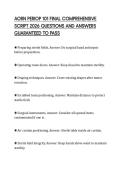
AORN PERIOP 101 FINAL COMPREHENSIVE
SCRIPT 2026 QUESTIONS AND ANSWERS
GUARANTEED TO PASS
◉ Preparing sterile fields. Answer: Do surgical hand antisepsis
before preparation.
◉ Operating room doors. Answer: Keep closed to maintain sterility.
◉ Draping techniques. Answer: Cover existing drapes after tumor
resection.
◉ Scrubbed team positioning. Answer: Maintain distance to protect
sterile field.
◉ Surgical instruments. Answer: Consider all opened items
contaminated if one is.
◉ Air curtain positioning. Answer: Sterile table inside air curtain.
◉ Sterile field integrity. Answer: Keep hands above waist to maintain
sterility.
,◉ Surgical gown components. Answer: Back and neckline are not
sterile.
◉ Sterile field preparation timing. Answer: Prepare fields before
patients arrive.
◉ Surgical procedure efficiency. Answer: Avoid preparing fields for
multiple patients simultaneously.
◉ Heavy item transfer. Answer: Present sharp items directly to
scrubbed team.
◉ Face-to-face positioning. Answer: Maintain this position with
scrubbed team members.
◉ Effective communication. Answer: Collaboration among nurses,
anesthesia, and surgeons.
◉ Tourniquet time limit. Answer: Should not exceed 30 minutes for
safety.
◉ Physiologic effects of exsanguination. Answer: Includes increased
central venous pressure and heart rate.
, ◉ Common effects of tourniquet deflation. Answer: Hypotension and
decreased heart rate are common.
◉ Acid-base effects of deflation. Answer: Elevated PaCO2 causes
respiratory and metabolic acidosis.
◉ Ischemic tissue type. Answer: Skeletal muscle is highly
susceptible to ischemia.
◉ Contraindications for tourniquet use. Answer: Significant vascular
disease is a primary contraindication.
◉ False statement on tourniquet safety. Answer: Narrow cuffs are
not safer than wide cuffs.
◉ Intravenous regional anesthesia. Answer: Cuff should not remain
inflated post-procedure.
◉ Nerve damage from tourniquet. Answer: Upper limb, radial nerve
is most affected.
◉ DVT risk factors. Answer: Age and prolonged bed rest increase
DVT risk.
SCRIPT 2026 QUESTIONS AND ANSWERS
GUARANTEED TO PASS
◉ Preparing sterile fields. Answer: Do surgical hand antisepsis
before preparation.
◉ Operating room doors. Answer: Keep closed to maintain sterility.
◉ Draping techniques. Answer: Cover existing drapes after tumor
resection.
◉ Scrubbed team positioning. Answer: Maintain distance to protect
sterile field.
◉ Surgical instruments. Answer: Consider all opened items
contaminated if one is.
◉ Air curtain positioning. Answer: Sterile table inside air curtain.
◉ Sterile field integrity. Answer: Keep hands above waist to maintain
sterility.
,◉ Surgical gown components. Answer: Back and neckline are not
sterile.
◉ Sterile field preparation timing. Answer: Prepare fields before
patients arrive.
◉ Surgical procedure efficiency. Answer: Avoid preparing fields for
multiple patients simultaneously.
◉ Heavy item transfer. Answer: Present sharp items directly to
scrubbed team.
◉ Face-to-face positioning. Answer: Maintain this position with
scrubbed team members.
◉ Effective communication. Answer: Collaboration among nurses,
anesthesia, and surgeons.
◉ Tourniquet time limit. Answer: Should not exceed 30 minutes for
safety.
◉ Physiologic effects of exsanguination. Answer: Includes increased
central venous pressure and heart rate.
, ◉ Common effects of tourniquet deflation. Answer: Hypotension and
decreased heart rate are common.
◉ Acid-base effects of deflation. Answer: Elevated PaCO2 causes
respiratory and metabolic acidosis.
◉ Ischemic tissue type. Answer: Skeletal muscle is highly
susceptible to ischemia.
◉ Contraindications for tourniquet use. Answer: Significant vascular
disease is a primary contraindication.
◉ False statement on tourniquet safety. Answer: Narrow cuffs are
not safer than wide cuffs.
◉ Intravenous regional anesthesia. Answer: Cuff should not remain
inflated post-procedure.
◉ Nerve damage from tourniquet. Answer: Upper limb, radial nerve
is most affected.
◉ DVT risk factors. Answer: Age and prolonged bed rest increase
DVT risk.


