

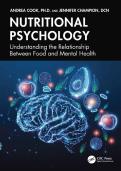
, Nutritional Psychology
Nutritional Psychology: Understanding the Relationship Between Food and Mental Health pro-
vides a broad look at the intersection between food and mental health and offers a comprehensive
approach to effectively prioritize nutrition as a powerful component to maintaining overall well-
being. Each of the 16 chapters deeply informs about a broad range of nutritional factors includ-
ing those that promote stable blood sugar levels, optimize brain functioning, and contribute to the
microbiome and hormone levels so important to the brain–gut connection. There are useful insights
into the dynamics of food selection, eating disorders, obesity, body image, and nutrition quality that
can stabilize or destabilize mental and emotional disorders. Additionally, environmental influences
that shape eating behaviors are fully explored.
Nutritional Psychology: Understanding the Relationship Between Food and Mental Health com-
bines psychology, nutrition, and medicine to form a framework for optimizing the relationship
between diet and mental wellbeing. This textbook is designed for undergraduate and graduate psy-
chology and nutrition college courses for students pursuing careers as psychologists, dietitians,
nurses, social workers, and a variety of health professionals who want to incorporate nutrition and
eating behavior into their discussions with patients.
Dr. Cook and Dr. Champion are both clinicians who work directly with clients with psychological
and physical health issues and utilize a blend of nutritional and psychological interventions in their
work, providing useful clinical applications for nutritional psychology.
,
, Nutritional Psychology
Understanding the Relationship Between
Food and Mental Health
Andrea Cook, PhD and Jennifer Champion, DCN
Nutritional Psychology: Understanding the Relationship Between Food and Mental Health pro-
vides a broad look at the intersection between food and mental health and offers a comprehensive
approach to effectively prioritize nutrition as a powerful component to maintaining overall well-
being. Each of the 16 chapters deeply informs about a broad range of nutritional factors includ-
ing those that promote stable blood sugar levels, optimize brain functioning, and contribute to the
microbiome and hormone levels so important to the brain–gut connection. There are useful insights
into the dynamics of food selection, eating disorders, obesity, body image, and nutrition quality that
can stabilize or destabilize mental and emotional disorders. Additionally, environmental influences
that shape eating behaviors are fully explored.
Nutritional Psychology: Understanding the Relationship Between Food and Mental Health com-
bines psychology, nutrition, and medicine to form a framework for optimizing the relationship
between diet and mental wellbeing. This textbook is designed for undergraduate and graduate psy-
chology and nutrition college courses for students pursuing careers as psychologists, dietitians,
nurses, social workers, and a variety of health professionals who want to incorporate nutrition and
eating behavior into their discussions with patients.
Dr. Cook and Dr. Champion are both clinicians who work directly with clients with psychological
and physical health issues and utilize a blend of nutritional and psychological interventions in their
work, providing useful clinical applications for nutritional psychology.
,
, Nutritional Psychology
Understanding the Relationship Between
Food and Mental Health
Andrea Cook, PhD and Jennifer Champion, DCN


