

20220128220914_61f4698a9f6fa_ati_pharmacology_proctored_2.docx 3/20/2026 20220128220914_61f4698a9f6fa_ati_pharmacology_proctored_2.docx
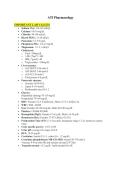
ATI Pharmacology
IMPORTANT LAB VALUES
• Sodium (Na): 136-145 mEq/L
• Calcium: 9.0-10 mg/dL
• Chloride: 98-106 mEq/L
• Bicarb HCO3: 21-28 mEq/L
• Potassium: 3.5-5.0 mg/L
• Phosphorus PO4 : 3.0-4.5 mg/dL
• Magnesium: 1.3- 2.1 mEq/L
• Cholesterol:
o Total <200mg/dL
o LDL ("bad") <100
o HDL ("good) >40
o Triglycerides <150mg/dL
• Liver enzymes
o ALT/SGPT 8-20 units/L
o AST/SGOT 5-40 units/L
o ALP 42-128 units/L
o Total protein 6-8 gm/dL
• Pancreatic enzymes
o Amylase 56-90 IU/L
o Lipase 0-110 units/L
o Prothrombin time 0.8-1.2
• Glucose:
Preprandial (fasting) 70-110 mg/dL
Postprandial 70-140 mg/dL
• RBC: Females 4.2-5.4 million/uL; Males 4.7-6.1 million /uL
• WBC: 5000 -10,000
• Iron: Females 60-160 mcg/dL; Males 80-180 mcg/dL
• Platelets: 150,000-450,000
• Hemoglobin (Hgb): Females 12-16 g/dL; Males 14-18 g/dL
• Hematocrit (Hct): Females 37-47%;Males 42-52%
• Prothrombin Time (PT): 11-14 seconds: therapeutic range 1.5-2x normal or control
value
• Urine specific gravity: 1.015-1.030
• Urine pH: average 6.0; range 4.6-8.0
• BUN: 10-20 mg/dL
• Creatinine: female 0.5-1.1, males 0.6 - 1.2 mg/dL;
• Creatinine phosphokinase MB (CK-MB): normal 30-170 units/L
*increase 4-6 hrs after MI and remains elevated 24-72hrs
• Troponin normal: <0.2 ng/dL *gold standard for MI
20220128220914_61f4698a9f6fa_ati_pharmacology_proctored_2
20220128220914_61f4698a9f6fa_ati_pharmacology_proctored_2
20220128220914_61f4698a9f6fa_ati_pharmacology_proctored_2.docx
,20220128220914_61f4698a9f6fa_ati_pharmacology_proctored_2.docx 3/20/2026 20220128220914_61f4698a9f6fa_ati_pharmacology_proctored_2.docx
- Safe Medication Administration and Error Reduction: Reviewing a Medication
Administration Record (RN QSEN - Teamwork and Collaboration, Active Learning
Template - Nursing Skill, RM Pharm RN 7.0 Ch. 2)
1) Report all errors, and implement corrective measures immediately
2) Complete an incident report within the time frame the facility specifies, usually 24 hr.
3) Do not reference or include this report in the client's medical record
4) Evaluate clients' responses to medications, and document and report them.
5) Identify side and adverse effects, and document and report them.
Chapter 12
- Substance Use Disorders: Therapeutic effect of chlordiazepoxide (Ch. 12 pg.85)
- Substance Use Disorders: Smoking cessation using bupropion (Ch. 12 pg. 87)
- Substance Use Disorders: Treatment for Cocaine Toxicity (Active Learning Template -
System Disorder, RM Pharm RN 7.0 Ch. 12)
1) First line treatment = Benzodiazepines (to reduce CNS & cardiovascular effects)
2) Chlordiazepoxide, diazepam, lorazepam, clorazepate, oxazepam
3) Provide seizure precautions
4) Manifestations include nausea; vomiting; tremors; restlessness and inability to sleep;
depressed mood or irritability; increased heart rate, blood pressure, respiratory rate, and
temperature; diaphoresis; and tonic‑clonic seizures. Illusions are also common
5) Monitor vitals and neurological status on a regular basis
Chapter 13
- Chronic Neurologic Disorders: Adverse effects of neostigmine (Ch. 13 pg. 91)
Adverse effects:
Excessive muscarinic stimulation
Cholinergic crisis
- Chronic Neurologic Disorders: Medications that interact with Carbamazepine (Ch. 13 pg.
99)
- Carbamazepine causes a decrease in the effects of oral contraceptives and warfarin due to
stimulation of hepatic medication-metabolizing enzymes.
- Grapefruit juice inhibits metabolism, and thus increases carbamazepine levels.
- Phenytoin and phenobarbital decrease effects of carbamazepine.
- Chronic Neurologic Disorders: Adverse Effects of Phenytoin (RN QSEN - Safety, Active
Learning Template - Medication, RM Pharm RN 7.0 Ch. 13)
1) CNS effects: Nystagmus, sedation, ataxia, double vision, cognitive impairment
2) Gingival hyperplasia: Softening and overgrowth of gum tissue, tenderness, and bleeding gums
(consider folic acid supplement)
3) Skin rash (stop medication if rash appears)
4) Cardiovascular effects: dysrhythmias, hypotension (administer slow; 50 mg/min and in dilute
solution)
5) Endocrine and other effects: Coarsening of facial features, hirsutism, and interference with
vitamin D metabolism (consume enough Vitamin D)
20220128220914_61f4698a9f6fa_ati_pharmacology_proctored_2
20220128220914_61f4698a9f6fa_ati_pharmacology_proctored_2
20220128220914_61f4698a9f6fa_ati_pharmacology_proctored_2.docx
, 20220128220914_61f4698a9f6fa_ati_pharmacology_proctored_2.docx 3/20/2026 20220128220914_61f4698a9f6fa_ati_pharmacology_proctored_2.docx
6) Interference with vitamin K‑dependent clotting factors causing bleeding in newborns.
- Miscellaneous Central Nervous System Medications: Treating Malignant Hyperthermia
(Active Learning Template - Medication, RM Pharm RN 7.0 Ch. 15)
1) Depolarizing neuromuscular blockers: Succinylcholine
2) Manifestations include muscle rigidity accompanied by increased temperature, as high as
43°C (109.4°)
3) Administer oxygen at 100%.
4) Initiate cooling measures including administration of iced 0.9% sodium chloride, applying a
cooling blanket, and placing ice bags in groin and other areas
5) Administer dantrolene to decrease metabolic activity of skeletal muscle.
- Airflow Disorders: Therapeutic Action of Montelukast (Active Learning Template -
Medication, RM Pharm RN 7.0 Ch. 17)
1) Leukotriene modifiers: suppress the effects of leukotrienes, thereby reducing inflammation,
bronchoconstriction, airway edema, and mucus production.
2) Long‑term therapy of asthma in adults and children, and to prevent exercise‑induced
bronchospasm
3) Depending on therapeutic intent, effectiveness is evidenced by long‑term control of asthma
4) Advise clients to take montelukast once daily at bedtime. 5) For exercise‑induced
bronchospasm, take 2 hr. before exercise. Instruct clients taking daily montelukast to not take an
additional dose for exercise induced bronchospasm
- Upper Respiratory Disorders: Client Teaching Prior to Allergy Testing (Active Learning
Template - Medication, RM Pharm RN 7.0 Ch. 18)
1) Medications that can interfere with skin tests include: antihistamines, Tricyclic
antidepressants, heartburn medications, asthma medication omalizumab (Xolair)
2) May need to discontinue certain meds 10 days prior
3) If you are running a fever or have an attack of hay fever or asthma, testing should be delayed
4) Do not change your diet before the test.
- Medications Affecting Blood Pressure: Titrating Continuous Nitroprusside Infusion (RN
QSEN - Safety, Active Learning Template - Medication, RM Pharm RN 7.0 Ch. 20)
1) Nitroprusside (centrally-acting vasodilator)
2) Direct vasodilation of arteries and veins resulting in rapid reduction of blood pressure
(decreased preload and after load
3) Used for hypertensive crisis
4) Administer medication slowly because rapid administration will cause blood pressure to go
down to rapidly
5) Prepare medication by adding to diluent for IV infusion.
20220128220914_61f4698a9f6fa_ati_pharmacology_proctored_2
20220128220914_61f4698a9f6fa_ati_pharmacology_proctored_2
20220128220914_61f4698a9f6fa_ati_pharmacology_proctored_2.docx
ATI Pharmacology
IMPORTANT LAB VALUES
• Sodium (Na): 136-145 mEq/L
• Calcium: 9.0-10 mg/dL
• Chloride: 98-106 mEq/L
• Bicarb HCO3: 21-28 mEq/L
• Potassium: 3.5-5.0 mg/L
• Phosphorus PO4 : 3.0-4.5 mg/dL
• Magnesium: 1.3- 2.1 mEq/L
• Cholesterol:
o Total <200mg/dL
o LDL ("bad") <100
o HDL ("good) >40
o Triglycerides <150mg/dL
• Liver enzymes
o ALT/SGPT 8-20 units/L
o AST/SGOT 5-40 units/L
o ALP 42-128 units/L
o Total protein 6-8 gm/dL
• Pancreatic enzymes
o Amylase 56-90 IU/L
o Lipase 0-110 units/L
o Prothrombin time 0.8-1.2
• Glucose:
Preprandial (fasting) 70-110 mg/dL
Postprandial 70-140 mg/dL
• RBC: Females 4.2-5.4 million/uL; Males 4.7-6.1 million /uL
• WBC: 5000 -10,000
• Iron: Females 60-160 mcg/dL; Males 80-180 mcg/dL
• Platelets: 150,000-450,000
• Hemoglobin (Hgb): Females 12-16 g/dL; Males 14-18 g/dL
• Hematocrit (Hct): Females 37-47%;Males 42-52%
• Prothrombin Time (PT): 11-14 seconds: therapeutic range 1.5-2x normal or control
value
• Urine specific gravity: 1.015-1.030
• Urine pH: average 6.0; range 4.6-8.0
• BUN: 10-20 mg/dL
• Creatinine: female 0.5-1.1, males 0.6 - 1.2 mg/dL;
• Creatinine phosphokinase MB (CK-MB): normal 30-170 units/L
*increase 4-6 hrs after MI and remains elevated 24-72hrs
• Troponin normal: <0.2 ng/dL *gold standard for MI
20220128220914_61f4698a9f6fa_ati_pharmacology_proctored_2
20220128220914_61f4698a9f6fa_ati_pharmacology_proctored_2
20220128220914_61f4698a9f6fa_ati_pharmacology_proctored_2.docx
,20220128220914_61f4698a9f6fa_ati_pharmacology_proctored_2.docx 3/20/2026 20220128220914_61f4698a9f6fa_ati_pharmacology_proctored_2.docx
- Safe Medication Administration and Error Reduction: Reviewing a Medication
Administration Record (RN QSEN - Teamwork and Collaboration, Active Learning
Template - Nursing Skill, RM Pharm RN 7.0 Ch. 2)
1) Report all errors, and implement corrective measures immediately
2) Complete an incident report within the time frame the facility specifies, usually 24 hr.
3) Do not reference or include this report in the client's medical record
4) Evaluate clients' responses to medications, and document and report them.
5) Identify side and adverse effects, and document and report them.
Chapter 12
- Substance Use Disorders: Therapeutic effect of chlordiazepoxide (Ch. 12 pg.85)
- Substance Use Disorders: Smoking cessation using bupropion (Ch. 12 pg. 87)
- Substance Use Disorders: Treatment for Cocaine Toxicity (Active Learning Template -
System Disorder, RM Pharm RN 7.0 Ch. 12)
1) First line treatment = Benzodiazepines (to reduce CNS & cardiovascular effects)
2) Chlordiazepoxide, diazepam, lorazepam, clorazepate, oxazepam
3) Provide seizure precautions
4) Manifestations include nausea; vomiting; tremors; restlessness and inability to sleep;
depressed mood or irritability; increased heart rate, blood pressure, respiratory rate, and
temperature; diaphoresis; and tonic‑clonic seizures. Illusions are also common
5) Monitor vitals and neurological status on a regular basis
Chapter 13
- Chronic Neurologic Disorders: Adverse effects of neostigmine (Ch. 13 pg. 91)
Adverse effects:
Excessive muscarinic stimulation
Cholinergic crisis
- Chronic Neurologic Disorders: Medications that interact with Carbamazepine (Ch. 13 pg.
99)
- Carbamazepine causes a decrease in the effects of oral contraceptives and warfarin due to
stimulation of hepatic medication-metabolizing enzymes.
- Grapefruit juice inhibits metabolism, and thus increases carbamazepine levels.
- Phenytoin and phenobarbital decrease effects of carbamazepine.
- Chronic Neurologic Disorders: Adverse Effects of Phenytoin (RN QSEN - Safety, Active
Learning Template - Medication, RM Pharm RN 7.0 Ch. 13)
1) CNS effects: Nystagmus, sedation, ataxia, double vision, cognitive impairment
2) Gingival hyperplasia: Softening and overgrowth of gum tissue, tenderness, and bleeding gums
(consider folic acid supplement)
3) Skin rash (stop medication if rash appears)
4) Cardiovascular effects: dysrhythmias, hypotension (administer slow; 50 mg/min and in dilute
solution)
5) Endocrine and other effects: Coarsening of facial features, hirsutism, and interference with
vitamin D metabolism (consume enough Vitamin D)
20220128220914_61f4698a9f6fa_ati_pharmacology_proctored_2
20220128220914_61f4698a9f6fa_ati_pharmacology_proctored_2
20220128220914_61f4698a9f6fa_ati_pharmacology_proctored_2.docx
, 20220128220914_61f4698a9f6fa_ati_pharmacology_proctored_2.docx 3/20/2026 20220128220914_61f4698a9f6fa_ati_pharmacology_proctored_2.docx
6) Interference with vitamin K‑dependent clotting factors causing bleeding in newborns.
- Miscellaneous Central Nervous System Medications: Treating Malignant Hyperthermia
(Active Learning Template - Medication, RM Pharm RN 7.0 Ch. 15)
1) Depolarizing neuromuscular blockers: Succinylcholine
2) Manifestations include muscle rigidity accompanied by increased temperature, as high as
43°C (109.4°)
3) Administer oxygen at 100%.
4) Initiate cooling measures including administration of iced 0.9% sodium chloride, applying a
cooling blanket, and placing ice bags in groin and other areas
5) Administer dantrolene to decrease metabolic activity of skeletal muscle.
- Airflow Disorders: Therapeutic Action of Montelukast (Active Learning Template -
Medication, RM Pharm RN 7.0 Ch. 17)
1) Leukotriene modifiers: suppress the effects of leukotrienes, thereby reducing inflammation,
bronchoconstriction, airway edema, and mucus production.
2) Long‑term therapy of asthma in adults and children, and to prevent exercise‑induced
bronchospasm
3) Depending on therapeutic intent, effectiveness is evidenced by long‑term control of asthma
4) Advise clients to take montelukast once daily at bedtime. 5) For exercise‑induced
bronchospasm, take 2 hr. before exercise. Instruct clients taking daily montelukast to not take an
additional dose for exercise induced bronchospasm
- Upper Respiratory Disorders: Client Teaching Prior to Allergy Testing (Active Learning
Template - Medication, RM Pharm RN 7.0 Ch. 18)
1) Medications that can interfere with skin tests include: antihistamines, Tricyclic
antidepressants, heartburn medications, asthma medication omalizumab (Xolair)
2) May need to discontinue certain meds 10 days prior
3) If you are running a fever or have an attack of hay fever or asthma, testing should be delayed
4) Do not change your diet before the test.
- Medications Affecting Blood Pressure: Titrating Continuous Nitroprusside Infusion (RN
QSEN - Safety, Active Learning Template - Medication, RM Pharm RN 7.0 Ch. 20)
1) Nitroprusside (centrally-acting vasodilator)
2) Direct vasodilation of arteries and veins resulting in rapid reduction of blood pressure
(decreased preload and after load
3) Used for hypertensive crisis
4) Administer medication slowly because rapid administration will cause blood pressure to go
down to rapidly
5) Prepare medication by adding to diluent for IV infusion.
20220128220914_61f4698a9f6fa_ati_pharmacology_proctored_2
20220128220914_61f4698a9f6fa_ati_pharmacology_proctored_2
20220128220914_61f4698a9f6fa_ati_pharmacology_proctored_2.docx


