

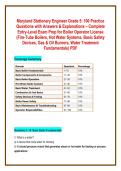
Maryland Stationary Engineer Grade 5: 100 Practice
Questions with Answers & Explanations – Complete
Entry-Level Exam Prep for Boiler Operator License
(Fire-Tube Boilers, Hot Water Systems, Basic Safety
Devices, Gas & Oil Burners, Water Treatment
Fundamentals) PDF
Coverage Summary
Domain Questions Percentage
Basic Boiler Fundamentals 1–10 10%
Boiler Components & Accessories 11–20 10%
Basic Boiler Operation 21–30 10%
Hot Water Boiler Systems 31–40 10%
Basic Water Treatment 41–50 10%
Combustion & Fuel Basics 51–60 10%
Safety Devices & Testing 61–70 10%
Boiler Room Safety 71–80 10%
Basic Maintenance & Troubleshooting 81–90 10%
Operator Responsibilities 91–100 10%
Questions 1–10: Basic Boiler Fundamentals
1. What is a boiler?
a) A device that cools water for drinking
b) A closed pressure vessel that generates steam or hot water for heating or process
applications
,c) A pump that circulates water through pipes
d) A storage tank for hot water
A boiler is a closed pressure vessel designed to transfer heat from a fuel source or
electricity to water, producing steam or hot water for heating, process applications, or power
generation.
2. What is the primary purpose of a boiler in a heating system?
a) To cool the building
b) To provide heat by generating steam or hot water that is distributed throughout the
building
c) To filter air
d) To store cold water
Boilers are the central heating source in many buildings, producing steam or hot water that
travels through pipes to radiators, baseboards, or air handling units to provide comfortable
temperatures.
3. Which of the following is a common fuel used in boilers?
a) Water
b) Natural gas
c) Sand
d) Air
Natural gas is one of the most common boiler fuels due to its availability, cleanliness, and
efficiency. Other common fuels include fuel oil, propane, coal, and electricity.
4. What is the function of a burner in a boiler?
a) To circulate water
b) To mix fuel and air and ignite the mixture to produce heat
c) To cool the combustion chamber
d) To store fuel
,The burner is the component that combines fuel with combustion air and ignites the mixture,
creating a controlled flame that heats the water or generates steam in the boiler.
5. What is steam?
a) Hot water
b) Water in its gaseous state, created when water is heated to its boiling point
c) Ice particles
d) Condensed water vapor
Steam is water that has been heated to its boiling point and vaporized into a gas. It contains
significant energy and is used for heating, humidification, and power generation.
6. What is hot water heating?
a) Using steam to heat water
b) Heating water to temperatures below its boiling point for circulation through a
heating system
c) Using electricity to generate steam
d) Cooling water for air conditioning
Hot water heating systems circulate water heated to temperatures typically between 140°F
and 200°F through pipes and emitters to provide space heating, without converting the
water to steam.
7. What is the difference between a boiler and a furnace?
a) There is no difference
b) A boiler heats water or steam; a furnace heats air
c) A boiler uses gas; a furnace uses oil
d) A boiler is larger than a furnace
Boilers produce hot water or steam that is distributed through pipes to radiators or
baseboards, while furnaces heat air that is distributed through ductwork to warm the
building.
, 8. What is the purpose of insulation on a boiler?
a) To make the boiler look better
b) To reduce heat loss, improve efficiency, and protect personnel from burns
c) To increase boiler pressure
d) To prevent water from leaking
Insulation wraps around the boiler vessel and piping to minimize heat loss to the
surroundings, improving fuel efficiency and maintaining safe surface temperatures to
prevent burns.
9. What is a pressure vessel?
a) Any container that holds liquid
b) A container designed to hold gases or liquids at a pressure substantially different
from the ambient pressure
c) A storage tank for fuel oil
d) A water storage tank
A boiler is a type of pressure vessel specifically designed to contain water and steam under
pressure, with construction standards governed by the ASME Boiler and Pressure Vessel
Code for safety.
10. What is the most important safety consideration when operating a boiler?
a) Fuel efficiency
b) Maintaining proper water level
c) Quiet operation
d) Aesthetics
Maintaining proper water level is critical because low water can cause the boiler to
overheat, leading to catastrophic failure and explosion. The low-water fuel cutoff is the most
important safety device for this reason
Questions 11–20: Boiler Components & Accessories
Questions with Answers & Explanations – Complete
Entry-Level Exam Prep for Boiler Operator License
(Fire-Tube Boilers, Hot Water Systems, Basic Safety
Devices, Gas & Oil Burners, Water Treatment
Fundamentals) PDF
Coverage Summary
Domain Questions Percentage
Basic Boiler Fundamentals 1–10 10%
Boiler Components & Accessories 11–20 10%
Basic Boiler Operation 21–30 10%
Hot Water Boiler Systems 31–40 10%
Basic Water Treatment 41–50 10%
Combustion & Fuel Basics 51–60 10%
Safety Devices & Testing 61–70 10%
Boiler Room Safety 71–80 10%
Basic Maintenance & Troubleshooting 81–90 10%
Operator Responsibilities 91–100 10%
Questions 1–10: Basic Boiler Fundamentals
1. What is a boiler?
a) A device that cools water for drinking
b) A closed pressure vessel that generates steam or hot water for heating or process
applications
,c) A pump that circulates water through pipes
d) A storage tank for hot water
A boiler is a closed pressure vessel designed to transfer heat from a fuel source or
electricity to water, producing steam or hot water for heating, process applications, or power
generation.
2. What is the primary purpose of a boiler in a heating system?
a) To cool the building
b) To provide heat by generating steam or hot water that is distributed throughout the
building
c) To filter air
d) To store cold water
Boilers are the central heating source in many buildings, producing steam or hot water that
travels through pipes to radiators, baseboards, or air handling units to provide comfortable
temperatures.
3. Which of the following is a common fuel used in boilers?
a) Water
b) Natural gas
c) Sand
d) Air
Natural gas is one of the most common boiler fuels due to its availability, cleanliness, and
efficiency. Other common fuels include fuel oil, propane, coal, and electricity.
4. What is the function of a burner in a boiler?
a) To circulate water
b) To mix fuel and air and ignite the mixture to produce heat
c) To cool the combustion chamber
d) To store fuel
,The burner is the component that combines fuel with combustion air and ignites the mixture,
creating a controlled flame that heats the water or generates steam in the boiler.
5. What is steam?
a) Hot water
b) Water in its gaseous state, created when water is heated to its boiling point
c) Ice particles
d) Condensed water vapor
Steam is water that has been heated to its boiling point and vaporized into a gas. It contains
significant energy and is used for heating, humidification, and power generation.
6. What is hot water heating?
a) Using steam to heat water
b) Heating water to temperatures below its boiling point for circulation through a
heating system
c) Using electricity to generate steam
d) Cooling water for air conditioning
Hot water heating systems circulate water heated to temperatures typically between 140°F
and 200°F through pipes and emitters to provide space heating, without converting the
water to steam.
7. What is the difference between a boiler and a furnace?
a) There is no difference
b) A boiler heats water or steam; a furnace heats air
c) A boiler uses gas; a furnace uses oil
d) A boiler is larger than a furnace
Boilers produce hot water or steam that is distributed through pipes to radiators or
baseboards, while furnaces heat air that is distributed through ductwork to warm the
building.
, 8. What is the purpose of insulation on a boiler?
a) To make the boiler look better
b) To reduce heat loss, improve efficiency, and protect personnel from burns
c) To increase boiler pressure
d) To prevent water from leaking
Insulation wraps around the boiler vessel and piping to minimize heat loss to the
surroundings, improving fuel efficiency and maintaining safe surface temperatures to
prevent burns.
9. What is a pressure vessel?
a) Any container that holds liquid
b) A container designed to hold gases or liquids at a pressure substantially different
from the ambient pressure
c) A storage tank for fuel oil
d) A water storage tank
A boiler is a type of pressure vessel specifically designed to contain water and steam under
pressure, with construction standards governed by the ASME Boiler and Pressure Vessel
Code for safety.
10. What is the most important safety consideration when operating a boiler?
a) Fuel efficiency
b) Maintaining proper water level
c) Quiet operation
d) Aesthetics
Maintaining proper water level is critical because low water can cause the boiler to
overheat, leading to catastrophic failure and explosion. The low-water fuel cutoff is the most
important safety device for this reason
Questions 11–20: Boiler Components & Accessories


