

🌿 SECTION 1 —
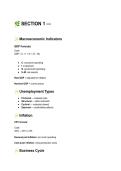
✨ Macroeconomic Indicators
GDP Formula
Code
GDP = C + I + G + (X – M)
● C: consumer spending
● I: investment
● G: government spending
● X–M: net exports
Real GDP = adjusted for inflation
Nominal GDP = current prices
✨ Unemployment Types
● Frictional — between jobs
● Structural — skills mismatch
● Cyclical — recession‑based
● Seasonal — predictable patterns
✨ Inflation
CPI Formula:
Code
(CPI₂ – CPI₁) / CPI₁
Demand‑pull inflation: too much spending
Cost‑push inflation: rising production costs
✨ Business Cycle
, Code
Expansion → Peak → Contraction → Trough
✨ Aggregate Demand (AD)
Downward sloping because of:
● wealth effect
● interest rate effect
● exchange rate effect
✨ Aggregate Supply (AS)
● SRAS: upward sloping
● LRAS: vertical at full employment
Stagflation = SRAS shifts left
✨ Fiscal Policy
Expansionary: ↑ spending, ↓ taxes
Contractionary: ↓ spending, ↑ taxes
Multiplier:
Code
1 / (1 – MPC)
✨ Monetary Policy
Tools of the Fed:
● open market operations
● discount rate
● reserve requirement
Buy bonds → MS ↑ → interest rates ↓
Sell bonds → MS ↓ → interest rates ↑
✨ Macroeconomic Indicators
GDP Formula
Code
GDP = C + I + G + (X – M)
● C: consumer spending
● I: investment
● G: government spending
● X–M: net exports
Real GDP = adjusted for inflation
Nominal GDP = current prices
✨ Unemployment Types
● Frictional — between jobs
● Structural — skills mismatch
● Cyclical — recession‑based
● Seasonal — predictable patterns
✨ Inflation
CPI Formula:
Code
(CPI₂ – CPI₁) / CPI₁
Demand‑pull inflation: too much spending
Cost‑push inflation: rising production costs
✨ Business Cycle
, Code
Expansion → Peak → Contraction → Trough
✨ Aggregate Demand (AD)
Downward sloping because of:
● wealth effect
● interest rate effect
● exchange rate effect
✨ Aggregate Supply (AS)
● SRAS: upward sloping
● LRAS: vertical at full employment
Stagflation = SRAS shifts left
✨ Fiscal Policy
Expansionary: ↑ spending, ↓ taxes
Contractionary: ↓ spending, ↑ taxes
Multiplier:
Code
1 / (1 – MPC)
✨ Monetary Policy
Tools of the Fed:
● open market operations
● discount rate
● reserve requirement
Buy bonds → MS ↑ → interest rates ↓
Sell bonds → MS ↓ → interest rates ↑


