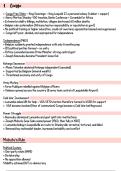
1. Congo
• Congo Free State — King Sovereign — King Leopold II a personal colony (rubber + copper)
• Henry Morton Stanley: 400 treaties, Berlin Confernce + Scramble For Africa
• Extreme brutality: killings, mutilation, villages destroyed ±10 million deaths
• Belgian rule: paternalism (Africans had no responsibility or reputation in govt)
• No political training or higher education, could not own land, opposistion banned and suppressed
• Congo left poor, divided, and unprepared for independence
Independence (1960)
• Belgium suddenly granted independence with only 6 months prep
• 120 political parties formed — no unity
• Patrice Lumumba became Prime Minister: strong central govt
• Joseph Kasavubu became President: loose fed
Katanga Secession
• Moise Tshombe declared Katanga independent (seceded)
• Supported by Belgium (mineral wealth)
• Threatened economy and unity of Congo
Army Mutiny
• Force Publique rebelled against Belgian officers
• Violence spread across the country (B army took control of Leopoldville Airport)
Cold War Involvement
• Lumumba asked UN for help — USA VETO’d action therefore turned to USSR for support
• USA became involved (fear of communism) Congo became a Cold War battleground
Power Struggle
• Kasavubu dismissed Lumumba and govt split into rival factions
• Joseph Mobutu Sese Seko seized power (1960, then fully in 1965)
• Lumumba hiding in Leopoldville en route to Stanleyville: arrested, tortured, and killed
• Removed key nationalist leader, increased instability and conflict
Mobutu’s Rule
Political System
• One-party state (MPR)
• Dictatorship
• No opposition allowed
Stability achieved BUT no democracy
• Congo Free State — King Sovereign — King Leopold II a personal colony (rubber + copper)
• Henry Morton Stanley: 400 treaties, Berlin Confernce + Scramble For Africa
• Extreme brutality: killings, mutilation, villages destroyed ±10 million deaths
• Belgian rule: paternalism (Africans had no responsibility or reputation in govt)
• No political training or higher education, could not own land, opposistion banned and suppressed
• Congo left poor, divided, and unprepared for independence
Independence (1960)
• Belgium suddenly granted independence with only 6 months prep
• 120 political parties formed — no unity
• Patrice Lumumba became Prime Minister: strong central govt
• Joseph Kasavubu became President: loose fed
Katanga Secession
• Moise Tshombe declared Katanga independent (seceded)
• Supported by Belgium (mineral wealth)
• Threatened economy and unity of Congo
Army Mutiny
• Force Publique rebelled against Belgian officers
• Violence spread across the country (B army took control of Leopoldville Airport)
Cold War Involvement
• Lumumba asked UN for help — USA VETO’d action therefore turned to USSR for support
• USA became involved (fear of communism) Congo became a Cold War battleground
Power Struggle
• Kasavubu dismissed Lumumba and govt split into rival factions
• Joseph Mobutu Sese Seko seized power (1960, then fully in 1965)
• Lumumba hiding in Leopoldville en route to Stanleyville: arrested, tortured, and killed
• Removed key nationalist leader, increased instability and conflict
Mobutu’s Rule
Political System
• One-party state (MPR)
• Dictatorship
• No opposition allowed
Stability achieved BUT no democracy