

Written by students who passed Immediately available after payment Read online or as PDF Wrong document? Swap it for free 4.6 TrustPilot
logo-home
Document preview thumbnail
Preview 4 out of 46 pages
Summary

Summary External Relations of the EU; European Studies, Maastricht University

Document preview thumbnail
Preview 4 out of 46 pages

This course makes students acquainted with the specific and multi- faceted nature of EU foreign policy. The course introduces students into the general framework of EU external relations: objectives, institutions, instruments, areas. It puts emphasis on the unique nature of EU foreign policy and evaluates its strengths and weaknesses in various functional domains – trade, development, security and defence, etc. - and different regional settings – Western Balkans, European neighbourhood, Africa. It places the EU’s foreign policy in a broader international context and discusses some major challenges facing the EU in the 21st century. Please note that this is an elective course and available places are limited.

Content preview

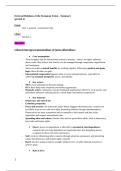
External Relations of the European Union – Summary
(period 4)

Exam:
- Oral: 1 question + preparation time
-
Chair:
- Tutorial 4

Tutorial 1

Liberal intergovernmentalism (LI)/neo-liberalism:

 Core assumptions
- They recognize that the international system is anarchic – there’s no higher authority
above states. they believe that anarchy can be managed through cooperation, negotiations,
and institutions.
- States can achieve mutual benefits by working together, following a positive sum game
logic where all sides can gain.
- International cooperation happens when it serves national interests, especially for
achieving economic prosperity, peace, and stability.

 Key actors:
- MS’s: most influential in decision making.
- IO’s: these help states cooperate and enforce agreements.
- Domestic actors: companies, non-governmental organizations (NGO’s), civil society, and
individuals influence national policies, which shape international cooperation.

 Key interests:
- Democracy and rule of law
- Economic prosperity:
- Peace and security: the democratic peace theory suggests that democratic countries are
less likely to go to war with each other, promoting stability through interdependence.
Democracies are more transparent and accountable to their people and they value
negotiation and respect international rules.
- Spreading ideas and values: liberals often seek to spread their ideals, such as democracy,
free trade and human rights.

 Power: power in negotiations is affected by asymmetric interdependence :
countries that are more dependent on cooperation have less bargaining power
compared to those with more alternatives.
- Soft: involves influencing other countries through attraction, persuasion, and promoting
values like democracy and human rights. (mainly)
- Hard: involves using economic strength, military force, or other material resources to
achieve goals.

 Role of IO’s:


1

, - IO’s are essential to managing anarchy by promoting economic growth, peace and
stability.
- They act as platforms where countries can negotiate, bargain, and coordinate their actions.

 Values:
- Shared values make cooperation easier and are often used as tools of soft power.
- Values like democracy, free trade, and international law help build trust and partnerships.
- When national interests clash, values can become less important – each MS may prioritize
differently depending on its own needs.

 Concerns:
- Bandwagoning: smaller or less powerful countries may align themselves with stronger
powers for protections or economic gains. Power imbalance: stronger c might exploit the
weaker one economically or politically.

 Conception EU:
- It acts as a platform where MS work together to achieve shared goals.
- The EU spreads its values and influence beyond its borders through partnerships and
agreements.
- In some areas, MS delegate power to EU institutions, allowing them to make independent
decisions (e.g. in trade policy or competition law).
- However, for major decisions, the EU still relies on cooperation and consensus among
MS, reflecting the intergovernmental nature of its structure.
Realism
 Core Assumptions: The Anarchic International System
At the heart of realism lies the idea that the international system is anarchic—there is no
overarching authority to enforce rules or guarantee security.
 No central authority: Unlike domestic politics where governments maintain order, the
international arena lacks a sovereign power to enforce peace.
 Self-help system: States must rely on their own resources to protect themselves, secure their
interests, and ensure survival.
 Independence over cooperation: States prioritize their own sovereignty and national
interests over collective efforts.
 Zero-sum logic: International relations are often competitive; one state’s gain is perceived as
another’s loss, reducing chances for mutually beneficial cooperation.

 Main Actors: States as Central Players
Realism sees states as the most important and powerful actors in global politics.
 States control critical resources like military and economic power and act as unitary actors—
internal politics are considered irrelevant (black box model).
 The international system pushes states to compete for power instead of working together.
 Staying safe and protecting themselves is their main goal, so states care more about their own
interests than about international rules or shared values.
 State Behavior and Interests
Realist theory offers two major strands explaining how and why states pursue power:
 Offensive Realism (John Mearsheimer):
States aim to maximize their power to dominate others and secure their position. Using force
is seen as a smart way for states to protect themselves and avoid being weak.


2

, Example: Russia’s invasion of Ukraine as an attempt to regain influence and block NATO
expansion.
 Defensive Realism (Kenneth Waltz, Stephen Walt):
States try to get just enough power to stay safe. If they try to get too much, other countries
might team up against them.
Example: NATO’s expansion and support for Ukraine viewed as a move to deter aggression,
not provoke it.
Key state goals include:
1. National security – protecting the state from external threats like war.
2. Survival – maintaining sovereignty and political independence.
3. Power accumulation – especially hard power, including:
o Military strength (leading to arms races and security dilemmas)
o Economic wealth (to fund military and sustain power)
o Natural resources
o Strategic geography

 The Role of International Organizations (IOs)
Realism views IOs as tools of statecraft, not independent actors.
 IOs have limited importance and mainly work when their goals match the interests of
powerful states.
 They are a means to an end—states use them when it’s useful and leave when it no longer
helps their national interests.
 The influence of IOs depends on the distribution of power—stronger states have more control
over what happens, while weaker states have less influence.

 Realist View on Values and Norms
Realists are skeptical of international cooperation based on values like democracy or
human rights.
 They argue that such value-based cooperation is unreliable and secondary to power and
security concerns.
 Tangible power—military strength, economic resources—is considered far more important for
achieving peace and stability than shared ideals.

6. Key Challenges in the Realist Worldview
 Balance of Power: Realism stresses that peace is most stable when power is evenly
distributed among major players. Any disruption (e.g. one state becoming too powerful) can
trigger conflict.
 Security Dilemma:
o When one state builds up its military for defense, others feel threatened and do the
same.
o This leads to mutual suspicion, arms races, and higher chances of conflict—even if no
state intends to attack.

 The European Union through a Realist Lens
Realists view the EU not as a supranational actor but as a product of geopolitical
competition among its member states.
 Integration is limited by national interests—Member States (MS) work together when it
benefits them but avoid deeper unity if it risks their sovereignty.
 The EU is seen as fragile—if a major MS leaves (like Brexit), it can hurt the EU’s stability.

3

,  Power disparities shape EU politics—larger states (like Germany and France) have more
control, while smaller MS have less influence.
 Bandwagoning: weaker MS may join stronger ones to get protection or economic benefits,
but this can mean giving up some independence

Constructivism
Constructivism focuses on ideas, identities, and norms rather than just material interests like military
or economic power. It argues that international relations are shaped by socially constructed realities
—how states see themselves, others, and the world around them.
- Not just self-interest or security: state actions are influenced by values, beliefs, and
collective meanings, not only by survival or power.
- Anarchy is what states make of it (Wendt): There isn’t just one way to understand
anarchy—states shape their own rules and relationships based on their history, culture, and
shared ideas.
 The nature of the international system:
Constructivism doesn’t see the international system as naturally anarchic or cooperative.
Instead, the structure of the system is shaped by state interactions and shared meanings over .
time
 Key actors:
- States remain important but so are: domestic actors (political leaders, civil society),
NGO’s, IO’s, ideas and norms themselves.
 Interest and identity: interests are fluid, shaped by a state’s identity, values, and historical
context.
- State identity influences how it interprets events and acts.
- States can respond differently to the same situation because they see it through different
cultural or historical lenses.
 Understanding of power
- Power is not just about military force or money—it also includes normative power,
which means shaping ideas, beliefs, and behavior.
- Soft power is important: for example, the EU uses its values—like democracy, human
rights, and international law—to influence others instead of using military force.
- In constructivism, a key kind of power is the ability to create global norms and shape
what is seen as legitimate or right.
 Role of IO’s: constructivists view IO’s as active shapers of norms and behavior.
- Unlike in realism, IOs are not just tools used by powerful states.
- They help decide what is legitimate and spread shared values, which can change how
states think and behave.
 Key concerns: the problem of othering
- Constructivism warns about the dangers of “othering” – when states define themselves in
contrast to others, often creating enemies or outsiders.
 The EU through a constructivist lens
- Constructivism sees the EU not just as a political or economic actor, but as a community
of shared values.
- The EU is a place where Member States (MS) work together based on common beliefs
and a shared identity.
- The EU’s power comes from spreading its values and norms (like through partnerships,
trade deals, and foreign policy) and influencing countries outside the EU.


4

Table of contents

  1. 01 Key actors: 1
  2. 02 MS’s: most influential in decision making. 1
  3. 03 IO’s: these help states cooperate and enforce agreements. 1
  4. 04 Domestic actors: companies, non-governmental organizations (NGO’s), civil society, and individuals influence national policies, which shape international cooperation. 1
  5. 05 Tutorial 5 The institutional framework of EU external action 16
  6. 06 General structure of EU external action 16
  7. 07 How the EU deals with the rest of the world – involves both shared EU-level power and national-level power, depending on the policy area. (involves trade, development, humanitarian aid, foreign and security policy (CFSP), and defence (CSDP). 16
  8. 08 Supranationalism: EU institutions have the power to make binding decisions that apply to all MS. In these areas, countries have given up some control to the EU so it can act as one voice. 16
  9. 09 Example: trade policy – the EU alone negotiates trade deals for all MS, not each country individually. 16
  10. 10 Intergovernmental: individual MS keep control over decisions. The EU can only act if all countries agree : protects national sovereignty. 16
  11. 11 Example: foreign and defence policy – countries make decisions together in the council, and often require unanimity (every country must agree). 16
  12. 12 Trade policy – common commercial policy (CCP) 16
  13. 13 This explains how EU trade policy works, especially through the common commercial policy (CCP), which is one of the EU’s most supranational areas of power. 16
  14. 14 Exclusive EU competence (art. 207 TFEU) + supranationalism 16
  15. 15 This means only the EU, not individual countries, is allowed to make laws and sign agreement on trade with the rest of the world. MS cannot negotiate their own trade deals – the EU acts as a single block. 16
  16. 16 Institutions involved: 16
  17. 17 EC: starts and leads the negotiation. 16
  18. 18 Council of the EU (foreign affairs council): gives permission (mandate) to start negotiations and supervises the process. They approve the final deal using QMV. 16
  19. 19 EP: has become more powerful since the LT. it must approve the final agreement for it to be valid. 16
  20. 20 Trade agreement process: 16
  21. 21 1. Commission proposes and negotiates the deal with a third country. 16
  22. 22 2. Council gives a negotiation mandate and supervises the talks. 16
  23. 23 3. MS and EP are kept informed. 16
  24. 24 4. EP votes to approve the final agreement. 16
  25. 25 5. If the agreement covers areas that involve national powers (education/culture), it becomes a mixed agreement, which means national parliaments must also ratify it. 16
  26. 26 Modern issues in trade policy: 16
  27. 27 FDI screening: the EU checks foreign investments (Chinese interest in tech firms like ASML) to protect critical sectors. 16
  28. 28 Anti-dumping: the EU can block products that are sold too cheaply because they are heavily subsidized by foreign governments, to protect EU industries. 16
  29. 29 Politicization of trade: deals like TTIP and CETA sparked public protests and debate, making trade a political topic, not just an economic one. 16
  30. 30 Climate linked trade: example: the carbon border adjustment mechanism (carbon border tax) makes polluting imports more expensive, pushing other countries to adopt greener standards. 16
  31. 31 How the EU handles foreign and security policy, through CFSP and CSDP (defence) 16
  32. 32 Intergovernmental: 16
  33. 33 CFSP and CSDP are intergovernmental : MS stay in control, all big foreign policy decisions are made together by the countries, not imposed from the EU level. 16
  34. 34 Decision making process: 16
  35. 35 Unanimity required + limited QMV: it is possible only in very specific cases, like appointing special representatives, but not for major foreign policy actions. 17
  36. 36 Commission and EP’s role: 17
  37. 37 EC: has no power to propose foreign/security policy here. 17
  38. 38 EP: can only give opinions or suggestions, but has no power to make decisions. 17
  39. 39 Key bodies involved: 17
  40. 40 European council: made up of EU leaders. They set the overall direction of foreign policy. 17
  41. 41 Foreign affairs council: made up of national foreign ministers, it implements foreign policy and makes detailed decisions. It’s chaired by the high representative. 17
  42. 42 HR/VP > has a triple role: 17
  43. 43 Chairs the FAC meetings. 17
  44. 44 Leads the European external action service – the EU’s diplomatic body. 17
  45. 45 Acts as vice president of the commission, helping bridge EU institutions. 17
  46. 46 EEAS: 17
  47. 47 helps coordinate the EU’s foreign policy, plans missions during crises (like natural disasters or conflicts), and represents the EU in other countries. 17
  48. 48 Decision tools & support structure: 17
  49. 49 Constructive abstention: a country can choose not to support a policy but not block it either (they don’t have to follow it, but they won’t stop it). They don’t have to apply the policy themselves, they opt out. 17
  50. 50 Political and security committee: group of ambassadors from each country who monitor international situations, coordinate EU responses to crises, and prepare decisions for the FAC. 17
  51. 51 COREPER II: prepares high-level council meetings (usually ambassadors). 17
  52. 52 Working parties: technical groups made up of national experts and diplomats. They handle very specific policy areas. Their job is to draft and negotiate proposals and prepare discussions for COREPER. 17
  53. 53 Why are trade deals like TTIP and CETA so politicized? 17
  54. 54 Transparency issues: the talks happened behind closed doors, so people didn’t know what was being negotiated, which led to distrust. 17
  55. 55 Corporate influence fears: many believed that big companies had too much power in shaping the rules of the deals, possibly putting profit above public interest. 17
  56. 56 Sovereignty concerns: there were fears that EU countries would lose control over their own laws and regulations (food, environment, health). 17
  57. 57 ISDS (investor state dispute settlement): let’s foreign companies sue governments if a new law hurts their profits – for example, an environmental rule that bans a product they use. People worry about it because: it gives special rights to big companies + cases happen in secret tribunals, not public courts + it might stop governments from making strong laws to protect health or the environment. 17
  58. 58 Weak value clauses: rules in trade deals about things like protecting the environment or worker’s rights look good on paper, but in reality, they don’t have real legal power. They’re often not enforced, so countries/companies don’t get punished if they ignore them. People saw them as more symbolic promises than actual rules. 17
  59. 59 National vetoes: even though trade deals like CETA are negotiated at the EU level, they sometimes need approval from national and regional parliaments in MS. In the case of CETA, the regional parliament of Wallonia in Belgium almost voted against the deal. Since Belgium can’t approval a deal without all its regions agreeing, Wallonia could have blocked the entire EU-Canada agreement, even though most of the EU supported it. 17
  60. 60 Open strategic autonomy (OSA) 17
  61. 61 Definition: the EU’s strategy to stay open to global trade, but at the same time become less dependent on other countries – especially for important things like energy, medicine, or technology. 17
  62. 62 Why: the EU realized during recent crises that it was too dependent on others: 17
  63. 63 during COVID-19, Europe had trouble getting enough medical supplies because it depended too much on other countries to make them. 18
  64. 64 When Russia invaded Ukraine, it became clear that relying on Russian gas was risky. > energy dependence gave Russia political and economic leverage over EU. 18
  65. 65 Shift in thinking from idealism to realism: 18
  66. 66 In the past, the EU believed open trade would naturally spread peace, democracy, and cooperation. 18
  67. 67 Now, it sees that relying too much on others can be risky 18
  68. 68 Example: countries like Russia or groups like OPEC can raise prices or reduce supply to pressure the EU. This makes Europe vulnerable and drives up costs for people and businesses. 18
  69. 69 EU’s response 4 pillars: 18
  70. 70 1. Make more important products in the EU: computer chips, so Europe doesn’t run out if global trade is disrupted. 18
  71. 71 2. Protect EU companies from unfair competition from other countries, like when foreign governments give their companies extra help or try to buy important EU businesses. 18
  72. 72 3. Include EU values in trade, like caring for the environment and making sure workers are treated fairly. 18
  73. 73 4. FDI: means that the EU wants to protect its most critical industries and infrastructure from being controlled by foreign powers, especially those seen as untrustworthy or strategic rivals (like China or Russia). 18
  74. 74 Main tensions in EU trade policy (Baur, Flach) 18
  75. 75 Trade-offs between openness and autonomy: the EU wants to stay open to global trade, but also needs to protect its economy and reduce reliance on countries like China or Russia. This creates a balancing act – being open can bring benefits, but too much dependence can be risky. 18
  76. 76 Modern trade deals are complex: today’s trade agreements aren’t just about lowering tariffs. They also include rules about product standards, services, where goods come from (rules of origin), and environmental or labor protections. This makes deals harder to negotiate and apply. 18
  77. 77 Role of trade in EU external relations 18
  78. 78 Trade is not just about making money or selling goods anymore – for the EU, it has become a strategic foreign policy tool. 18
  79. 79 Build global influence: the EU uses trade to strengthen its position in the world, making deals and partnerships with other countries. 18
  80. 80 Dealing with Russia and China: the EU puts rules or limits on trade (sanctions) to protect its safety and values. 18
  81. 81 Push environmental and labor standards: through trade agreements, the EU encourages other countries to follow EU style rules on things like protecting the environment or workers’ rights. + values 18
  82. 82 Impose sanctions and restrictions: The EU uses trade to respond to international problems — like punishing countries (e.g., Russia) with trade bans or restrictions when they break international law. 18
  83. 83 Gain soft power and regulatory dominance (the Brussels Effect): The EU often sets global rules (like on data privacy or product safety) because its market is so large — companies around the world follow EU rules just to be able to trade with the EU. 18
  84. 84 Working with friendly countries: the EU builds strong trade ties with countries like Japan and Canada – not just for business, but also to support shared values like democracy. > promoting a rule based international order. 18
  85. 85 Strategic tools: 18
  86. 86 Instruments the EU now uses to protect itself and influence others: 18
  87. 87 Carbon border taxes: the EU adds extra taxes on products from countries that don’t have strong climate rules. This protects EU companies and helps fight climate change. 18
  88. 88 FDI screening: the EU checks foreign investments (especially from non-democratic countries) to stop them from buying important companies in areas like energy or technology. If the EU thinks the investment could be a risk to security or give too much control to a foreign power, it can block the deal. 19
  89. 89 EU competences: Exclusive, Shared, Supporting 19
  90. 90 Define which areas of policy the EU can legislate in, and whether MS’s still have power in those areas. 19
  91. 91 Exclusive competences (only the EU can legislate, MS’s cannot make their own rules in these areas): customs union, monetary policy for the euro area, competition rules in the internal market, fisheries, common external relations. 19
  92. 92 Shared competence (both EU and MS’s can legislate, in these areas MS’s can legislate only if the EU has not already done so): internal market, social policy, environment, consumer protection, research and development. 19
  93. 93 Supporting competences (The EU can assist but not overrule MS’s, in these areas, the EU cannot create binding laws but can coordinate, support, or supplement national policies): education, culture, tourism, public health 19
  94. 94 Feature 19
  95. 95 Trade policy 19
  96. 96 CFSP (foreign & security policy) 19
  97. 97 Type 19
  98. 98 Supranational – EU institutions make most decisions, and MS have given up some control. 19
  99. 99 Intergovernmental – MS keep control and must agree together. 19
  100. 100 Legal basis 19
  101. 101 Article 207 of the TFEU, which gives the EU power over trade. 19
  102. 102 Title V of the TEU, which deals with foreign and security policy. 19
  103. 103 Competence 19
  104. 104 Exclusive – only the EU can make trade laws and agreements. MS can’t do it on their own. 19
  105. 105 MS competence – MS control foreign policy decisions; the EU cannot act alone. 19
  106. 106 Initiator 19
  107. 107 European commission starts and leads trade negotiations. 19
  108. 108 The high representative and the council lead on foreign policy. 19
  109. 109 Decision rule 19
  110. 110 QMV – most trade decisions don’t need everyone to agree. 19
  111. 111 Unanimity – all MS must agree on foreign policy decisions. 19
  112. 112 EP role 19
  113. 113 Strong – the EP must approve trade agreements. 19
  114. 114 Minimal – the EP only gives opinions; it doesn’t decide. 19
  115. 115 MS role 19
  116. 116 MS can’t make their own trade deals. For mixed deals, national parliaments must approve. 19
  117. 117 MS have full control – they decide together in the council. 19
  118. 118 Tutorial 6 the EU’s geo-economic strategy: context, drivers and policy debate 20
  119. 119 What are the EU’s geo-economic interests? 20
  120. 120 the EU no longer sees trade and the economy only as a way to grow and make money. Because the world is more tense and unpredictable – with rising global rivalries, supply chain issues, and energy problems – the EU now uses its economic power in a more strategic way. 20
  121. 121 Neighbourhood stability: the EU wants to keep the countries close to its borders (eastern Europe, Balkans, Mediterranean) peaceful and economically stable. If these neighbouring regions are unstable, it can cause problems for the EU too – like wars, people fleeing as refugees, or interruptions in trade and transport. > by helping these regions stay stable and develop well, the EU protects itself from the spillover of problems that could cross into EU countries. 20
  122. 122 Strategic autonomy: the EU wants to rely less on countries like Russia/China – especially for important things like gas, oil, rare materials, and technology – because those governments are not democratic and could use their power to pressure or threaten the EU > by becoming more self-sufficient, or finding more trustworthy partners, the EU can protect itself. 20
  123. 123 Multilateralism: even though the EU wants to be more independent and less dependent on other countries, it still supports working together with others through international rules and agreements. The EU believes in fair trade and global cooperation, not just acting alone or using power to gets it way. 20
  124. 124 Strategic partnerships: the EU works closely with smaller or less powerful countries – especially in Africa and Latin America – to create win-win relationships. The goal is to help both sides grow economically and politically, while also making sure that powerful rivals like China don’t dominate those regions with their own influence (like through China’s belt & road initiative, which offers loans and builds infrastructure in exchange for stronger ties) 20
  125. 125 Strengthening the Euro: the EU wants more countries and companies around the world to use the euro instead of US dollar when they trade or make financial deals. If the euro is used more often globally, the EU will have more financial power and be less affected by decisions made by the US. 20
  126. 126 EU values through trade: the EU tries to embed its principles into its trade agreements with other countries. It’s not just about exchanging goods and services. 20
  127. 127 The EU includes rules in trade deals that ask partner countries to respect democracy, human rights, and the rule of law. > if they are broken, the EU can pause or stop parts of the deal. 20
  128. 128 The EU wants trade partners to follow basic workers’ rights; banning child labor, and ensuring safe working conditions 20
  129. 129 The EU tries to make sure that trade doesn’t harm the environment or society in the long run. It may support things like eco-friendly farming or clean energy through trade. 20
  130. 130 Brussels effect: the EU can shape rules around the world just because it’s a big and important market. > the EU makes strict rules for things like online privacy, food safety, and the environment. If companies from other countries want to sell in the EU, they often follow these rules so they don’t lose access to the market. This gives the EU power to influence global rules without forcing anyone: soft power. 20
  131. 131 Why is the EU pursuing a more geo-economic approach? 20
  132. 132 Recent global shocks have exposed EU vulnerabilities. 20
  133. 133 Covid-19: the EU realized it was too dependent on other countries for important products like medical equipment and computer chips. When global supply chains broke down, the EU had trouble getting essential items. This pushed the EU to think about how to become more self-reliant. 20
  134. 134 War Ukraine: the war in Ukraine showed that the EU was too dependent on Russian gas for its energy. When Russia did cut back on gas supplies energy prices went up and caused economic problems for EU countries. Relying too much on other countries is too dangerous. 21
  135. 135 US China subsidies: both the US and China give a lot of subsidies to support important industries – energy, technology, electric cars. By doing this, they help their own companies grow faster and compete better in the global market. It can also make it harder for companies in other countries, to keep up. The EU is now also starting to give subsidies to its own industries. 21
  136. 136 Weaponisation of interdependence: The EU has realised that being economically connected to other countries can be risky. Some powerful countries, like Russia or China, can use trade or energy supplies to put pressure on others or punish them. This has pushed the EU to move away from depending too much on others and to protect important parts of its economy more carefully. 21
  137. 137 EU identity: there’s a growing worry in the EU that too much influence from outside countries, could weaken Europe’s own culture, values, or political decisions. If foreign companies control important media or tech platforms, it might affect what people see or read. To protect its identity and way of life, the EU wants to be more careful about who it does business with. > setting stricter rules on foreign investment 21
  138. 138 Internal inequality: there are big differences in wealth between EU countries and also between rich and poor areas within countries. Because of this, people are asking the EU to do more protect local jobs and help local businesses, especially in places that are having a hard time. 21
  139. 139 Challenges of protectionism: reshoring (producing everything within the EU) can be more expensive then importing. > it could lead to higher prices for consumers 21
  140. 140 it might seem safer to rely only on local production, it can actually make the EU more vulnerable. Fe: if something goes wrong inside the EU, the whole supply chain might collapse, there are no others to rely on. 21
  141. 141 If the EU closes itself off to trade by reshoring and using protectionist policies, other countries might do the same. This could lead to fewer exports and damage industries that rely on global markets. 21
  142. 142 Open markets (OM) vs open strategic autonomy (OSA) 21
  143. 143 OM: supports keeping trade as open and free as possible. 21
  144. 144 Free trade = prosperity: the EU has become rich and successful by trading openly with other countries. Free trade has helped businesses grow, created jobs, and made products cheaper. 21
  145. 145 Global influence via norms: by trading with many countries, the EU can also spread its values, like fair working conditions. 21
  146. 146 Diversify, don’t close: instead of cutting off trade with countries like China/Russia, the EU should trade with more different countries, so it’s not too dependent on just a few. 21
  147. 147 The EU has trade deals with 77 countries through 45 agreements. 21
  148. 148 In 2019, 17% of what the EU produced was sold to people outside the EU. This is more than in the US or China, which means the EU depends more on global trade. 21
  149. 149 Free trade has helped the EU become a strong player in the world economy. If the EU closes itself off too much, it could lose its influence and ability to shape global trade rules. 22
  150. 150 Risks: 22
  151. 151 Missed opportunities: if the EU closes itself off too much, it might miss chances to grow its economy or get new ideas from other countries. 22
  152. 152 Losing access to foreign market: if the EU puts up trade barriers, other countries might do the same in return. 22
  153. 153 Declining influence in global rule setting: if the EU trades less with the world, it will also have less say in making global rules. 22
  154. 154 OSA: protecting EU’s independence and strength. 22
  155. 155 Trade as power: trade shouldn’t just be about making money. It should also help the EU protect its values, its interests, and its ability to handle future problems. 22
  156. 156 Reduce risk dependencies: the EU should not rely too much on countries that are not stable or don’t share its values. 22
  157. 157 Preparedness for crises: the EU should be able to make its own important products, like medicine, so it’s not caught off guard in the next crisis. 22
  158. 158 Support key industries: the EU should invest money and support in important areas like green energy, new technologies, and defence, to stay strong. 22
  159. 159 Strategic tools: the EU should use things like trade rules, regulations, and checks on foreign investments to protect its economy and security. It could also set regulations to make sure foreign products meet EU standards, or use tariffs and quotas to protect local industries 22
  160. 160 Problems with the current global trading system 22
  161. 161 One big problem is that countries have very different tariffs (taxes on imports). Rich countries like Japan and the US have low tariffs (around 3–4%), but countries like India (18.1%), Argentina (13.3%), and Brazil (11.1%) have much higher ones. → This makes it harder for countries to agree on trade rules at the global level, especially at the World Trade Organization (WTO). 22
  162. 162 Trade deals between just two countries or small groups (called bilateral trade agreements) help those involved, but they can make things worse for countries that are not part of the deal. It can lead to unfair competition. > countries in the deal may trade goods with each other at lower costs, which give their businesses and advantage. > businesses from countries not in the deal still face higher costs when exporting to the same markets. This makes it harder for them to compete. 22
  163. 163 The EU’s own trade rules and systems can be quite complex and make it hard for other countries to sell their products in the EU. 22
  164. 164 When the EU signs deeper trade agreements, it often adds extra rules to protect itself. These can include special conditions or limits that make trade harder for some partners. For example, the EU might require that imported goods meet strict environmental, labour, or safety standards, or it might set limits on how much can be imported. These rules can be hard for some countries—especially developing ones—to follow. 22
  165. 165 Tutorial 7 23
  166. 166 The EU has made good progress in becoming an international security actor — meaning it plays a role in managing conflicts, promoting peace, and responding to crises around the world. It does this using a mix of civilian tools (like diplomacy, development aid, and trade) and military tools (like peacekeeping and training missions 23
  167. 167 However, there are still big challenges that stop the EU from being a fully effective and unified security power. 23
  168. 168 Extent of EU success as a security actor 23
  169. 169 Slow decision making: for foreign and security policies, all 27 MS usually have to agree: unanimity. This makes it hard to respond quickly to international crises. 23
  170. 170 Limited military power: the EU doesn’t have its own full military force and still relies a lot on NATO and US for things like equipment and logistics. 23
  171. 171 Conflicting national interests: different countries in the EU often have different foreign policy goals, so it’s hard to act as one unified player on the global stage. 23
  172. 172 Budget issue: EU countries don’t spend enough together on defence, which limits how large or strong EU military actions can be. 23
  173. 173 Current toolbox for international security 23
  174. 174 the tools the EU uses to deal with international security issues. 23
  175. 175 Civilian instruments (non-military) soft power: focusing on peace, development, and law rather than force. (focused on by EU) 23
  176. 176 Diplomacy and sanctions: talks and negotiations to solve conflicts + punishing countries of they break rules. 23
  177. 177 Development and humanitarian aid: EU helps rebuild countries, support schools, hospitals, and give emergency help during crises. 23
  178. 178 Security sector reform (SSR): the EU trains and improves local police, courts, and border guards in unstable countries. 23
  179. 179 Election monitoring and peace mediation: the EU watches elections to make sure they are fair and helps different groups negotiate during or after conflicts. 23
  180. 180 Police and judicial training: the EU helps strengthen local justice systems and laws enforcement. 23
  181. 181 Civilian missions: non-military missions where EU experts go to countries to help with police, law, or governance. 23
  182. 182 EULEX Kosovo (legal and police reform) 23
  183. 183 Military instruments: hard power 23
  184. 184 These involve using or supporting armed forces, often under the common security and defence policy (CSDP). (Focused on by MS) 23
  185. 185 Peacekeeping and stabilization missions: the EU sends troops to help keep peace after a conflict. (EUFOR althea in Bosnia). 24
  186. 186 Maritime and border operations: the EU uses ships or patrols to protect borders or sea routes. (EUNAVFOR Atalanta (anti-piracy), operation Sophia (against people smuggling). 24
  187. 187 Military training: the EU trains national armies in fragile states. (EUTM Mali and EUTM Somalia). 24
  188. 188 PESCO (permanent structured cooperation): a plan for EU countries to work more closely together on military projects like equipment and training. 24
  189. 189 European defence fund (EDF): EU money that helps fund joint defence projects and research to make the EU stronger in security and defence. 24
  190. 190 Tutorial 8 28
  191. 191 What is strategic autonomy? 28
  192. 192 The EU’s ability to act independently in matters of security and defense, without relying too heavily on other powers, especially the US or NATO. It’s about building up european capabilities to protect its interests and respond to crisis – both within and beyond EU borders. 28
  193. 193 It includes: 28
  194. 194 Decision making autonomy (the ability to make independent political choices). 28
  195. 195 Autonomy of action (the capability to carry out operations without external help) 28
  196. 196 Information autonomy (control over intelligence, surveillance, and data) 28
  197. 197 Concerns and criticisms 28
    1. a. Money (Economy reforms) 40
    2. b. Power (How reforms happen) 40
    3. c. Glory (Looking good without real change) 40

Document information

Study
Uploaded on
March 18, 2026
Number of pages
46
Written in
2024/2025
Type
Summary
$4.47

Wrong document? Swap it for free Within 14 days of purchase and before downloading, you can choose a different document. You can simply spend the amount again.
Written by students who passed
Immediately available after payment
Read online or as PDF

Sold
13
Followers
7
Items
6
Last sold
5 months ago


Why students choose Stuvia

Created by fellow students, verified by reviews

Quality you can trust: written by students who passed their tests and reviewed by others who've used these notes.

Didn't get what you expected? Choose another document

No worries! You can instantly pick a different document that better fits what you're looking for.

Pay as you like, start learning right away

No subscription, no commitments. Pay the way you're used to via credit card and download your PDF document instantly.

Student with book image

“Bought, downloaded, and aced it. It really can be that simple.”

Alisha Student

Working on your references?

Create accurate citations in APA, MLA and Harvard with our free citation generator.

Working on your references?

Frequently asked questions

