

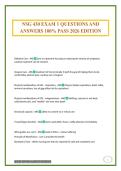
NSG 430 EXAM 1 QUESTIONS AND
ANSWERS 100% PASS 2026 EDITION
Palliative Care - ANS Care or treatment focusing on reducing the severity of symptoms;
curative treatment can be involved
Hospice Care - ANS treatment of the terminally ill with the goal of helping them to die
comfortably, without pain; curative care is forgone
Physical manifestations of EOL - respiratory - ANS Cheyne-Stokes respirations, death rattle,
terminal secretions, loss of gag reflex (risk for aspiration)
Physical manifestations of EOL - integumentary - ANS Mottling, cyanosis in nail beds,
cold/clammy skin, and "waxlike" skin very near death
Decisional capacity - ANS ability to consent to or refuse care
Tissue/Organ donation - ANS Some used within hours, notify physician immediately
What guides our care? - ANS Code of Ethics - relieve suffering
Principle of Beneficence - care is provided to benefit
Standard of Care - define nursing acts that are required for safe and competent care
1
@2026 EDITION ALLRIGHTS RESERVED
, Assessments - last hours of life - ANS limit to comfort measures, concerns about pain and
respiratory should be addressed, emotional/comfort support
Postmortem Care - ANS close pt's eyes, replace dentures, wash/position body - allow family
privacy
Classic triad of DKA - ANS hyperglycemia (>250)
ketones
acidosis
Other manifestations of DKA include - ANS profound dehydration
tachycardia
fruity breath
(early signs) - weakness/lethargy
DKA treatment includes - ANS IV fluids
regular insulin - 0.1 U/kg/hr
electrolytes (potassium esp.) - PRN
HHS occurs when - ANS Blood glucose >600
HHS vs DKA - ANS no ketones (has enough insulin to prevent this)
severe hyperglycemia (>600)
occurs gradually
Other HHS manifestations - ANS increased serum osmolality (concentrated)
normal blood pH
fever/warm dry skin
2
@2026 EDITION ALLRIGHTS RESERVED
ANSWERS 100% PASS 2026 EDITION
Palliative Care - ANS Care or treatment focusing on reducing the severity of symptoms;
curative treatment can be involved
Hospice Care - ANS treatment of the terminally ill with the goal of helping them to die
comfortably, without pain; curative care is forgone
Physical manifestations of EOL - respiratory - ANS Cheyne-Stokes respirations, death rattle,
terminal secretions, loss of gag reflex (risk for aspiration)
Physical manifestations of EOL - integumentary - ANS Mottling, cyanosis in nail beds,
cold/clammy skin, and "waxlike" skin very near death
Decisional capacity - ANS ability to consent to or refuse care
Tissue/Organ donation - ANS Some used within hours, notify physician immediately
What guides our care? - ANS Code of Ethics - relieve suffering
Principle of Beneficence - care is provided to benefit
Standard of Care - define nursing acts that are required for safe and competent care
1
@2026 EDITION ALLRIGHTS RESERVED
, Assessments - last hours of life - ANS limit to comfort measures, concerns about pain and
respiratory should be addressed, emotional/comfort support
Postmortem Care - ANS close pt's eyes, replace dentures, wash/position body - allow family
privacy
Classic triad of DKA - ANS hyperglycemia (>250)
ketones
acidosis
Other manifestations of DKA include - ANS profound dehydration
tachycardia
fruity breath
(early signs) - weakness/lethargy
DKA treatment includes - ANS IV fluids
regular insulin - 0.1 U/kg/hr
electrolytes (potassium esp.) - PRN
HHS occurs when - ANS Blood glucose >600
HHS vs DKA - ANS no ketones (has enough insulin to prevent this)
severe hyperglycemia (>600)
occurs gradually
Other HHS manifestations - ANS increased serum osmolality (concentrated)
normal blood pH
fever/warm dry skin
2
@2026 EDITION ALLRIGHTS RESERVED


