USMLE STEP 1 Pharmacology
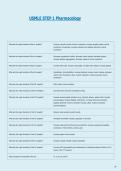
What are the major functions of the α1 receptor? Increase vascular smooth muscle contraction, increase pupillary dilator muscle
contraction (mydriasis), increase intestinal and bladder sphincter muscle
contraction
What are the major functions of the α2 receptor? Decrease sympathetic outflow, decrease insulin release, decrease lipolysis,
increase platelet aggregation, decrease aqueous humor production
What are the major functions of the β1 receptor? Increase heart rate, increase contractility, increase renin release, increase lipolysis
What are the major functions of the β2 receptor? Vasodilation, bronchodilation, increase lipolysis, increase insulin release, decrease
uterine tone (tocolysis), ciliary muscle relaxation, increase aqueous humor
production
What are the major functions of the M1 receptor? CNS, enteric nervous system
What are the major functions of the M2 receptor? Decrease heart rate and contractility of atria
What are the major functions of the M3 receptor? Increase exocrine gland secretions (e.g., lacrimal, salivary, gastric acid), increase
gut peristalsis, increase bladder contraction, increase bronchoconstriction,
pupillary sphincter muscle contraction (miosis), ciliary muscle contraction
(accommodation)
What are the major functions of the D1 receptor? Relaxes renal vascular smooth muscle
What are the major functions of the D2 receptor? Modulates transmitter release, especially in the brain
What are the major functions of the H1 receptor? Increase nasal and bronchial mucus production, increase vascular permeability,
contraction of bronchioles, pruritis, pain
What are the major functions of the H2 receptor? Increase gastric acid secretion
What are the major functions of the V1 receptor? Increase vascular smooth muscle contraction
What are the major functions of the V2 receptor? Increase H2O permeability and reabsorption in collecting tubules of kidney (V2 is
found in the "2" kidneys)
What receptors are associate with Gq? H1, α1, V1, M1, and M3
1/8
, What receptors are associated with Gs? H2, B1, B2, V2, D1
What receptors are associated with Gi? M2, α2, D2
Bethanechol -Direct cholinergic agonist
-Activates bowel and bladder smooth muscle
-Used in postoperative and neurogenic ileus
-Resistant to AChE
Carbachol -Direct cholinergic agonist
-Carbon copy of acetylcholine
-Constricts pupils and relieves intraocular pressure in glaucoma
Methacholine -Direct cholinergic agonist
-Stimulates muscarinic receptors in airways when inhaled
-Used as a challenge test for diagnosis of asthma
Pilocarpine -Direct cholinergic agonist
-Contracts ciliary muscle of eye (open angle glaucoma), contracts pupillary
sphincter (closed angle glaucoma)
-Potent stimulator of sweat, tears and saliva
-AChE resistant
Donepezil -Anticholinesterse - increases ACh
-Alzheimer disease
Galantamine -Anticholinesterse - increases ACh
-Alzheimer disease
Rivastigmine -Anticholinesterse - increases ACh
-Alzheimer disease
Edrophonium -Anticholinesterse - increases ACh
-Historically used to diagnose myasthenia gravis (MG is now diagnosed by anti-
AChR Ab test.
Neostigmine -Anticholinesterse - increases ACh
-Used in postoperative and neurogenic ileus and urinary retention, myasthenia
gravis, and postoperative reversal of neuromuscular junction blockade
Physostigmine -Anticholinesterse - increases ACh
-Used in anticholinergic toxicity
-Crosses the blood-brain barrier (CNS)
Pyridostigmine -Anticholinesterse - increases ACh
-Increases muscle strength
-Used in myasthenia gravis (long acting)
-Does not penetrate CNS
2/8
What are the major functions of the α1 receptor? Increase vascular smooth muscle contraction, increase pupillary dilator muscle
contraction (mydriasis), increase intestinal and bladder sphincter muscle
contraction
What are the major functions of the α2 receptor? Decrease sympathetic outflow, decrease insulin release, decrease lipolysis,
increase platelet aggregation, decrease aqueous humor production
What are the major functions of the β1 receptor? Increase heart rate, increase contractility, increase renin release, increase lipolysis
What are the major functions of the β2 receptor? Vasodilation, bronchodilation, increase lipolysis, increase insulin release, decrease
uterine tone (tocolysis), ciliary muscle relaxation, increase aqueous humor
production
What are the major functions of the M1 receptor? CNS, enteric nervous system
What are the major functions of the M2 receptor? Decrease heart rate and contractility of atria
What are the major functions of the M3 receptor? Increase exocrine gland secretions (e.g., lacrimal, salivary, gastric acid), increase
gut peristalsis, increase bladder contraction, increase bronchoconstriction,
pupillary sphincter muscle contraction (miosis), ciliary muscle contraction
(accommodation)
What are the major functions of the D1 receptor? Relaxes renal vascular smooth muscle
What are the major functions of the D2 receptor? Modulates transmitter release, especially in the brain
What are the major functions of the H1 receptor? Increase nasal and bronchial mucus production, increase vascular permeability,
contraction of bronchioles, pruritis, pain
What are the major functions of the H2 receptor? Increase gastric acid secretion
What are the major functions of the V1 receptor? Increase vascular smooth muscle contraction
What are the major functions of the V2 receptor? Increase H2O permeability and reabsorption in collecting tubules of kidney (V2 is
found in the "2" kidneys)
What receptors are associate with Gq? H1, α1, V1, M1, and M3
1/8
, What receptors are associated with Gs? H2, B1, B2, V2, D1
What receptors are associated with Gi? M2, α2, D2
Bethanechol -Direct cholinergic agonist
-Activates bowel and bladder smooth muscle
-Used in postoperative and neurogenic ileus
-Resistant to AChE
Carbachol -Direct cholinergic agonist
-Carbon copy of acetylcholine
-Constricts pupils and relieves intraocular pressure in glaucoma
Methacholine -Direct cholinergic agonist
-Stimulates muscarinic receptors in airways when inhaled
-Used as a challenge test for diagnosis of asthma
Pilocarpine -Direct cholinergic agonist
-Contracts ciliary muscle of eye (open angle glaucoma), contracts pupillary
sphincter (closed angle glaucoma)
-Potent stimulator of sweat, tears and saliva
-AChE resistant
Donepezil -Anticholinesterse - increases ACh
-Alzheimer disease
Galantamine -Anticholinesterse - increases ACh
-Alzheimer disease
Rivastigmine -Anticholinesterse - increases ACh
-Alzheimer disease
Edrophonium -Anticholinesterse - increases ACh
-Historically used to diagnose myasthenia gravis (MG is now diagnosed by anti-
AChR Ab test.
Neostigmine -Anticholinesterse - increases ACh
-Used in postoperative and neurogenic ileus and urinary retention, myasthenia
gravis, and postoperative reversal of neuromuscular junction blockade
Physostigmine -Anticholinesterse - increases ACh
-Used in anticholinergic toxicity
-Crosses the blood-brain barrier (CNS)
Pyridostigmine -Anticholinesterse - increases ACh
-Increases muscle strength
-Used in myasthenia gravis (long acting)
-Does not penetrate CNS
2/8