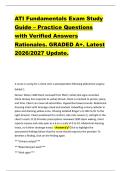
ATI Fundamental Proctored
Exam Study Guide: GRADED
A+. Practice Questions and
Verified Answers. Latest 2026
Update
Home Health Assessment - Ans✔✔-Evaluation of safety in a patient's home.
Carbon Monoxide Detector - Ans✔✔-Device to detect harmful carbon
monoxide levels.
Non-vented Heater - Ans✔✔-Heater that releases combustion gases indoors.
Food Poisoning Symptoms - Ans✔✔-Nausea, vomiting, diarrhea from
contaminated food.
Social Services Collaboration - Ans✔✔-Working with agencies to address
patient needs.
Electrical Needs Assessment - Ans✔✔-Evaluating electricity supply for food
safety.
,Refrigeration Importance - Ans✔✔-Prevents food spoilage and bacterial
growth.
Patient Comfort Zone - Ans✔✔-Temperature range for optimal patient comfort.
Normal Comfort Temperature - Ans✔✔-Ideal temperature: 65°F to 75°F (18.3°C
to 23.9°C).
Hypothermia Indicators - Ans✔✔-Low body temperature, especially in
homeless individuals.
Vital Signs Monitoring - Ans✔✔-Regular checks of temperature, pulse,
respiration, blood pressure.
Wound Care Education - Ans✔✔-Teaching patients proper techniques for
wound management.
Pathogen Transmission Prevention - Ans✔✔-Methods to reduce spread of
infectious agents.
Hand Hygiene - Ans✔✔-Washing hands to prevent infection spread.
Wound Washing Technique - Ans✔✔-Cleansing wounds to promote healing.
Glove Usage - Ans✔✔-Wearing gloves to protect against contamination.
,Environmental Hazards - Ans✔✔-Conditions that pose risks to health and
safety.
Assessment of Risks - Ans✔✔-Identifying potential dangers in a patient's
environment.
Chimney Inspection - Ans✔✔-Checking chimney for safety and functionality.
Health History Completion - Ans✔✔-Gathering patient information for care
planning.
Patient Symptoms Follow-up - Ans✔✔-Monitoring symptoms for appropriate
interventions.
Emergency Department Protocol - Ans✔✔-Immediate care procedures for
urgent patient needs.
Nausea and Diarrhea Management - Ans✔✔-Addressing gastrointestinal
symptoms effectively.
Hand Hygiene - Ans✔✔-Primary method to limit pathogen transmission.
Eye Protection - Ans✔✔-Protective gear to shield eyes from pathogens.
Never Events - Ans✔✔-Adverse events that should never occur.
, Surgical Sponge Retention - Ans✔✔-Leaving sponge in patient is a Never Event.
Pulmonary Embolism - Ans✔✔-Serious complication after certain surgeries.
Pressure Ulcer Stage II - Ans✔✔-Skin loss with blistering or shallow ulcer.
Incident Report - Ans✔✔-Documentation of an unexpected event.
Fall Risk Factors - Ans✔✔-Includes orthostatic hypotension and age.
Purple Wristband - Ans✔✔-Indicates do not resuscitate preferences.
Lead Poisoning Risk - Ans✔✔-Highest incidence in toddlers.
Aseptic Technique - Ans✔✔-Method to prevent infection during procedures.
Gloves Usage - Ans✔✔-Worn to protect against pathogen exposure.
Patient Safety Standards - Ans✔✔-Consensus guidelines for healthcare safety.
Infection Control - Ans✔✔-Strategies to prevent pathogen spread.
Exam Study Guide: GRADED
A+. Practice Questions and
Verified Answers. Latest 2026
Update
Home Health Assessment - Ans✔✔-Evaluation of safety in a patient's home.
Carbon Monoxide Detector - Ans✔✔-Device to detect harmful carbon
monoxide levels.
Non-vented Heater - Ans✔✔-Heater that releases combustion gases indoors.
Food Poisoning Symptoms - Ans✔✔-Nausea, vomiting, diarrhea from
contaminated food.
Social Services Collaboration - Ans✔✔-Working with agencies to address
patient needs.
Electrical Needs Assessment - Ans✔✔-Evaluating electricity supply for food
safety.
,Refrigeration Importance - Ans✔✔-Prevents food spoilage and bacterial
growth.
Patient Comfort Zone - Ans✔✔-Temperature range for optimal patient comfort.
Normal Comfort Temperature - Ans✔✔-Ideal temperature: 65°F to 75°F (18.3°C
to 23.9°C).
Hypothermia Indicators - Ans✔✔-Low body temperature, especially in
homeless individuals.
Vital Signs Monitoring - Ans✔✔-Regular checks of temperature, pulse,
respiration, blood pressure.
Wound Care Education - Ans✔✔-Teaching patients proper techniques for
wound management.
Pathogen Transmission Prevention - Ans✔✔-Methods to reduce spread of
infectious agents.
Hand Hygiene - Ans✔✔-Washing hands to prevent infection spread.
Wound Washing Technique - Ans✔✔-Cleansing wounds to promote healing.
Glove Usage - Ans✔✔-Wearing gloves to protect against contamination.
,Environmental Hazards - Ans✔✔-Conditions that pose risks to health and
safety.
Assessment of Risks - Ans✔✔-Identifying potential dangers in a patient's
environment.
Chimney Inspection - Ans✔✔-Checking chimney for safety and functionality.
Health History Completion - Ans✔✔-Gathering patient information for care
planning.
Patient Symptoms Follow-up - Ans✔✔-Monitoring symptoms for appropriate
interventions.
Emergency Department Protocol - Ans✔✔-Immediate care procedures for
urgent patient needs.
Nausea and Diarrhea Management - Ans✔✔-Addressing gastrointestinal
symptoms effectively.
Hand Hygiene - Ans✔✔-Primary method to limit pathogen transmission.
Eye Protection - Ans✔✔-Protective gear to shield eyes from pathogens.
Never Events - Ans✔✔-Adverse events that should never occur.
, Surgical Sponge Retention - Ans✔✔-Leaving sponge in patient is a Never Event.
Pulmonary Embolism - Ans✔✔-Serious complication after certain surgeries.
Pressure Ulcer Stage II - Ans✔✔-Skin loss with blistering or shallow ulcer.
Incident Report - Ans✔✔-Documentation of an unexpected event.
Fall Risk Factors - Ans✔✔-Includes orthostatic hypotension and age.
Purple Wristband - Ans✔✔-Indicates do not resuscitate preferences.
Lead Poisoning Risk - Ans✔✔-Highest incidence in toddlers.
Aseptic Technique - Ans✔✔-Method to prevent infection during procedures.
Gloves Usage - Ans✔✔-Worn to protect against pathogen exposure.
Patient Safety Standards - Ans✔✔-Consensus guidelines for healthcare safety.
Infection Control - Ans✔✔-Strategies to prevent pathogen spread.