

Cardiometabolic and Fluid Nursing Bundle
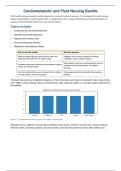
This bundle groups related nursing topics into a single revision resource. It is designed for quick review
before examinations, clinical placement, or assignment work, while still keeping enough explanation to
support understanding rather than rote memorization.
Topics included
• Cardiovascular Nursing Assessment
• Diabetes Nursing Management
• Hypertension Nursing Care
• Fluid and Electrolyte Balance
• Medication Administration Safety
How to use this bundle Revision purpose
Read one topic page at a time and then open the Supports short revision sessions and faster
matching individual PDF for deeper detail. navigation across related subjects.
Helps identify common nursing patterns such as
Compare assessment domains and escalation triggers
reassessment, documentation, and patient
across the grouped topics.
teaching.
Use the bundle before exams or placement to refresh Encourages practical recall rather than passive
the main actions and warning signs. reading.
The chart below gives a simplified comparison of how intensively each topic is monitored in day to day clinical
work. Higher values indicate frequent reassessment, rapid response needs, or a stronger safety component at
the bedside.
Figure 1. Comparative emphasis across the topics in this bundle.
Although the five subjects in this bundle are different, they share a common nursing cycle: assess carefully,
intervene safely, reassess promptly, document clearly, and teach the patient or family what matters next.
, Cardiometabolic and Fluid Nursing Bundle
Topic 1: Cardiovascular Nursing Assessment
Overview
Cardiovascular Nursing Assessment focuses on recognizing changes in perfusion, rhythm, blood pressure,
and fluid status. Nurses use this area of practice to identify risk early, guide safe interventions, and support
better patient outcomes through timely reassessment and documentation.
Cardiovascular assessment helps nurses detect poor perfusion, arrhythmia, heart failure, and hemodynamic
instability early. Findings often guide urgent decisions about monitoring intensity and escalation.
High value assessment points
Domain Key point
Pulse Assess rate, rhythm, volume, and equality where relevant.
Blood pressure Monitor trend, posture related changes, and response to treatment.
Perfusion Check capillary refill, skin temperature, color, and peripheral pulses.
Fluid signs Look for edema, jugular venous distension, weight change, or crackles.
Practice priority Key action
Trend blood pressure and pulse rather than relying on isolated values when
Core intervention
the patient is unstable.
Escalation trigger Chest pain or pressure with new hemodynamic change
Teach patients how to report chest symptoms, palpitations, and dizziness
Teaching focus
promptly.
Cross cutting reminder Why it matters
A single action is not enough; response to care must be checked and
Reassess after intervention
documented.
Many complications are reduced when deterioration is escalated before
Communicate risk early
the patient becomes critically unstable.
A patient with heart failure becomes more breathless and develops rising peripheral edema. Nursing
assessment of perfusion, fluid signs, and oxygenation helps identify decompensation early.
This bundle groups related nursing topics into a single revision resource. It is designed for quick review
before examinations, clinical placement, or assignment work, while still keeping enough explanation to
support understanding rather than rote memorization.
Topics included
• Cardiovascular Nursing Assessment
• Diabetes Nursing Management
• Hypertension Nursing Care
• Fluid and Electrolyte Balance
• Medication Administration Safety
How to use this bundle Revision purpose
Read one topic page at a time and then open the Supports short revision sessions and faster
matching individual PDF for deeper detail. navigation across related subjects.
Helps identify common nursing patterns such as
Compare assessment domains and escalation triggers
reassessment, documentation, and patient
across the grouped topics.
teaching.
Use the bundle before exams or placement to refresh Encourages practical recall rather than passive
the main actions and warning signs. reading.
The chart below gives a simplified comparison of how intensively each topic is monitored in day to day clinical
work. Higher values indicate frequent reassessment, rapid response needs, or a stronger safety component at
the bedside.
Figure 1. Comparative emphasis across the topics in this bundle.
Although the five subjects in this bundle are different, they share a common nursing cycle: assess carefully,
intervene safely, reassess promptly, document clearly, and teach the patient or family what matters next.
, Cardiometabolic and Fluid Nursing Bundle
Topic 1: Cardiovascular Nursing Assessment
Overview
Cardiovascular Nursing Assessment focuses on recognizing changes in perfusion, rhythm, blood pressure,
and fluid status. Nurses use this area of practice to identify risk early, guide safe interventions, and support
better patient outcomes through timely reassessment and documentation.
Cardiovascular assessment helps nurses detect poor perfusion, arrhythmia, heart failure, and hemodynamic
instability early. Findings often guide urgent decisions about monitoring intensity and escalation.
High value assessment points
Domain Key point
Pulse Assess rate, rhythm, volume, and equality where relevant.
Blood pressure Monitor trend, posture related changes, and response to treatment.
Perfusion Check capillary refill, skin temperature, color, and peripheral pulses.
Fluid signs Look for edema, jugular venous distension, weight change, or crackles.
Practice priority Key action
Trend blood pressure and pulse rather than relying on isolated values when
Core intervention
the patient is unstable.
Escalation trigger Chest pain or pressure with new hemodynamic change
Teach patients how to report chest symptoms, palpitations, and dizziness
Teaching focus
promptly.
Cross cutting reminder Why it matters
A single action is not enough; response to care must be checked and
Reassess after intervention
documented.
Many complications are reduced when deterioration is escalated before
Communicate risk early
the patient becomes critically unstable.
A patient with heart failure becomes more breathless and develops rising peripheral edema. Nursing
assessment of perfusion, fluid signs, and oxygenation helps identify decompensation early.


