

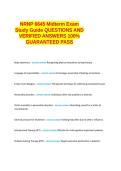
NRNP 6645 Midterm Exam
Study Guide QUESTIONS AND
VERIFIED ANSWERS 100%
GUARANTEED PASS
Body awareness - correct answer Recognizing physical sensations during therapy.
Language of responsibility - correct answer Encourages ownership of feelings and actions.
Empty-chair dialogue - correct answer Therapeutic technique for addressing unresolved issues.
Personality disorders - correct answer Individuals often see problems as external.
Victim mentality in personality disorders - correct answer Describing oneself as a victim of
circumstances.
External pressure for treatment - correct answer Seeking help often due to others' influence.
Interpersonal Therapy (IPT) - correct answer Effective for mild cognitive impairment patients.
Problem-Solving Therapy (PST) - correct answer Targets executive dysfunction in patients.
,Cognitive Behavioral Therapy (CBT) - correct answer Addresses cognitive distortions in mild
dementia.
Ecosystem-Focused Therapy (EFT) - correct answer Considers environmental factors in therapy.
Child psychotherapy systems - correct answer Includes peers, family, school, and community.
Life Review Therapy (LRT) - correct answer Encourages recalling significant life events.
Reminiscence Therapy (RT) - correct answer Focuses on recalling past experiences.
Self-efficacy in DBT - correct answer Belief in one's ability to manage urges.
Premature distancing in therapy - correct answer Concern about patient disengagement from
treatment.
Family-centered approach - correct answer Focuses on family dynamics in treatment.
Deflection in therapy - correct answer Changing topics to avoid sensitive issues.
Family treatment - correct answer Engagement strategy for family involvement in services.
Gestalt Therapy - correct answer Focuses on awareness and present experience in therapy.
Deflection - correct answer Avoiding sensitive topics by changing the subject.
,Dialectical Behavior Therapy (DBT) - correct answer Therapeutic approach for emotional
regulation and distress tolerance.
Stage 1 of DBT - correct answer Focus on stabilization and safety for patients.
Suicidal behaviors - correct answer High-priority issues in DBT treatment.
Sleep hygiene - correct answer Practices promoting better sleep quality and duration.
Boundary maintenance - correct answer Establishing clear limits in therapeutic relationships.
Person-centered psychotherapy - correct answer Therapy emphasizing client autonomy and
self-discovery.
Unfinished business - correct answer Emotional issues unresolved from past experiences.
Empty-chair dialogue - correct answer Technique for addressing unresolved feelings with
others.
Confluence - correct answer Blurring boundaries between self and others' beliefs.
Introjection - correct answer Adopting others' beliefs without critical evaluation.
Cognitive Behavioral Therapy (CBT) - correct answer Focuses on modifying dysfunctional
thoughts and behaviors.
Core problems - correct answer Fundamental issues needing identification in personality
disorders.
, Schemas - correct answer Cognitive frameworks influencing perception and behavior.
Emotional regulation - correct answer Ability to manage and respond to emotional experiences.
Therapeutic relationship - correct answer Professional bond essential for effective therapy.
Process interventions - correct answer Techniques aimed at enhancing therapeutic dialogue.
Nondirective approach - correct answer Counseling style allowing client-led exploration.
Therapeutic confidentiality - correct answer Maintaining privacy within legal and ethical limits.
Self-harming behaviors - correct answer Actions taken to intentionally harm oneself.
Good sleep practices - correct answer Recommendations for improving sleep quality.
Dialectical Behavior Therapy (DBT) - correct answer Therapy focusing on emotional regulation
and interpersonal effectiveness.
Patient Frustration - correct answer Common response when therapy skills seem ineffective.
Validation - correct answer Acknowledging a patient's feelings to promote engagement.
Behavioral Analysis - correct answer Examining actions and consequences to understand
patterns.
Study Guide QUESTIONS AND
VERIFIED ANSWERS 100%
GUARANTEED PASS
Body awareness - correct answer Recognizing physical sensations during therapy.
Language of responsibility - correct answer Encourages ownership of feelings and actions.
Empty-chair dialogue - correct answer Therapeutic technique for addressing unresolved issues.
Personality disorders - correct answer Individuals often see problems as external.
Victim mentality in personality disorders - correct answer Describing oneself as a victim of
circumstances.
External pressure for treatment - correct answer Seeking help often due to others' influence.
Interpersonal Therapy (IPT) - correct answer Effective for mild cognitive impairment patients.
Problem-Solving Therapy (PST) - correct answer Targets executive dysfunction in patients.
,Cognitive Behavioral Therapy (CBT) - correct answer Addresses cognitive distortions in mild
dementia.
Ecosystem-Focused Therapy (EFT) - correct answer Considers environmental factors in therapy.
Child psychotherapy systems - correct answer Includes peers, family, school, and community.
Life Review Therapy (LRT) - correct answer Encourages recalling significant life events.
Reminiscence Therapy (RT) - correct answer Focuses on recalling past experiences.
Self-efficacy in DBT - correct answer Belief in one's ability to manage urges.
Premature distancing in therapy - correct answer Concern about patient disengagement from
treatment.
Family-centered approach - correct answer Focuses on family dynamics in treatment.
Deflection in therapy - correct answer Changing topics to avoid sensitive issues.
Family treatment - correct answer Engagement strategy for family involvement in services.
Gestalt Therapy - correct answer Focuses on awareness and present experience in therapy.
Deflection - correct answer Avoiding sensitive topics by changing the subject.
,Dialectical Behavior Therapy (DBT) - correct answer Therapeutic approach for emotional
regulation and distress tolerance.
Stage 1 of DBT - correct answer Focus on stabilization and safety for patients.
Suicidal behaviors - correct answer High-priority issues in DBT treatment.
Sleep hygiene - correct answer Practices promoting better sleep quality and duration.
Boundary maintenance - correct answer Establishing clear limits in therapeutic relationships.
Person-centered psychotherapy - correct answer Therapy emphasizing client autonomy and
self-discovery.
Unfinished business - correct answer Emotional issues unresolved from past experiences.
Empty-chair dialogue - correct answer Technique for addressing unresolved feelings with
others.
Confluence - correct answer Blurring boundaries between self and others' beliefs.
Introjection - correct answer Adopting others' beliefs without critical evaluation.
Cognitive Behavioral Therapy (CBT) - correct answer Focuses on modifying dysfunctional
thoughts and behaviors.
Core problems - correct answer Fundamental issues needing identification in personality
disorders.
, Schemas - correct answer Cognitive frameworks influencing perception and behavior.
Emotional regulation - correct answer Ability to manage and respond to emotional experiences.
Therapeutic relationship - correct answer Professional bond essential for effective therapy.
Process interventions - correct answer Techniques aimed at enhancing therapeutic dialogue.
Nondirective approach - correct answer Counseling style allowing client-led exploration.
Therapeutic confidentiality - correct answer Maintaining privacy within legal and ethical limits.
Self-harming behaviors - correct answer Actions taken to intentionally harm oneself.
Good sleep practices - correct answer Recommendations for improving sleep quality.
Dialectical Behavior Therapy (DBT) - correct answer Therapy focusing on emotional regulation
and interpersonal effectiveness.
Patient Frustration - correct answer Common response when therapy skills seem ineffective.
Validation - correct answer Acknowledging a patient's feelings to promote engagement.
Behavioral Analysis - correct answer Examining actions and consequences to understand
patterns.


