Edrftgyihu jiuh
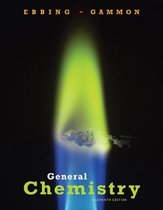
General Chemistry
ST
11th Edition
UV
TEST BANK
IA
?_
Darrell D. Ebbing, Steven D. Gammon
AP
Comprehensive Test Bank for Instructors
PR
and Students
||| ||| || ||| || | || ||| | || ||| |
OV
9781305580343
© Darrell D. Ebbing & Steven D. Gammon. All rights
ED
reserved. Reproduction or distribution without permission is
prohibited.
?
© MEDGEEK
, TABLE OF CONTENTS
Test Bank – General Chemistry (11th Edition)
Authors: Darrell D. Ebbing and Steven D. Gammon
ST
ISBN: 9781305580343
PART I: FOUNDATIONS OF CHEMISTRY
Chapter 1: Chemistry and Measurement
UV
Chapter 2: Atoms, Molecules, and Ions
Chapter 3: Calculations with Chemical Formulas and Equations
Chapter 4: Chemical Reactions
PART II: STATES OF MATTER AND THERMODYNAMICS
IA
Chapter 5: The Gaseous State
Chapter 6: Thermochemistry
Chapter 11: States of Matter; Liquids and Solids
Chapter 12: Solutions
?_
PART III: ATOMIC STRUCTURE AND BONDING
Chapter 7: Quantum Theory of the Atom
AP
Chapter 8: Electron Configurations and Periodicity
Chapter 9: Ionic and Covalent Bonding
Chapter 10: Molecular Geometry and Chemical Bonding Theory
PART IV: DYNAMICS AND EQUILIBRIUM
PR
Chapter 13: Rates of Reaction
Chapter 14: Chemical Equilibrium
Chapter 15: Acids and Bases
Chapter 16: Acid–Base Equilibria
Chapter 17: Solubility and Complex-Ion Equilibria
OV
Chapter 18: Thermodynamics and Equilibrium
PART V: ELECTROCHEMISTRY, NUCLEAR, AND DESCRIPTIVE CHEMISTRY
Chapter 19: Electrochemistry
ED
Chapter 20: Nuclear Chemistry
Chapter 21: Chemistry of the Main-Group Elements
Chapter 22: The Transition Elements and Coordination Compounds
PART VI: ORGANIC AND POLYMER CHEMISTRY
?
Chapter 23: Organic Chemistry
Chapter 24: Polymer Materials: Synthetic and Biological
, Chapter 01 - Chemistry and Measurement
1. What is a scientific theory?
a. It is a collection of experimental data.
b. It is an assertion of scientific fact.
c. It is a guess or conjecture about natural phenomena.
ST
d. It is a fundamental relationship of nature.
e. It is an explanation of natural phenomena that has undergone significant testing.
ANSWER: e
POINTS: 1
UV
DIFFICULTY: easy
REFERENCES: 1.2
HAS VARIABLES: False
LEARNING OBJECTIVE GENE.EBBI.13.1 - Understand how the scientific method is an approach to
S: performing science.
IA
TOPICS: general concepts
scientific method
OTHER: general chemistry
?_
2. An untested explanation of a series of experimental observations is called _____.
a. a hypothesis
b. a theory
AP
c. a law
d. an experiment
e. the scientific method
ANSWER: a
POINTS: 1
PR
DIFFICULTY: easy
REFERENCES: 1.2
HAS VARIABLES: False
LEARNING OBJECTIVE GENE.EBBI.13.1 - Understand how the scientific method is an approach to
OV
S: performing science.
TOPICS: general concepts
scientific method
3. Which of the following statements concerning experiment and explanation is/are true?
1. A law is always given in the form of a mathematical expression.
ED
2. Once a hypothesis passes one or two tests it is considered a theory.
3. Observation is a key component of the scientific method.
a. 1 only
b. 2 only
?
c. 3 only
d. 1 and 2
e. 1, 2, and 3
Copyright Cengage Learning. Powered by Cognero. Page 1
, Chapter 01 - Chemistry and Measurement
ANSWER: c
POINTS: 1
DIFFICULTY: easy
REFERENCES: 1.2
ST
HAS VARIABLES: False
LEARNING OBJECTIVE GENE.EBBI.13.1 - Understand how the scientific method is an approach to
S: performing science.
TOPICS: general concepts
UV
scientific method
4. A saline solution similar to that used for intravenous drips is made by dissolving 0.45 g sodium chloride in
50.00 g water. Which of the following statements concerning the saline solution and the law of conservation of
mass is/are correct?
1. The mass of the saline solution is greater than the mass of water.
IA
2. The mass of the saline solution is equal to the combined mass of sodium chloride and water.
3. The mass of the saline solution is greater than the mass of the sodium chloride.
a. 1 only
b. 2 only
?_
c. 3 only
d. 1 and 2
e. 1, 2, and 3
AP
ANSWER: d
POINTS: 1
DIFFICULTY: easy
REFERENCES: 1.3
HAS VARIABLES: False
PR
LEARNING OBJECTIVES: GENE.EBBI.13.2 - Apply the law of the conservation of mass.
TOPICS: general concepts
matter
OV
5. A 54.0-g sample of sodium is completely burned in air to form sodium oxide. The mass of sodium oxide
must be
a. less than 54.0 g.
b. greater than 54.0 g.
c. equal to 54.0 g.
ED
d. all of the above.
e. none of the above.
ANSWER: b
POINTS: 1
?
DIFFICULTY: easy
REFERENCES: 1.3
HAS VARIABLES: True
Copyright Cengage Learning. Powered by Cognero. Page 2
General Chemistry
ST
11th Edition
UV
TEST BANK
IA
?_
Darrell D. Ebbing, Steven D. Gammon
AP
Comprehensive Test Bank for Instructors
PR
and Students
||| ||| || ||| || | || ||| | || ||| |
OV
9781305580343
© Darrell D. Ebbing & Steven D. Gammon. All rights
ED
reserved. Reproduction or distribution without permission is
prohibited.
?
© MEDGEEK
, TABLE OF CONTENTS
Test Bank – General Chemistry (11th Edition)
Authors: Darrell D. Ebbing and Steven D. Gammon
ST
ISBN: 9781305580343
PART I: FOUNDATIONS OF CHEMISTRY
Chapter 1: Chemistry and Measurement
UV
Chapter 2: Atoms, Molecules, and Ions
Chapter 3: Calculations with Chemical Formulas and Equations
Chapter 4: Chemical Reactions
PART II: STATES OF MATTER AND THERMODYNAMICS
IA
Chapter 5: The Gaseous State
Chapter 6: Thermochemistry
Chapter 11: States of Matter; Liquids and Solids
Chapter 12: Solutions
?_
PART III: ATOMIC STRUCTURE AND BONDING
Chapter 7: Quantum Theory of the Atom
AP
Chapter 8: Electron Configurations and Periodicity
Chapter 9: Ionic and Covalent Bonding
Chapter 10: Molecular Geometry and Chemical Bonding Theory
PART IV: DYNAMICS AND EQUILIBRIUM
PR
Chapter 13: Rates of Reaction
Chapter 14: Chemical Equilibrium
Chapter 15: Acids and Bases
Chapter 16: Acid–Base Equilibria
Chapter 17: Solubility and Complex-Ion Equilibria
OV
Chapter 18: Thermodynamics and Equilibrium
PART V: ELECTROCHEMISTRY, NUCLEAR, AND DESCRIPTIVE CHEMISTRY
Chapter 19: Electrochemistry
ED
Chapter 20: Nuclear Chemistry
Chapter 21: Chemistry of the Main-Group Elements
Chapter 22: The Transition Elements and Coordination Compounds
PART VI: ORGANIC AND POLYMER CHEMISTRY
?
Chapter 23: Organic Chemistry
Chapter 24: Polymer Materials: Synthetic and Biological
, Chapter 01 - Chemistry and Measurement
1. What is a scientific theory?
a. It is a collection of experimental data.
b. It is an assertion of scientific fact.
c. It is a guess or conjecture about natural phenomena.
ST
d. It is a fundamental relationship of nature.
e. It is an explanation of natural phenomena that has undergone significant testing.
ANSWER: e
POINTS: 1
UV
DIFFICULTY: easy
REFERENCES: 1.2
HAS VARIABLES: False
LEARNING OBJECTIVE GENE.EBBI.13.1 - Understand how the scientific method is an approach to
S: performing science.
IA
TOPICS: general concepts
scientific method
OTHER: general chemistry
?_
2. An untested explanation of a series of experimental observations is called _____.
a. a hypothesis
b. a theory
AP
c. a law
d. an experiment
e. the scientific method
ANSWER: a
POINTS: 1
PR
DIFFICULTY: easy
REFERENCES: 1.2
HAS VARIABLES: False
LEARNING OBJECTIVE GENE.EBBI.13.1 - Understand how the scientific method is an approach to
OV
S: performing science.
TOPICS: general concepts
scientific method
3. Which of the following statements concerning experiment and explanation is/are true?
1. A law is always given in the form of a mathematical expression.
ED
2. Once a hypothesis passes one or two tests it is considered a theory.
3. Observation is a key component of the scientific method.
a. 1 only
b. 2 only
?
c. 3 only
d. 1 and 2
e. 1, 2, and 3
Copyright Cengage Learning. Powered by Cognero. Page 1
, Chapter 01 - Chemistry and Measurement
ANSWER: c
POINTS: 1
DIFFICULTY: easy
REFERENCES: 1.2
ST
HAS VARIABLES: False
LEARNING OBJECTIVE GENE.EBBI.13.1 - Understand how the scientific method is an approach to
S: performing science.
TOPICS: general concepts
UV
scientific method
4. A saline solution similar to that used for intravenous drips is made by dissolving 0.45 g sodium chloride in
50.00 g water. Which of the following statements concerning the saline solution and the law of conservation of
mass is/are correct?
1. The mass of the saline solution is greater than the mass of water.
IA
2. The mass of the saline solution is equal to the combined mass of sodium chloride and water.
3. The mass of the saline solution is greater than the mass of the sodium chloride.
a. 1 only
b. 2 only
?_
c. 3 only
d. 1 and 2
e. 1, 2, and 3
AP
ANSWER: d
POINTS: 1
DIFFICULTY: easy
REFERENCES: 1.3
HAS VARIABLES: False
PR
LEARNING OBJECTIVES: GENE.EBBI.13.2 - Apply the law of the conservation of mass.
TOPICS: general concepts
matter
OV
5. A 54.0-g sample of sodium is completely burned in air to form sodium oxide. The mass of sodium oxide
must be
a. less than 54.0 g.
b. greater than 54.0 g.
c. equal to 54.0 g.
ED
d. all of the above.
e. none of the above.
ANSWER: b
POINTS: 1
?
DIFFICULTY: easy
REFERENCES: 1.3
HAS VARIABLES: True
Copyright Cengage Learning. Powered by Cognero. Page 2