ADVANCED MED SURG STUDY GUIDE EXAM 2
Unit 5 & 6: Complex Metabolism
Hyperglycemic- Hyperosmolar State (HHS)
Pathophysiology A hyperosmolar state caused by hyperglycemia. Sustained osmotic
diuresis leads to extremely high blood glucose levels and severe
dehydration.
Clinical Severe dehydration, CNS changes- confusion to coma, seizures,
Manifestations paralysis.
Etiology/ Risk DM I
factors Other causes: infection, other stressors, poor fluid intake, M1, sepsis,
pancreatitis, stroke, some drug therapy (glucocorticoids, diuretics,
phenytoin, betas, CCBs).
Tests/ Serum glucose > 600, blood osmolarity >320 (285-295) , pH > 7.4,
Diagnostics elevated BUN
Therapeutic IV regular insulin, hypotonic fluids first 0.45%, then isotonic 0.9%
Management NS fluids
Nursing/ PRIORITY: Restore blood volume with IV fluids, correct
Assessment hyperglycemia, monitor potassium level with IV insulin.
Assess hourly for signs of cerebral edema (changes in mental
status, abnormal neuro signs, coma). Monitor neuro status and
changes in LOC and pupils.
,
,
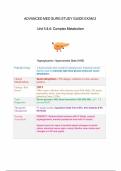
Unit 5 & 6: Complex Metabolism
Hyperglycemic- Hyperosmolar State (HHS)
Pathophysiology A hyperosmolar state caused by hyperglycemia. Sustained osmotic
diuresis leads to extremely high blood glucose levels and severe
dehydration.
Clinical Severe dehydration, CNS changes- confusion to coma, seizures,
Manifestations paralysis.
Etiology/ Risk DM I
factors Other causes: infection, other stressors, poor fluid intake, M1, sepsis,
pancreatitis, stroke, some drug therapy (glucocorticoids, diuretics,
phenytoin, betas, CCBs).
Tests/ Serum glucose > 600, blood osmolarity >320 (285-295) , pH > 7.4,
Diagnostics elevated BUN
Therapeutic IV regular insulin, hypotonic fluids first 0.45%, then isotonic 0.9%
Management NS fluids
Nursing/ PRIORITY: Restore blood volume with IV fluids, correct
Assessment hyperglycemia, monitor potassium level with IV insulin.
Assess hourly for signs of cerebral edema (changes in mental
status, abnormal neuro signs, coma). Monitor neuro status and
changes in LOC and pupils.
,
,