

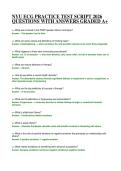
NYU ECG PRACTICE TEST SCRIPT 2026
QUESTIONS WITH ANSWERS GRADED A+
>> What was involved in the PREP speaker listener technique?
Answer: - The speaker has the floor
>> What are some names and definitions of thinking traps?
Answer: Catastrophizing --> when we believe the only possible outcome is the worst thing imaginable
>> What happens to those who chronically procrastinate?
Answer: 1st 1/2 of semester --> short term benefits, early stress relief, 1st half of semester lower use of
health center
>> What are mature defenses in therapy?
Answer: - Altruism
>> How do we define a mental health disorder?
Answer: The disturbance causes clinically significant distress or impairment in social, occupational, or
other important areas of functioning
>> What are the top predictors of success in therapy?
Answer: - A secure base
>> What are the definitions of forgiveness and reconciliation?
Answer: Forgiveness --> conscious decision to release feelings of anger or resentment towards
someone
>> What is attachment theory?
Answer: - Conducted by Harlow (monkeys)
>> What is equity theory?
Answer: - Assumes that people calculate costs and benefits involved in interacting with others
>> What is the ratio of positive emotions to negative emotions that promotes our relationships with
others?
Answer: 5 positive emotions: 1 negative emotion
>> What makes avoidance of something we're afraid of so powerful?
Answer: Because avoidance reinforces negative emotions/a negative mindset
, >> What is PMR, and what was the exercise for it that we did in lecture?
Answer: PMR = progressive muscle relaxation.
>> What is the tetris effect?
Answer: Study done where people played tetris for hours on end- the participants eventually found
themselves seeing tetris in real life- such as arranging produce at the grocery store.
>> What are our working definitions of mindfulness and mindlessness?
Answer: Mindfullness:
>> What are state and trait changes resulting from mediation?
Answer: State changes:
>> What are character strengths, and what are three steps for fostering our signature strengths?
Answer: Character/signature strengths are individual(s) most notable strengths of character that a
person can own, celebrate, and frequently exercise.
>> What is challenge response?
Answer: - Instead of viewing a thing as a threat, you view it as a challenge. Reappraising our anxiety to
be excitement- enhances performance. Has to do with how you respond to stress.
>> What are the key qualities of goal setting?
Answer: - Resources
>> What are prevention vs. promotion goals?
Answer: Prevention: careful, pessimistic
>> What is our working definition of meaning, and when does the search for meaning occur in our
lifespan?
Answer: 1. OUR LIVES MATTER
>> What are characteristics of harmonious passion, and what are characteristics of obsessive
passion?
Answer: Harmonious: you do it because you love it, to learn and grow, not to win or lose
>> What are the 4 PREP communication danger signs?
Answer: 1. Escalation
>> What is ACR, and why is it the best of all 4 styles of responses to good news? Draw chart.
Answer: ACR = Active Constructing Response. Most effective way to respond, giving both the deliverer
of good news and the listener a positive outcome.
QUESTIONS WITH ANSWERS GRADED A+
>> What was involved in the PREP speaker listener technique?
Answer: - The speaker has the floor
>> What are some names and definitions of thinking traps?
Answer: Catastrophizing --> when we believe the only possible outcome is the worst thing imaginable
>> What happens to those who chronically procrastinate?
Answer: 1st 1/2 of semester --> short term benefits, early stress relief, 1st half of semester lower use of
health center
>> What are mature defenses in therapy?
Answer: - Altruism
>> How do we define a mental health disorder?
Answer: The disturbance causes clinically significant distress or impairment in social, occupational, or
other important areas of functioning
>> What are the top predictors of success in therapy?
Answer: - A secure base
>> What are the definitions of forgiveness and reconciliation?
Answer: Forgiveness --> conscious decision to release feelings of anger or resentment towards
someone
>> What is attachment theory?
Answer: - Conducted by Harlow (monkeys)
>> What is equity theory?
Answer: - Assumes that people calculate costs and benefits involved in interacting with others
>> What is the ratio of positive emotions to negative emotions that promotes our relationships with
others?
Answer: 5 positive emotions: 1 negative emotion
>> What makes avoidance of something we're afraid of so powerful?
Answer: Because avoidance reinforces negative emotions/a negative mindset
, >> What is PMR, and what was the exercise for it that we did in lecture?
Answer: PMR = progressive muscle relaxation.
>> What is the tetris effect?
Answer: Study done where people played tetris for hours on end- the participants eventually found
themselves seeing tetris in real life- such as arranging produce at the grocery store.
>> What are our working definitions of mindfulness and mindlessness?
Answer: Mindfullness:
>> What are state and trait changes resulting from mediation?
Answer: State changes:
>> What are character strengths, and what are three steps for fostering our signature strengths?
Answer: Character/signature strengths are individual(s) most notable strengths of character that a
person can own, celebrate, and frequently exercise.
>> What is challenge response?
Answer: - Instead of viewing a thing as a threat, you view it as a challenge. Reappraising our anxiety to
be excitement- enhances performance. Has to do with how you respond to stress.
>> What are the key qualities of goal setting?
Answer: - Resources
>> What are prevention vs. promotion goals?
Answer: Prevention: careful, pessimistic
>> What is our working definition of meaning, and when does the search for meaning occur in our
lifespan?
Answer: 1. OUR LIVES MATTER
>> What are characteristics of harmonious passion, and what are characteristics of obsessive
passion?
Answer: Harmonious: you do it because you love it, to learn and grow, not to win or lose
>> What are the 4 PREP communication danger signs?
Answer: 1. Escalation
>> What is ACR, and why is it the best of all 4 styles of responses to good news? Draw chart.
Answer: ACR = Active Constructing Response. Most effective way to respond, giving both the deliverer
of good news and the listener a positive outcome.


