

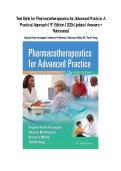
Test Bank for Pharmacotherapeutics for Advanced Practice: A
Practical Approach | 5th Edition | 2026 Update | Answers +
Rationales|
Virginia Poole Arcangelo | Andrew M. Peterson |Veronica Wilbur |Dr. Tep M. Kang
,Table of Contents
Chapter 1: Issues for the Practitioner in Drug Therapy ........................................................................ 4
Chapter 2: Pharmacokinetic Basis of Therapeutics and Pharmacodynamic Principles ...................... 18
Chapter 3: Impact of Drug Interactions and Adverse Events on Therapeutics................................... 32
Chapter 4: Principles of Pharmacotherapy in Pediatrics, Pregnancy, and Lactation .......................... 46
Chapter 5: Pharmacotherapy Principles in Older Adults .................................................................... 60
Chapter 6: Principles of Antimicrobial Therapy .................................................................................. 74
Chapter 7: Pharmacogenomics ........................................................................................................... 88
Chapter 8: The Economics of Pharmacotherapeutics ....................................................................... 103
Chapter 9: Principles of Pharmacology in Pain Management .......................................................... 118
Chapter 10: Pain Management in Opioid Use Disorder (OUD) Patients........................................... 132
Chapter 11: Cannabis and Pain Management .................................................................................. 146
Chapter 12: Dermatitis...................................................................................................................... 160
Chapter 13: Bacterial, Fungal, and Viral Infections of the Skin......................................................... 175
Chapter 14: Psoriasis......................................................................................................................... 189
Chapter 15: Acne Vulgaris and Rosacea............................................................................................ 203
Chapter 16: Ophthalmic Disorders ................................................................................................... 217
Chapter 17: Otitis Media and Otitis Externa ..................................................................................... 231
Chapter 18: Hypertension ................................................................................................................. 245
Chapter 19: Hyperlipidemia .............................................................................................................. 259
Chapter 20: Chronic Stable Angina and Myocardial Infarction ........................................................ 273
Chapter 21: Heart Failure.................................................................................................................. 287
Chapter 22: Arrhythmias................................................................................................................... 301
Chapter 23: Respiratory Infections ................................................................................................... 315
Chapter 24: Asthma and Chronic Obstructive Pulmonary Disease................................................... 329
Chapter 25: Gastric, Functional and Inflammatory Bowel Disorders ............................................... 343
Chapter 26: Gastroesophageal Reflux Disease and Peptic Ulcer Disease ........................................ 357
Chapter 27: Liver Diseases ................................................................................................................ 371
Chapter 28: Urinary Tract Infection .................................................................................................. 385
Chapter 29: Prostatic Disorders and Erectile Dysfunction ................................................................ 392
Chapter 30: Overactive Bladder ........................................................................................................ 406
Chapter 31: Sexually Transmitted Infections .................................................................................... 419
Chapter 32: Osteoarthritis and Gout ................................................................................................ 433
,Chapter 33: Osteoporosis ................................................................................................................. 447
Chapter 34: Rheumatoid Arthritis..................................................................................................... 461
Chapter 35: Headaches ..................................................................................................................... 474
Chapter 36: Seizure Disorders........................................................................................................... 486
Chapter 37: Alzheimer’s Disease ...................................................................................................... 498
Chapter 38: Parkinson Disease ......................................................................................................... 510
Chapter 39: Major Depressive Disorder and Bipolar Disorders ........................................................ 523
Chapter 40: Anxiety Disorders .......................................................................................................... 536
Chapter 41: Sleep Disorders ............................................................................................................. 549
Chapter 42: Attention Deficit Hyperactivity Disorder....................................................................... 562
Chapter 43: Substance Use Disorders ............................................................................................... 575
Chapter 44: Diabetes Mellitus .......................................................................................................... 588
Chapter 45: Thyroid and Parathyroid Disorders ............................................................................... 601
Chapter 46: Allergies and Allergic Reactions .................................................................................... 614
Chapter 47: Human Immunodeficiency Virus ................................................................................... 627
Chapter 48: Organ Transplantation .................................................................................................. 640
Chapter 49: Pharmacotherapy for Select Thromboembolic Disorders ............................................ 653
Chapter 50: Anemias ......................................................................................................................... 666
Chapter 51: Immunizations ............................................................................................................... 679
Chapter 52: Smoking Cessation ........................................................................................................ 692
Chapter 53: Weight Loss ................................................................................................................... 705
Chapter 54: Contraception ............................................................................................................... 718
Chapter 55: Menopause ................................................................................................................... 731
Chapter 56: Vaginitis ......................................................................................................................... 744
, Chapter 1: Issues for the Practitioner in Drug Therapy
1. A 68-year-old patient with hypertension, diabetes, and osteoarthritis takes six prescribed medications
and two herbal supplements. She presents with dizziness and confusion. What is the most likely
contributing factor?
A. Poor renal clearance
B. Polypharmacy-related drug interactions
C. Inadequate drug absorption
D. Age-related memory decline
ANS: B
Rationale: Polypharmacy increases the risk of pharmacokinetic and pharmacodynamic interactions,
adverse effects, and medication errors. Multiple drugs and supplements can alter metabolism and CNS
effects, leading to dizziness and confusion.
2. A nurse practitioner prescribes warfarin to a patient who regularly consumes leafy green vegetables.
What is the most important counseling point?
A. Avoid all vegetables
B. Increase vitamin C intake
C. Maintain consistent vitamin K intake
D. Take warfarin with meals
ANS: C
Rationale: Vitamin K antagonizes warfarin. Consistent intake helps maintain stable INR levels and
reduces bleeding or thrombotic risk.
3. A patient reports using St. John’s wort for depression while taking oral contraceptives. What is the
primary concern?
A. Increased estrogen toxicity
B. Reduced contraceptive effectiveness
C. Increased blood pressure
D. Enhanced sedation
ANS: B
Rationale: St. John’s wort induces CYP450 enzymes, increasing metabolism of contraceptives and
reducing effectiveness, raising pregnancy risk.
Practical Approach | 5th Edition | 2026 Update | Answers +
Rationales|
Virginia Poole Arcangelo | Andrew M. Peterson |Veronica Wilbur |Dr. Tep M. Kang
,Table of Contents
Chapter 1: Issues for the Practitioner in Drug Therapy ........................................................................ 4
Chapter 2: Pharmacokinetic Basis of Therapeutics and Pharmacodynamic Principles ...................... 18
Chapter 3: Impact of Drug Interactions and Adverse Events on Therapeutics................................... 32
Chapter 4: Principles of Pharmacotherapy in Pediatrics, Pregnancy, and Lactation .......................... 46
Chapter 5: Pharmacotherapy Principles in Older Adults .................................................................... 60
Chapter 6: Principles of Antimicrobial Therapy .................................................................................. 74
Chapter 7: Pharmacogenomics ........................................................................................................... 88
Chapter 8: The Economics of Pharmacotherapeutics ....................................................................... 103
Chapter 9: Principles of Pharmacology in Pain Management .......................................................... 118
Chapter 10: Pain Management in Opioid Use Disorder (OUD) Patients........................................... 132
Chapter 11: Cannabis and Pain Management .................................................................................. 146
Chapter 12: Dermatitis...................................................................................................................... 160
Chapter 13: Bacterial, Fungal, and Viral Infections of the Skin......................................................... 175
Chapter 14: Psoriasis......................................................................................................................... 189
Chapter 15: Acne Vulgaris and Rosacea............................................................................................ 203
Chapter 16: Ophthalmic Disorders ................................................................................................... 217
Chapter 17: Otitis Media and Otitis Externa ..................................................................................... 231
Chapter 18: Hypertension ................................................................................................................. 245
Chapter 19: Hyperlipidemia .............................................................................................................. 259
Chapter 20: Chronic Stable Angina and Myocardial Infarction ........................................................ 273
Chapter 21: Heart Failure.................................................................................................................. 287
Chapter 22: Arrhythmias................................................................................................................... 301
Chapter 23: Respiratory Infections ................................................................................................... 315
Chapter 24: Asthma and Chronic Obstructive Pulmonary Disease................................................... 329
Chapter 25: Gastric, Functional and Inflammatory Bowel Disorders ............................................... 343
Chapter 26: Gastroesophageal Reflux Disease and Peptic Ulcer Disease ........................................ 357
Chapter 27: Liver Diseases ................................................................................................................ 371
Chapter 28: Urinary Tract Infection .................................................................................................. 385
Chapter 29: Prostatic Disorders and Erectile Dysfunction ................................................................ 392
Chapter 30: Overactive Bladder ........................................................................................................ 406
Chapter 31: Sexually Transmitted Infections .................................................................................... 419
Chapter 32: Osteoarthritis and Gout ................................................................................................ 433
,Chapter 33: Osteoporosis ................................................................................................................. 447
Chapter 34: Rheumatoid Arthritis..................................................................................................... 461
Chapter 35: Headaches ..................................................................................................................... 474
Chapter 36: Seizure Disorders........................................................................................................... 486
Chapter 37: Alzheimer’s Disease ...................................................................................................... 498
Chapter 38: Parkinson Disease ......................................................................................................... 510
Chapter 39: Major Depressive Disorder and Bipolar Disorders ........................................................ 523
Chapter 40: Anxiety Disorders .......................................................................................................... 536
Chapter 41: Sleep Disorders ............................................................................................................. 549
Chapter 42: Attention Deficit Hyperactivity Disorder....................................................................... 562
Chapter 43: Substance Use Disorders ............................................................................................... 575
Chapter 44: Diabetes Mellitus .......................................................................................................... 588
Chapter 45: Thyroid and Parathyroid Disorders ............................................................................... 601
Chapter 46: Allergies and Allergic Reactions .................................................................................... 614
Chapter 47: Human Immunodeficiency Virus ................................................................................... 627
Chapter 48: Organ Transplantation .................................................................................................. 640
Chapter 49: Pharmacotherapy for Select Thromboembolic Disorders ............................................ 653
Chapter 50: Anemias ......................................................................................................................... 666
Chapter 51: Immunizations ............................................................................................................... 679
Chapter 52: Smoking Cessation ........................................................................................................ 692
Chapter 53: Weight Loss ................................................................................................................... 705
Chapter 54: Contraception ............................................................................................................... 718
Chapter 55: Menopause ................................................................................................................... 731
Chapter 56: Vaginitis ......................................................................................................................... 744
, Chapter 1: Issues for the Practitioner in Drug Therapy
1. A 68-year-old patient with hypertension, diabetes, and osteoarthritis takes six prescribed medications
and two herbal supplements. She presents with dizziness and confusion. What is the most likely
contributing factor?
A. Poor renal clearance
B. Polypharmacy-related drug interactions
C. Inadequate drug absorption
D. Age-related memory decline
ANS: B
Rationale: Polypharmacy increases the risk of pharmacokinetic and pharmacodynamic interactions,
adverse effects, and medication errors. Multiple drugs and supplements can alter metabolism and CNS
effects, leading to dizziness and confusion.
2. A nurse practitioner prescribes warfarin to a patient who regularly consumes leafy green vegetables.
What is the most important counseling point?
A. Avoid all vegetables
B. Increase vitamin C intake
C. Maintain consistent vitamin K intake
D. Take warfarin with meals
ANS: C
Rationale: Vitamin K antagonizes warfarin. Consistent intake helps maintain stable INR levels and
reduces bleeding or thrombotic risk.
3. A patient reports using St. John’s wort for depression while taking oral contraceptives. What is the
primary concern?
A. Increased estrogen toxicity
B. Reduced contraceptive effectiveness
C. Increased blood pressure
D. Enhanced sedation
ANS: B
Rationale: St. John’s wort induces CYP450 enzymes, increasing metabolism of contraceptives and
reducing effectiveness, raising pregnancy risk.


