
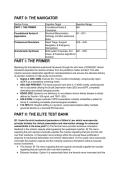
PART 0: THE NAVIGATOR
Section Focus Cognitive Target Question Range
PART I: THE PRIMER Foundational Rules & N/A
Constraints
Foundational Syntax & Structural Memorization, Q1 – Q15
Application Histology, & Patho-anatomical
Rules
Professional Simulation Rapid Triage, Surgical Q16 – Q40
Navigation, & Emergency
Interventions
Grandmaster Synthesis Multi-system Cascades, ICU Q41 – Q55
Crises, & Predictive Algorithmic
Aversion
PART I: THE PRIMER
Mastering the foundational anatomical framework through the strict lens of 2026/2027 clinical
standards separates the reactive amateur from the predictive master architect. This elite
intuition prevents catastrophic algorithmic misinterpretations and ensures the absolute delivery
of precision medicine in high-acuity environments.
● Sepsis-3 (SSC 2026): Execute the 1-hour bundle immediately; unequivocally reject
qSOFA as a standalone screening metric.
● AHA 2026 PREVENT: The blood pressure hard deck is <130/80 mmHg; cardiovascular
risk is calculated utilizing the Social Deprivation Index (SDI) and eGFR, completely
eliminating race-based biological proxies.
● KDIGO 2026: Systemic iron deficiency in non-dialysis chronic kidney disease is strictly
defined by Ferritin <100 ng/mL and TSAT <20%.
● GOLD 2026: A single moderate COPD exacerbation instantly reclassifies a patient to
Group E, mandating immediate pharmacological escalation.
● TJC NPG 12: Hospital staffing is a dynamic, acuity-based patient safety mandate
governed directly by a licensed RN Executive.
PART II: THE ELITE TEST BANK
Q1: Under the strict anatomical parameters of Hilton's Law, which neurovascular
principle dictates the clinical presentation and intervention strategy for advanced
osteoarthritis in the knee joint? A) The femoral nerve provides exclusive nociceptive
feedback to the anterior capsule while bypassing the quadriceps insertion. B) The nerve
supplying the joint capsule universally supplies the muscles regulating that joint and the skin
over their insertions. C) Nociceptor nerve endings within the synovial tissue proliferate in
response to mechanical deformation and chronic inflammation. D) The sciatic nerve exclusively
innervates the posterior capsule and the overlying cutaneous dermatome without muscular
branch involvement.
● The Answer: B) The nerve supplying the joint capsule universally supplies the muscles
regulating that joint and the skin over their insertions.
● Distractor Analysis: Option A is anatomically false; the femoral nerve innervates both the
, anterior capsule and the extensor mechanism. Option C is a common amateur trap;
nociceptors are found densely in the fibrous capsule, not the synovial tissue or menisci.
Option D ignores the posterior genicular plexus contributions from the obturator and tibial
nerves.
● The Mentor's Analysis: Hilton's Law is the foundational principle for executing targeted
joint denervation and understanding referred joint pain. A practitioner must intuitively
recognize that a single nerve root dictates capsular, muscular, and cutaneous sensation.
This anatomical reality allows for precise pericapsular nerve blocks during total knee
arthroplasties, mitigating capsular pain while attempting to preserve the proprioceptive
feedback necessary for postoperative ambulation and joint stability.
Q2: According to the Terminologia Anatomica 2 (TA2) standardized nomenclature, which
structural hierarchy must be utilized when documenting a surgical procedure in an
international electronic health record (EHR)? A) Eponymous terminology based on the
surgeon's regional preference and historical precedent. B) English equivalents exclusively,
bypassing Latin terminology to expedite clinical workflow in acute settings. C) The official Latin
term, accompanied by authorized English synonyms, utilizing a hierarchical part-of relationship.
D) The Nomina Anatomica framework updated with localized institutional clinical jargon.
● The Answer: C) The official Latin term, accompanied by authorized English synonyms,
utilizing a hierarchical part-of relationship.
● Distractor Analysis: Option A relies on eponyms (e.g., "Poupart's ligament" instead of
inguinal ligament), which TA2 explicitly seeks to eliminate to prevent catastrophic surgical
miscommunication. Option B violates the IFAA standard which mandates Latin as the
universal baseline. Option D utilizes an obsolete framework (Nomina Anatomica) that was
superseded by TA2.
● The Mentor's Analysis: International clinical interoperability relies on absolute precision.
TA2 provides a rigid ontological framework, ensuring that a vascular surgeon in Tokyo and
a radiologist in New York are discussing the exact same vessel. When predictive
algorithms parse EHR data for clinical analytics, non-standard eponyms result in
corrupted datasets. Mastery of TA2 is not academic pedantry; it is a data-integrity survival
skill.
Q3: Based on the Terminologia Histologica 2 (TH2) framework, which cellular
classification is critical for accurately diagnosing a derangement in the extracellular
matrix of connective tissue proper? A) Osteocytes B) Chondroblasts C) Fibroblasts D)
Erythrocytes
● The Answer: C) Fibroblasts.
● Distractor Analysis: Options A and B relate to bone and cartilage, respectively, which are
specialized supportive tissues, not connective tissue proper. Option D represents the
haemotolymphoid complex, existing entirely outside the connective tissue proper
hierarchy.
● The Mentor's Analysis: Mastery of the TH2 hierarchy ensures that a pathologist accurately
categorizes tissue pathologies. Fibroblasts synthesize the extracellular matrix and
collagen fibers in connective tissue proper. When evaluating a patient with Marfan
syndrome or excessive fibrotic scarring, understanding this exact histological
classification dictates the pathophysiological origin of the disease state. The TH2
framework prevents diagnostic drift between cytology and gross anatomy.
Q4: Applying the Frank-Starling Law to a critically ill patient, what is the immediate
physiological consequence of administering aggressive fluid resuscitation when the
patient’s ventricles are operating on the flat, terminal portion of the curve? A) A linear
, increase in stroke volume and cardiac output proportional to the fluid infused. B) Preload
independence resulting in fluid overload, elevated intra-abdominal pressure, and venous
congestion. C) A reduction in central venous pressure (CVP) due to enhanced venous return
and rapid atrial emptying. D) Augmented myocardial contractility leading to improved
microvascular perfusion and oxygen delivery.
● The Answer: B) Preload independence resulting in fluid overload, elevated
intra-abdominal pressure, and venous congestion.
● Distractor Analysis: Options A and D occur only on the steep portion of the Frank-Starling
curve, where the heart is preload-responsive. Option C is physiologically backward; fluid
administration increases CVP, which impairs renal perfusion if the heart cannot
accommodate the volume.
● The Mentor's Analysis: Administering fluids to a preload-independent patient is not just
ineffective; it is actively toxic. When myocardial fibers are stretched beyond their
physiological limit, stroke volume plateaus. Additional fluid simply backs up into the
venous system, guaranteeing interstitial edema, compromising hepatic and renal
perfusion, and accelerating multi-organ failure. Fluids must be titrated as pharmacological
agents.
Q5: Under the KDIGO 2026 Anemia Management Guidelines, which laboratory threshold
definitively diagnoses iron deficiency in a non-dialysis chronic kidney disease (ND-CKD)
patient, mandating therapeutic intervention? A) Ferritin < 500 ng/mL and TSAT < 30% B)
Ferritin < 100 ng/mL and TSAT < 20% C) Ferritin > 800 ng/mL with elevated C-reactive protein
(CRP) D) Hemoglobin < 13 g/dL regardless of iron stores
● The Answer: B) Ferritin < 100 ng/mL and TSAT < 20%.
● Distractor Analysis: Option A represents the permissive threshold for hemodialysis
patients, not ND-CKD. Option C indicates iron overload or acute inflammation. Option D
defines anemia by WHO standards but ignores the requisite iron parameters required to
safely initiate therapy without causing systemic toxicity.
● The Mentor's Analysis: The 2026 KDIGO update drastically tightened the threshold for
non-dialysis patients to prevent premature intravenous iron toxicity. You must differentiate
between true systemic iron deficiency (depleted stores) and iron-restricted erythropoiesis
(hepcidin-mediated blockade). Treating a patient with an elevated ferritin simply because
their hemoglobin is low subjects them to catastrophic oxidative stress.
Q6: In accordance with the AHA 2026 High Blood Pressure Guidelines, what is the
universal treatment target for a 45-year-old patient diagnosed with Stage 1 Hypertension?
A) <140/90 mmHg B) <130/80 mmHg C) <120/80 mmHg D) <150/90 mmHg
● The Answer: B) <130/80 mmHg.
● Distractor Analysis: Option A is the obsolete pre-2017 standard that permitted ongoing
target organ damage. Option C is the ideal normotensive state, but not the definitive
pharmacological treatment target threshold. Option D is dangerously negligent.
● The Mentor's Analysis: The <130/80 mmHg "Hard Deck" is absolute. The 2026 standards
confirmed that every 10 mmHg reduction in systolic BP slashes the risk of coronary heart
disease by 17%, stroke by 27%, and prevents early-onset cognitive impairment and
dementia. Permitting a patient to coast at 135/85 mmHg is an abdication of clinical duty.
Q7: The AHA 2026 PREVENT risk equation completely eliminates race as a variable.
Which novel inputs were integrated to calculate a patient’s 10-year total cardiovascular
risk accurately? A) QRS duration and left ventricular ejection fraction B) Social Deprivation
Index (SDI) and estimated Glomerular Filtration Rate (eGFR) C) Genetic sequencing for APOE4
and continuous glucose monitoring data D) Pooled Cohort Equations (PCE) correction factors
Section Focus Cognitive Target Question Range
PART I: THE PRIMER Foundational Rules & N/A
Constraints
Foundational Syntax & Structural Memorization, Q1 – Q15
Application Histology, & Patho-anatomical
Rules
Professional Simulation Rapid Triage, Surgical Q16 – Q40
Navigation, & Emergency
Interventions
Grandmaster Synthesis Multi-system Cascades, ICU Q41 – Q55
Crises, & Predictive Algorithmic
Aversion
PART I: THE PRIMER
Mastering the foundational anatomical framework through the strict lens of 2026/2027 clinical
standards separates the reactive amateur from the predictive master architect. This elite
intuition prevents catastrophic algorithmic misinterpretations and ensures the absolute delivery
of precision medicine in high-acuity environments.
● Sepsis-3 (SSC 2026): Execute the 1-hour bundle immediately; unequivocally reject
qSOFA as a standalone screening metric.
● AHA 2026 PREVENT: The blood pressure hard deck is <130/80 mmHg; cardiovascular
risk is calculated utilizing the Social Deprivation Index (SDI) and eGFR, completely
eliminating race-based biological proxies.
● KDIGO 2026: Systemic iron deficiency in non-dialysis chronic kidney disease is strictly
defined by Ferritin <100 ng/mL and TSAT <20%.
● GOLD 2026: A single moderate COPD exacerbation instantly reclassifies a patient to
Group E, mandating immediate pharmacological escalation.
● TJC NPG 12: Hospital staffing is a dynamic, acuity-based patient safety mandate
governed directly by a licensed RN Executive.
PART II: THE ELITE TEST BANK
Q1: Under the strict anatomical parameters of Hilton's Law, which neurovascular
principle dictates the clinical presentation and intervention strategy for advanced
osteoarthritis in the knee joint? A) The femoral nerve provides exclusive nociceptive
feedback to the anterior capsule while bypassing the quadriceps insertion. B) The nerve
supplying the joint capsule universally supplies the muscles regulating that joint and the skin
over their insertions. C) Nociceptor nerve endings within the synovial tissue proliferate in
response to mechanical deformation and chronic inflammation. D) The sciatic nerve exclusively
innervates the posterior capsule and the overlying cutaneous dermatome without muscular
branch involvement.
● The Answer: B) The nerve supplying the joint capsule universally supplies the muscles
regulating that joint and the skin over their insertions.
● Distractor Analysis: Option A is anatomically false; the femoral nerve innervates both the
, anterior capsule and the extensor mechanism. Option C is a common amateur trap;
nociceptors are found densely in the fibrous capsule, not the synovial tissue or menisci.
Option D ignores the posterior genicular plexus contributions from the obturator and tibial
nerves.
● The Mentor's Analysis: Hilton's Law is the foundational principle for executing targeted
joint denervation and understanding referred joint pain. A practitioner must intuitively
recognize that a single nerve root dictates capsular, muscular, and cutaneous sensation.
This anatomical reality allows for precise pericapsular nerve blocks during total knee
arthroplasties, mitigating capsular pain while attempting to preserve the proprioceptive
feedback necessary for postoperative ambulation and joint stability.
Q2: According to the Terminologia Anatomica 2 (TA2) standardized nomenclature, which
structural hierarchy must be utilized when documenting a surgical procedure in an
international electronic health record (EHR)? A) Eponymous terminology based on the
surgeon's regional preference and historical precedent. B) English equivalents exclusively,
bypassing Latin terminology to expedite clinical workflow in acute settings. C) The official Latin
term, accompanied by authorized English synonyms, utilizing a hierarchical part-of relationship.
D) The Nomina Anatomica framework updated with localized institutional clinical jargon.
● The Answer: C) The official Latin term, accompanied by authorized English synonyms,
utilizing a hierarchical part-of relationship.
● Distractor Analysis: Option A relies on eponyms (e.g., "Poupart's ligament" instead of
inguinal ligament), which TA2 explicitly seeks to eliminate to prevent catastrophic surgical
miscommunication. Option B violates the IFAA standard which mandates Latin as the
universal baseline. Option D utilizes an obsolete framework (Nomina Anatomica) that was
superseded by TA2.
● The Mentor's Analysis: International clinical interoperability relies on absolute precision.
TA2 provides a rigid ontological framework, ensuring that a vascular surgeon in Tokyo and
a radiologist in New York are discussing the exact same vessel. When predictive
algorithms parse EHR data for clinical analytics, non-standard eponyms result in
corrupted datasets. Mastery of TA2 is not academic pedantry; it is a data-integrity survival
skill.
Q3: Based on the Terminologia Histologica 2 (TH2) framework, which cellular
classification is critical for accurately diagnosing a derangement in the extracellular
matrix of connective tissue proper? A) Osteocytes B) Chondroblasts C) Fibroblasts D)
Erythrocytes
● The Answer: C) Fibroblasts.
● Distractor Analysis: Options A and B relate to bone and cartilage, respectively, which are
specialized supportive tissues, not connective tissue proper. Option D represents the
haemotolymphoid complex, existing entirely outside the connective tissue proper
hierarchy.
● The Mentor's Analysis: Mastery of the TH2 hierarchy ensures that a pathologist accurately
categorizes tissue pathologies. Fibroblasts synthesize the extracellular matrix and
collagen fibers in connective tissue proper. When evaluating a patient with Marfan
syndrome or excessive fibrotic scarring, understanding this exact histological
classification dictates the pathophysiological origin of the disease state. The TH2
framework prevents diagnostic drift between cytology and gross anatomy.
Q4: Applying the Frank-Starling Law to a critically ill patient, what is the immediate
physiological consequence of administering aggressive fluid resuscitation when the
patient’s ventricles are operating on the flat, terminal portion of the curve? A) A linear
, increase in stroke volume and cardiac output proportional to the fluid infused. B) Preload
independence resulting in fluid overload, elevated intra-abdominal pressure, and venous
congestion. C) A reduction in central venous pressure (CVP) due to enhanced venous return
and rapid atrial emptying. D) Augmented myocardial contractility leading to improved
microvascular perfusion and oxygen delivery.
● The Answer: B) Preload independence resulting in fluid overload, elevated
intra-abdominal pressure, and venous congestion.
● Distractor Analysis: Options A and D occur only on the steep portion of the Frank-Starling
curve, where the heart is preload-responsive. Option C is physiologically backward; fluid
administration increases CVP, which impairs renal perfusion if the heart cannot
accommodate the volume.
● The Mentor's Analysis: Administering fluids to a preload-independent patient is not just
ineffective; it is actively toxic. When myocardial fibers are stretched beyond their
physiological limit, stroke volume plateaus. Additional fluid simply backs up into the
venous system, guaranteeing interstitial edema, compromising hepatic and renal
perfusion, and accelerating multi-organ failure. Fluids must be titrated as pharmacological
agents.
Q5: Under the KDIGO 2026 Anemia Management Guidelines, which laboratory threshold
definitively diagnoses iron deficiency in a non-dialysis chronic kidney disease (ND-CKD)
patient, mandating therapeutic intervention? A) Ferritin < 500 ng/mL and TSAT < 30% B)
Ferritin < 100 ng/mL and TSAT < 20% C) Ferritin > 800 ng/mL with elevated C-reactive protein
(CRP) D) Hemoglobin < 13 g/dL regardless of iron stores
● The Answer: B) Ferritin < 100 ng/mL and TSAT < 20%.
● Distractor Analysis: Option A represents the permissive threshold for hemodialysis
patients, not ND-CKD. Option C indicates iron overload or acute inflammation. Option D
defines anemia by WHO standards but ignores the requisite iron parameters required to
safely initiate therapy without causing systemic toxicity.
● The Mentor's Analysis: The 2026 KDIGO update drastically tightened the threshold for
non-dialysis patients to prevent premature intravenous iron toxicity. You must differentiate
between true systemic iron deficiency (depleted stores) and iron-restricted erythropoiesis
(hepcidin-mediated blockade). Treating a patient with an elevated ferritin simply because
their hemoglobin is low subjects them to catastrophic oxidative stress.
Q6: In accordance with the AHA 2026 High Blood Pressure Guidelines, what is the
universal treatment target for a 45-year-old patient diagnosed with Stage 1 Hypertension?
A) <140/90 mmHg B) <130/80 mmHg C) <120/80 mmHg D) <150/90 mmHg
● The Answer: B) <130/80 mmHg.
● Distractor Analysis: Option A is the obsolete pre-2017 standard that permitted ongoing
target organ damage. Option C is the ideal normotensive state, but not the definitive
pharmacological treatment target threshold. Option D is dangerously negligent.
● The Mentor's Analysis: The <130/80 mmHg "Hard Deck" is absolute. The 2026 standards
confirmed that every 10 mmHg reduction in systolic BP slashes the risk of coronary heart
disease by 17%, stroke by 27%, and prevents early-onset cognitive impairment and
dementia. Permitting a patient to coast at 135/85 mmHg is an abdication of clinical duty.
Q7: The AHA 2026 PREVENT risk equation completely eliminates race as a variable.
Which novel inputs were integrated to calculate a patient’s 10-year total cardiovascular
risk accurately? A) QRS duration and left ventricular ejection fraction B) Social Deprivation
Index (SDI) and estimated Glomerular Filtration Rate (eGFR) C) Genetic sequencing for APOE4
and continuous glucose monitoring data D) Pooled Cohort Equations (PCE) correction factors



