
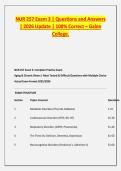
NUR 257 Exam 3 | Questions and Answers
| 2026 Update | 100% Correct – Galen
College.
NUR 257 Exam 3: Complete Practice Exam
Aging & Chronic Illness | Most Tested & Difficult Questions with Multiple Choice
Actual Exam Format 2025/2026
EXAM STRUCTURE
Section Topics Covered Questions
1 Metabolic Disorders (Thyroid, Diabetes) 1-15
2 Cardiovascular Disorders (HTN, MI, HF) 16-30
3 Respiratory Disorders (COPD, Pneumonia) 31-40
4 The Three Ds: Delirium, Dementia, Depression 41-50
5 Neurocognitive Disorders (Parkinson's, Alzheimer's) 51-60
,Section Topics Covered Questions
6 Cerebrovascular Disorders (Stroke, TIA) 61-70
7 Epidemiology & Community Health 71-80
8 Pharmacology & Medication Management 81-90
SECTION 1: METABOLIC DISORDERS (Thyroid, Diabetes) - Questions 1-15
Question 1
Type: Multiple Choice
For the elderly client, it is important to note in regards to diabetes mellitus that:
A. Symptoms appear early and are easily recognized
B. It is diagnosed in the late stages due to lack of symptoms in early stage
C. Type 2 diabetes rarely occurs in older adults
D. Blood glucose monitoring is unnecessary in the elderly
Answer: B
Rationale: In elderly clients, diabetes mellitus is often diagnosed in late stages
because classic symptoms may be absent or attributed to normal aging. Older
adults may present with vague symptoms such as fatigue, confusion, or
incontinence rather than the classic polyuria and polydipsia .
Question 2
Type: Multiple Choice
What does A1C measure?
,A. Blood glucose level at the moment of testing
B. Average blood glucose over the past 24 hours
C. Average blood glucose over 3 months
D. Insulin production capacity of the pancreas
Answer: C
Rationale: Hemoglobin A1C measures the average blood glucose level over
approximately 3 months (the lifespan of red blood cells). It reflects long-term
glucose control and is used for both diagnosis and monitoring of diabetes
management .
Question 3
Type: Multiple Choice
If your elderly client has an acute illness with inability to take oral medications for
their diabetes mellitus, what should you as the nurse do?
A. Skip the medication until they can eat again
B. Double the next dose when they resume eating
C. Contact the primary care provider (PCP)
D. Adminster insulin instead without orders
Answer: C
Rationale: When an elderly diabetic client cannot take oral medications due to
acute illness, the nurse should contact the provider for orders. The provider may
need to adjust the medication regimen, possibly switching to insulin temporarily.
Never skip or adjust diabetes medications without provider guidance .
Question 4
Type: Multiple Choice
Why should the nurse take caution when giving metformin to the elderly?
A. It causes excessive weight gain in older adults
B. It is ineffective in patients over 65
, C. Because of the declining kidney function in the elderly resulting in further
decline in kidney function
D. It interacts negatively with most antihypertensives
Answer: C
Rationale: Metformin is excreted by the kidneys. Elderly patients often have age-
related decline in renal function, increasing the risk of metformin accumulation
and lactic acidosis. Renal function should be monitored regularly .
Question 5
Type: Select All That Apply
What are some education points for the elderly who have diabetes mellitus?
(Select all that apply)
A. Limiting saturated fats
B. Encouraging low sodium diet
C. Foot care including daily inspection
D. Attending podiatrist appointments
E. Using a mirror to inspect plantar surface of feet
Answers: A, B, C, D, E
Rationale: All options are correct. Diabetes education for the elderly includes
dietary management (limiting saturated fats and sodium), comprehensive foot
care with daily inspection (using a mirror for the plantar surface), and regular
podiatry appointments to prevent complications and amputations .
Question 6
Type: Multiple Choice
What are some education points for the elderly who have diabetes mellitus about
hypoglycemia?
A. "The brain can function normally without glucose for several hours."
B. "You should only treat hypoglycemia if symptoms are severe."
| 2026 Update | 100% Correct – Galen
College.
NUR 257 Exam 3: Complete Practice Exam
Aging & Chronic Illness | Most Tested & Difficult Questions with Multiple Choice
Actual Exam Format 2025/2026
EXAM STRUCTURE
Section Topics Covered Questions
1 Metabolic Disorders (Thyroid, Diabetes) 1-15
2 Cardiovascular Disorders (HTN, MI, HF) 16-30
3 Respiratory Disorders (COPD, Pneumonia) 31-40
4 The Three Ds: Delirium, Dementia, Depression 41-50
5 Neurocognitive Disorders (Parkinson's, Alzheimer's) 51-60
,Section Topics Covered Questions
6 Cerebrovascular Disorders (Stroke, TIA) 61-70
7 Epidemiology & Community Health 71-80
8 Pharmacology & Medication Management 81-90
SECTION 1: METABOLIC DISORDERS (Thyroid, Diabetes) - Questions 1-15
Question 1
Type: Multiple Choice
For the elderly client, it is important to note in regards to diabetes mellitus that:
A. Symptoms appear early and are easily recognized
B. It is diagnosed in the late stages due to lack of symptoms in early stage
C. Type 2 diabetes rarely occurs in older adults
D. Blood glucose monitoring is unnecessary in the elderly
Answer: B
Rationale: In elderly clients, diabetes mellitus is often diagnosed in late stages
because classic symptoms may be absent or attributed to normal aging. Older
adults may present with vague symptoms such as fatigue, confusion, or
incontinence rather than the classic polyuria and polydipsia .
Question 2
Type: Multiple Choice
What does A1C measure?
,A. Blood glucose level at the moment of testing
B. Average blood glucose over the past 24 hours
C. Average blood glucose over 3 months
D. Insulin production capacity of the pancreas
Answer: C
Rationale: Hemoglobin A1C measures the average blood glucose level over
approximately 3 months (the lifespan of red blood cells). It reflects long-term
glucose control and is used for both diagnosis and monitoring of diabetes
management .
Question 3
Type: Multiple Choice
If your elderly client has an acute illness with inability to take oral medications for
their diabetes mellitus, what should you as the nurse do?
A. Skip the medication until they can eat again
B. Double the next dose when they resume eating
C. Contact the primary care provider (PCP)
D. Adminster insulin instead without orders
Answer: C
Rationale: When an elderly diabetic client cannot take oral medications due to
acute illness, the nurse should contact the provider for orders. The provider may
need to adjust the medication regimen, possibly switching to insulin temporarily.
Never skip or adjust diabetes medications without provider guidance .
Question 4
Type: Multiple Choice
Why should the nurse take caution when giving metformin to the elderly?
A. It causes excessive weight gain in older adults
B. It is ineffective in patients over 65
, C. Because of the declining kidney function in the elderly resulting in further
decline in kidney function
D. It interacts negatively with most antihypertensives
Answer: C
Rationale: Metformin is excreted by the kidneys. Elderly patients often have age-
related decline in renal function, increasing the risk of metformin accumulation
and lactic acidosis. Renal function should be monitored regularly .
Question 5
Type: Select All That Apply
What are some education points for the elderly who have diabetes mellitus?
(Select all that apply)
A. Limiting saturated fats
B. Encouraging low sodium diet
C. Foot care including daily inspection
D. Attending podiatrist appointments
E. Using a mirror to inspect plantar surface of feet
Answers: A, B, C, D, E
Rationale: All options are correct. Diabetes education for the elderly includes
dietary management (limiting saturated fats and sodium), comprehensive foot
care with daily inspection (using a mirror for the plantar surface), and regular
podiatry appointments to prevent complications and amputations .
Question 6
Type: Multiple Choice
What are some education points for the elderly who have diabetes mellitus about
hypoglycemia?
A. "The brain can function normally without glucose for several hours."
B. "You should only treat hypoglycemia if symptoms are severe."


