

1
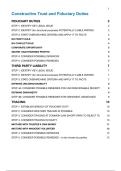
Constructive Trust and Fiduciary Duties
FIDUCIARY DUTIES 2
STEP 1: IDENTIFY KEY LEGAL ISSUE 2
STEP 2: IDENTIFY (for structural purposes) POTENTIALLY LIABLE PARTIES 2
STEP 3: STATE OVERARCHING CRITERIA AND APPLY IT TO FACTS 2
NO PROFIT RULE 3
NO CONFLICT RULE 4
CORPORATE OPPORTUNITY 5
SECRET UNAUTHORISED PROFITS 5
STEP 4: CONSIDER POSSIBLE DEFENCES 6
STEP 5: CONSIDER POSSIBLE REMEDIES 6
THIRD PARTY LIABILITY 7
STEP 1: IDENTIFY KEY LEGAL ISSUE 7
STEP 2: IDENTIFY (for structural purposes) POTENTIALLY LIABLE PARTIES 7
STEP 3: STATE OVERARCHING CRITERIA AND APPLY IT TO FACTS 7
DEFINING UNCONSCIONABILITY 8
STEP 4A: CONSIDER POSSIBLE REMEDIES FOR UNCONSCIONABLE RECEIPT 8
DEFINING DISHONESTY 9
STEP 4B: CONSIDER POSSIBLE REMEDIES FOR DISHONEST ASSISTANCE 9
TRACING 10
STEP 1: ESTABLISH BREACH OF FIDUCIARY DUTY 10
STEP 2: CONSIDER WHETHER TRACING IS POSSIBLE 10
STEP 3: CONSIDER TRACING AT COMMON LAW (SHORT PARA TO REJECT IT) 10
STEP 4: CONSIDER TRACING IN EQUITY 10
MIXTURE WITH TRUSTEE’S OWN MONEY 11
MIXTURE WITH INNOCENT VOLUNTEER 12
STEP 4: CONSIDER POSSIBLE DEFENCES 13
STEP 5: CONSIDER POSSIBLE REMEDIES – to be chosen by parties 13
  
, 2
A Constructive Trust may arise –
- When here is a breach of Fiduciary duties
- As a remedy for Receipt liability
- As a remedy following a tracing process
- Last act doctrine in constitution of trust
FIDUCIARY DUTIES
STEP 1: IDENTIFY KEY LEGAL ISSUE
- Fiduciary obligation: A Fiduciary is someone who undertakes to act for or on behalf of
another, irrespective of remuneration and whether or not the other party asked [Bristol
and West Building Society v Mothew].
STEP 2: IDENTIFY (for structural purposes) POTENTIALLY LIABLE PARTIES
- X may be liable for breach of fiduciary duty
STEP 3: STATE OVERARCHING CRITERIA AND APPLY IT TO FACTS
Q.1] IS X A FIDUCIARY?
Status based Fact based/Ad Hoc – Undertaking Test [Galambos v Perez]
Trustee for Bene ciary Test to apply:
- Undertaking to act for another party (express or implied)
Principal for Agent [De Bussche - Reliance by other party
v Alt] - Actual or potential nancial vulnerability for the other party.
Director/Promoter for Company Reading v AG [1951]: Army sergeant using military uniform to
[Aberdeen Rail Co v Blaikie Bros] facilitate smuggling was in breach of F.O.
Solicitor for client [Brown v IRC] AG v Blake [2001]: Ex-spy under F.O. not to disclose info
Executor for bene ciaries under English v Dedham Vale Properties [1978] – lack of disclosure of
the Will planning permission during sale of property – involuntary F.O.
NO Fiduciary Relationship in Russel v Cartwright [2020] – Fiduciary duties do not usually arise
in commercial relationships because each party is entitled to prefer its own interests
Q.2] HAS THERE BEEN A BREACH OF FIDUCIARY DUTY?
a) Is the breach intentional?
The breach must be an intentional act not an unconscious omission [Bristol and West
Building Society v Mothew]
b) Is the party in question the director of a Company?
IF YES, under statute –
- Company Act 2006
- Article 170: Scope and nature of General duties
- Article 172: Duty to promote the success of the company
- Article 174: Duty to exercise reasonable care, skill and diligence
- Article 175: Duty to avoid conflicts of interest

fi fifi
Constructive Trust and Fiduciary Duties
FIDUCIARY DUTIES 2
STEP 1: IDENTIFY KEY LEGAL ISSUE 2
STEP 2: IDENTIFY (for structural purposes) POTENTIALLY LIABLE PARTIES 2
STEP 3: STATE OVERARCHING CRITERIA AND APPLY IT TO FACTS 2
NO PROFIT RULE 3
NO CONFLICT RULE 4
CORPORATE OPPORTUNITY 5
SECRET UNAUTHORISED PROFITS 5
STEP 4: CONSIDER POSSIBLE DEFENCES 6
STEP 5: CONSIDER POSSIBLE REMEDIES 6
THIRD PARTY LIABILITY 7
STEP 1: IDENTIFY KEY LEGAL ISSUE 7
STEP 2: IDENTIFY (for structural purposes) POTENTIALLY LIABLE PARTIES 7
STEP 3: STATE OVERARCHING CRITERIA AND APPLY IT TO FACTS 7
DEFINING UNCONSCIONABILITY 8
STEP 4A: CONSIDER POSSIBLE REMEDIES FOR UNCONSCIONABLE RECEIPT 8
DEFINING DISHONESTY 9
STEP 4B: CONSIDER POSSIBLE REMEDIES FOR DISHONEST ASSISTANCE 9
TRACING 10
STEP 1: ESTABLISH BREACH OF FIDUCIARY DUTY 10
STEP 2: CONSIDER WHETHER TRACING IS POSSIBLE 10
STEP 3: CONSIDER TRACING AT COMMON LAW (SHORT PARA TO REJECT IT) 10
STEP 4: CONSIDER TRACING IN EQUITY 10
MIXTURE WITH TRUSTEE’S OWN MONEY 11
MIXTURE WITH INNOCENT VOLUNTEER 12
STEP 4: CONSIDER POSSIBLE DEFENCES 13
STEP 5: CONSIDER POSSIBLE REMEDIES – to be chosen by parties 13
  
, 2
A Constructive Trust may arise –
- When here is a breach of Fiduciary duties
- As a remedy for Receipt liability
- As a remedy following a tracing process
- Last act doctrine in constitution of trust
FIDUCIARY DUTIES
STEP 1: IDENTIFY KEY LEGAL ISSUE
- Fiduciary obligation: A Fiduciary is someone who undertakes to act for or on behalf of
another, irrespective of remuneration and whether or not the other party asked [Bristol
and West Building Society v Mothew].
STEP 2: IDENTIFY (for structural purposes) POTENTIALLY LIABLE PARTIES
- X may be liable for breach of fiduciary duty
STEP 3: STATE OVERARCHING CRITERIA AND APPLY IT TO FACTS
Q.1] IS X A FIDUCIARY?
Status based Fact based/Ad Hoc – Undertaking Test [Galambos v Perez]
Trustee for Bene ciary Test to apply:
- Undertaking to act for another party (express or implied)
Principal for Agent [De Bussche - Reliance by other party
v Alt] - Actual or potential nancial vulnerability for the other party.
Director/Promoter for Company Reading v AG [1951]: Army sergeant using military uniform to
[Aberdeen Rail Co v Blaikie Bros] facilitate smuggling was in breach of F.O.
Solicitor for client [Brown v IRC] AG v Blake [2001]: Ex-spy under F.O. not to disclose info
Executor for bene ciaries under English v Dedham Vale Properties [1978] – lack of disclosure of
the Will planning permission during sale of property – involuntary F.O.
NO Fiduciary Relationship in Russel v Cartwright [2020] – Fiduciary duties do not usually arise
in commercial relationships because each party is entitled to prefer its own interests
Q.2] HAS THERE BEEN A BREACH OF FIDUCIARY DUTY?
a) Is the breach intentional?
The breach must be an intentional act not an unconscious omission [Bristol and West
Building Society v Mothew]
b) Is the party in question the director of a Company?
IF YES, under statute –
- Company Act 2006
- Article 170: Scope and nature of General duties
- Article 172: Duty to promote the success of the company
- Article 174: Duty to exercise reasonable care, skill and diligence
- Article 175: Duty to avoid conflicts of interest

fi fifi


