

Ch 15
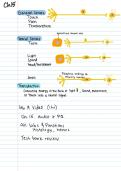
General senses
Touch
Pain 5,0
Temperature
Specializedreceptorcells
Special senses
9
Taste ago iff
Light too
sound Emmi
Head movement
Receptiveendingsof
smell olfactory
never oÉ_
Transduction
converting energy in the form of light sound movement
or touch into a neural signal
lab 9 Video Ihr
Ch 15 audio PQ
All labs Functions
Histology nerves
Test bank review
, 3
layers connectivetissuelayer
Olfaction sense of smell vesselsnerves
Chemoreceptors olfactoryéptitñiumod
10million Olfactory neurons neuronsbasalcellssupportingcells
muggagger
Only sense to bypass the thalamus fromolfactoryglands
Olfactory neurons chemoreceptors
modifiedbipolarneuronsthatdetectodorants
Olfactory cilia
end of eachdendrite whichincreases the surface area
for odorantdetection
Olfactory bulb
structurelocatedinthebrain justsuperiorto the ethmoidbone
Basal Cells
Stemcells that develop into olfactoryneuronsLifespan 3060days
Supporting cells
columnarcells that support andsurround the olfactoryneurons
Activation of receptors
1 Binding an odorant to it's receptor activates G Protein
Then detaches from receptor
2 The activated G Proteintriggers the enzyme adenylate
cyclase to convert ATP into cyclic AMP CAMP
3 CAMP opens ion channels that allow sodium Calciumions
to enter the cell
i
Pathways i
1 The axons of olfactoryneurons carry olfactory stimuli to
the olfactory blubin the CNS
2 Olfactorystimulustravelsfrom the olfactorybulb to theprimaryolfactorycortex
inthetemporallobe
faqorant so
I OE.IE
FI
dEEffd
IIII
IIllIdIIIIII.IE IIIIN.FI
me
Il IiIl
Vamp
LAMB
, Gustation sense of taste
Sweet glucosefructose
Sour tasteproducedbyhydrogenions
Salty presence of metalions suchas sodium Potassiumions
Bitter alkaloidslikeincoffeeBittersubstanceindicatetoxins
sat
Bariice fitter iii iii iii 100s
Vallate largest domeshaped contains oftastebuds
Fungiform mushroom shaped contain afew100taste
buds
Foliate sideofthe tonguetastebudsonlyin childhood
Filiform longthincylindersscatteredacrosstongue NotastebudsDetecttemp texture
Eolff Limbicsystemstores emotional
Fungiform reaction to food
Gustatory taste cells
specializedepithelial cells w microvillitastepores
Basal cells
stemcellsthat differentiateintonewgustatorycells Lifespan1014days
supportingcells
surround gustatorycellsProvidephysicalsupportnoroleintaste
Activation of tastereceptors
1 Changesinionmovements depolarizesthegustatorycell'splasmamembrane
2Depolarizationofthemembraneopensvoltagegated calciumion channelsandcalciumionenterthecell
3Thecalciumiontriggerthereleaseofneurotransmitterswhichproduceanactionpotentialintheaxonofthe
sensoryneuron
i i
Pathway 1
1 Axons of thefacial glossopharyngeal vagusnervescarrytastestimulifromthetongue
intothe CNS
2 Axonsofthe 3nervesterminate inthe solitarynucleus inthemedullaoblongataby
Synapsingon centralsensoryneurons
3 Axonsfromthesolitarynucleussynapseonneurons in thethalamus whichthen
sendthetastesignals to theprimarygustatorycortexintheparietallobe
feFf
gustatory
EFFFF.IT
i thalamusPrimary
General senses
Touch
Pain 5,0
Temperature
Specializedreceptorcells
Special senses
9
Taste ago iff
Light too
sound Emmi
Head movement
Receptiveendingsof
smell olfactory
never oÉ_
Transduction
converting energy in the form of light sound movement
or touch into a neural signal
lab 9 Video Ihr
Ch 15 audio PQ
All labs Functions
Histology nerves
Test bank review
, 3
layers connectivetissuelayer
Olfaction sense of smell vesselsnerves
Chemoreceptors olfactoryéptitñiumod
10million Olfactory neurons neuronsbasalcellssupportingcells
muggagger
Only sense to bypass the thalamus fromolfactoryglands
Olfactory neurons chemoreceptors
modifiedbipolarneuronsthatdetectodorants
Olfactory cilia
end of eachdendrite whichincreases the surface area
for odorantdetection
Olfactory bulb
structurelocatedinthebrain justsuperiorto the ethmoidbone
Basal Cells
Stemcells that develop into olfactoryneuronsLifespan 3060days
Supporting cells
columnarcells that support andsurround the olfactoryneurons
Activation of receptors
1 Binding an odorant to it's receptor activates G Protein
Then detaches from receptor
2 The activated G Proteintriggers the enzyme adenylate
cyclase to convert ATP into cyclic AMP CAMP
3 CAMP opens ion channels that allow sodium Calciumions
to enter the cell
i
Pathways i
1 The axons of olfactoryneurons carry olfactory stimuli to
the olfactory blubin the CNS
2 Olfactorystimulustravelsfrom the olfactorybulb to theprimaryolfactorycortex
inthetemporallobe
faqorant so
I OE.IE
FI
dEEffd
IIII
IIllIdIIIIII.IE IIIIN.FI
me
Il IiIl
Vamp
LAMB
, Gustation sense of taste
Sweet glucosefructose
Sour tasteproducedbyhydrogenions
Salty presence of metalions suchas sodium Potassiumions
Bitter alkaloidslikeincoffeeBittersubstanceindicatetoxins
sat
Bariice fitter iii iii iii 100s
Vallate largest domeshaped contains oftastebuds
Fungiform mushroom shaped contain afew100taste
buds
Foliate sideofthe tonguetastebudsonlyin childhood
Filiform longthincylindersscatteredacrosstongue NotastebudsDetecttemp texture
Eolff Limbicsystemstores emotional
Fungiform reaction to food
Gustatory taste cells
specializedepithelial cells w microvillitastepores
Basal cells
stemcellsthat differentiateintonewgustatorycells Lifespan1014days
supportingcells
surround gustatorycellsProvidephysicalsupportnoroleintaste
Activation of tastereceptors
1 Changesinionmovements depolarizesthegustatorycell'splasmamembrane
2Depolarizationofthemembraneopensvoltagegated calciumion channelsandcalciumionenterthecell
3Thecalciumiontriggerthereleaseofneurotransmitterswhichproduceanactionpotentialintheaxonofthe
sensoryneuron
i i
Pathway 1
1 Axons of thefacial glossopharyngeal vagusnervescarrytastestimulifromthetongue
intothe CNS
2 Axonsofthe 3nervesterminate inthe solitarynucleus inthemedullaoblongataby
Synapsingon centralsensoryneurons
3 Axonsfromthesolitarynucleussynapseonneurons in thethalamus whichthen
sendthetastesignals to theprimarygustatorycortexintheparietallobe
feFf
gustatory
EFFFF.IT
i thalamusPrimary


