

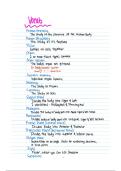
Vocab
Humananatonym
The study of the structure of the HumanBody
Humanphysiology
The study of it's functions
Tissue
Groups of cells together
organ
2 or more tissue types combine
Organ system
The body's organ are grouped
Ex Cardiovascular system
Heart Bloodvessels
Systemic anatomy
Individual organ systems
Histology
The study of tissues
Cystology
The study of cells
SagitalPlane
Dividesthe body into right Left
2 variations Midsagittal Parasagittal
Midsagittal
Dividesthebody orbodypartinto equalright lefthalves
Parasagittal
Dividesbody orbodypart into unequal right left sections
Frontal Plane coronal plane
Divides body into Anterior Posterior
transverse Plane Horizontal Plane
Divides the body into superior inferiorparts
Obliqueplane
sectiontaken at an angle Useful for examiningstructures
ie Kneejoints
Signs
Fever what you can see measure
Symptoms
f
, tiredness what
you feel
Metabolism
All chemicalreactions that occur w in the bod
Anabolism
small moleculesjoined to form largerones
Catabolism
Largemolecules brokendown into smallerones
Homeostasis
All body systems work together to maintain a stable
internal environment
Systems respond to externalandinternalchanges to keep
Variables w in normalranges Ex Bodytemp fluid balance
Receptor
Receives the stimulus
controlcenter
Processes the signal sends instructions
Effector
Carries out instructions
Positivefeedback
Initial stimulusproduces a response that amplifiestheoriginal
change in conditions
Bodyis movedawayfromhomeostasis normalrangeNOTmaintained
PositivefeedbackLoop
complete a dangerous process quickly to reestablish homeostasis
Negativefeedback
The response of the effectornegates thestimulus
Body is broughtbackinto homeostasisnormalbodyphysiologicalrangemaintain
Anterior cavity ventral
Organs of the chest and abdomen Front
Posterior cavity dorsal
brain spinal cord Back
Humananatonym
The study of the structure of the HumanBody
Humanphysiology
The study of it's functions
Tissue
Groups of cells together
organ
2 or more tissue types combine
Organ system
The body's organ are grouped
Ex Cardiovascular system
Heart Bloodvessels
Systemic anatomy
Individual organ systems
Histology
The study of tissues
Cystology
The study of cells
SagitalPlane
Dividesthe body into right Left
2 variations Midsagittal Parasagittal
Midsagittal
Dividesthebody orbodypartinto equalright lefthalves
Parasagittal
Dividesbody orbodypart into unequal right left sections
Frontal Plane coronal plane
Divides body into Anterior Posterior
transverse Plane Horizontal Plane
Divides the body into superior inferiorparts
Obliqueplane
sectiontaken at an angle Useful for examiningstructures
ie Kneejoints
Signs
Fever what you can see measure
Symptoms
f
, tiredness what
you feel
Metabolism
All chemicalreactions that occur w in the bod
Anabolism
small moleculesjoined to form largerones
Catabolism
Largemolecules brokendown into smallerones
Homeostasis
All body systems work together to maintain a stable
internal environment
Systems respond to externalandinternalchanges to keep
Variables w in normalranges Ex Bodytemp fluid balance
Receptor
Receives the stimulus
controlcenter
Processes the signal sends instructions
Effector
Carries out instructions
Positivefeedback
Initial stimulusproduces a response that amplifiestheoriginal
change in conditions
Bodyis movedawayfromhomeostasis normalrangeNOTmaintained
PositivefeedbackLoop
complete a dangerous process quickly to reestablish homeostasis
Negativefeedback
The response of the effectornegates thestimulus
Body is broughtbackinto homeostasisnormalbodyphysiologicalrangemaintain
Anterior cavity ventral
Organs of the chest and abdomen Front
Posterior cavity dorsal
brain spinal cord Back


