

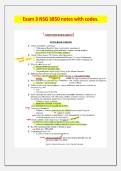
Exam 3 NSG 3850 notes with codes.
,NSG 3850 Exam 3 Practice Questions (1-40)
, 1. Nephrotic syndrome does not usually cause:
A. Hyperlipidemia
B. Proteinuria
C. Hematuria
D. Generalized edema
Correct Answer: C
2. A person with acute pyelonephritis would most typically experience:
A. Fever
B. Oliguria
C. Edema
D. Hypertension
Correct Answer: A
3. The organism most commonly associated with acute pyelonephritis is:
A. Streptococcus
B. Escherichia coli
C. Klebsiella
D. Enterobacter
Correct Answer: B
4. It is true that polycystic kidney disease is:
A. Always rapidly fatal
B. Caused by a streptococcal infection
C. Associated with supernumerary kidney
D. Genetically transmitted
Correct Answer: D
5. The pathophysiologic basis of acute glomerulonephritis is:
A. Renal ischemia
B. Bacterial invasion of the glomerulus
C. An anaphylactic reaction
D. An immune complex reaction
Correct Answer: D
6. Signs consistent with a diagnosis of glomerulonephritis include:
A. Anuria
B. Proteinuria
,NSG 3850 Exam 3 Practice Questions (1-40)
, 1. Nephrotic syndrome does not usually cause:
A. Hyperlipidemia
B. Proteinuria
C. Hematuria
D. Generalized edema
Correct Answer: C
2. A person with acute pyelonephritis would most typically experience:
A. Fever
B. Oliguria
C. Edema
D. Hypertension
Correct Answer: A
3. The organism most commonly associated with acute pyelonephritis is:
A. Streptococcus
B. Escherichia coli
C. Klebsiella
D. Enterobacter
Correct Answer: B
4. It is true that polycystic kidney disease is:
A. Always rapidly fatal
B. Caused by a streptococcal infection
C. Associated with supernumerary kidney
D. Genetically transmitted
Correct Answer: D
5. The pathophysiologic basis of acute glomerulonephritis is:
A. Renal ischemia
B. Bacterial invasion of the glomerulus
C. An anaphylactic reaction
D. An immune complex reaction
Correct Answer: D
6. Signs consistent with a diagnosis of glomerulonephritis include:
A. Anuria
B. Proteinuria


